Introduction: This Chinese ceramic 3D printing company is deploying dozens of machines for batch production of ceramic applications and has invited Nanjixiong to visit its factory.
At Formnext 2026 in Germany, Nanjixiong livestreamed interviews with Qiyu Technology CEO Zhu Pengfei and representative May.
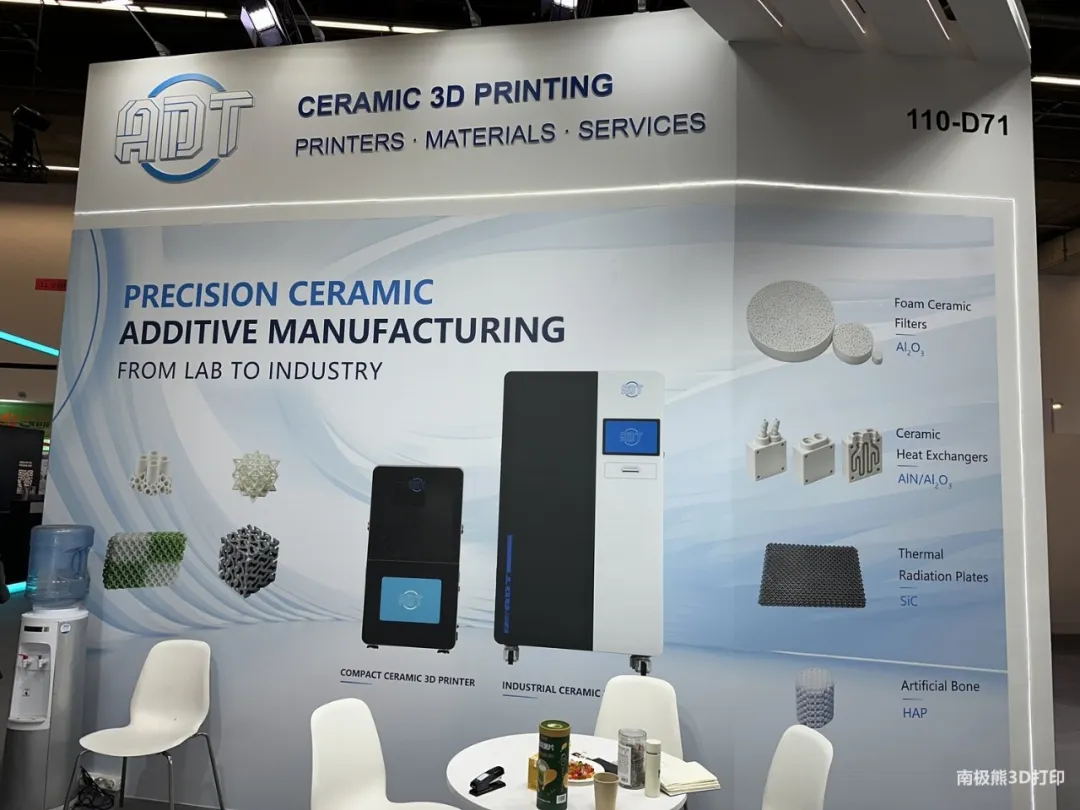
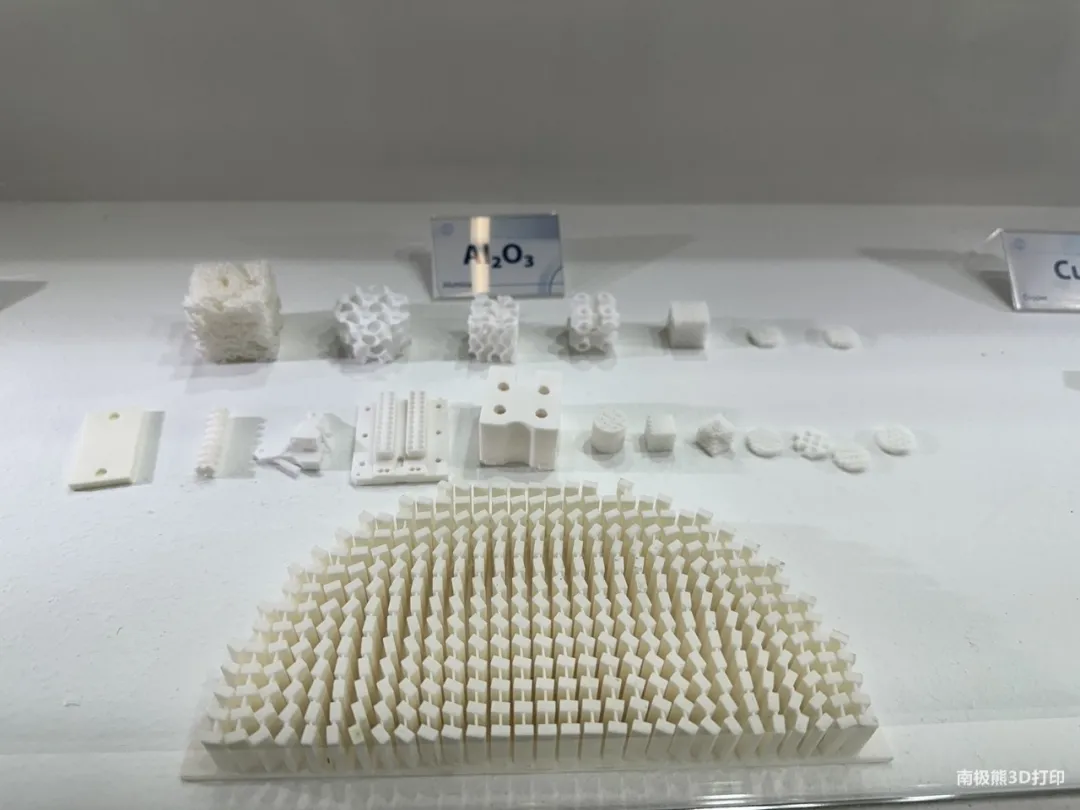
A small ceramic printer was producing alumina samples, while a large industrial machine alongside it had already been purchased by a customer at the show. The Guangdong company's message this year was explicit: "from lab to industry."
Small machines for laboratories, large machines for factories
Its displayed range clearly addresses two markets.
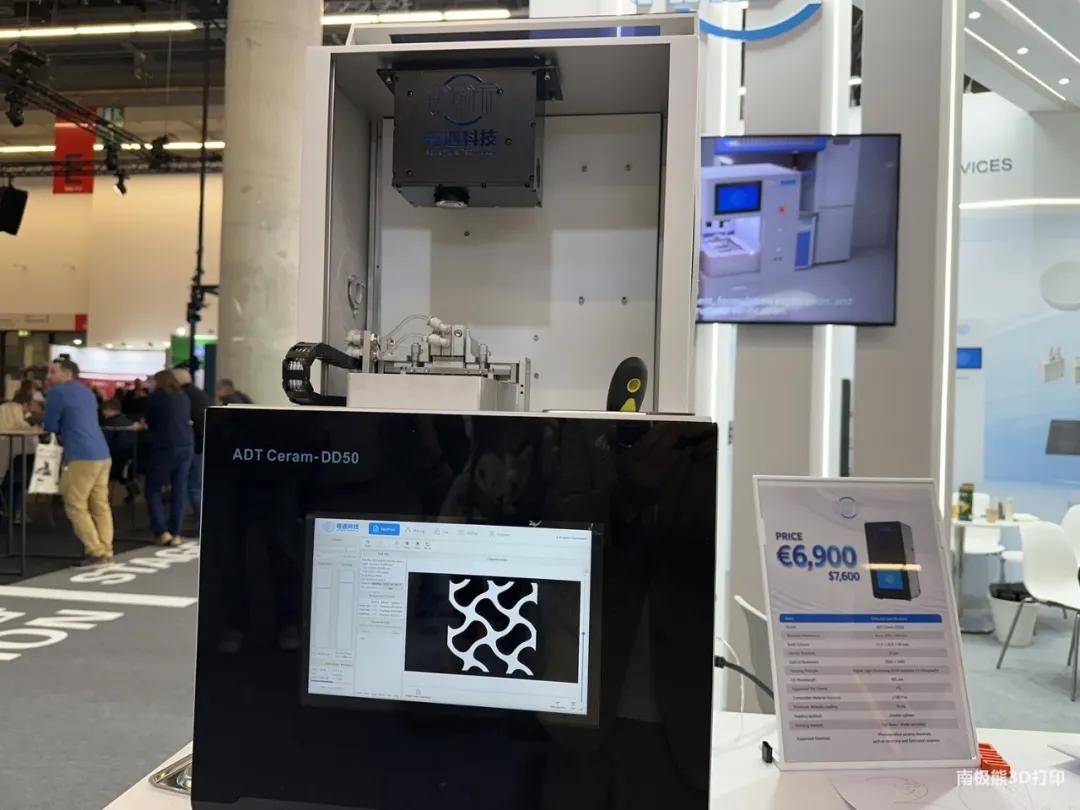
The small machine targets laboratories with a small build area and low starting material requirements: "You don't need much material to start printing." Its show price was €7,000. Supported materials include oxide ceramics such as alumina and zirconia; non-oxide ceramics such as aluminum nitride and silicon nitride; and bioceramics including hydroxyapatite and TCP. The interviewee acknowledged that photocuring ceramic printing is still developing, but real research demand exists. This machine is designed specifically for laboratory use.
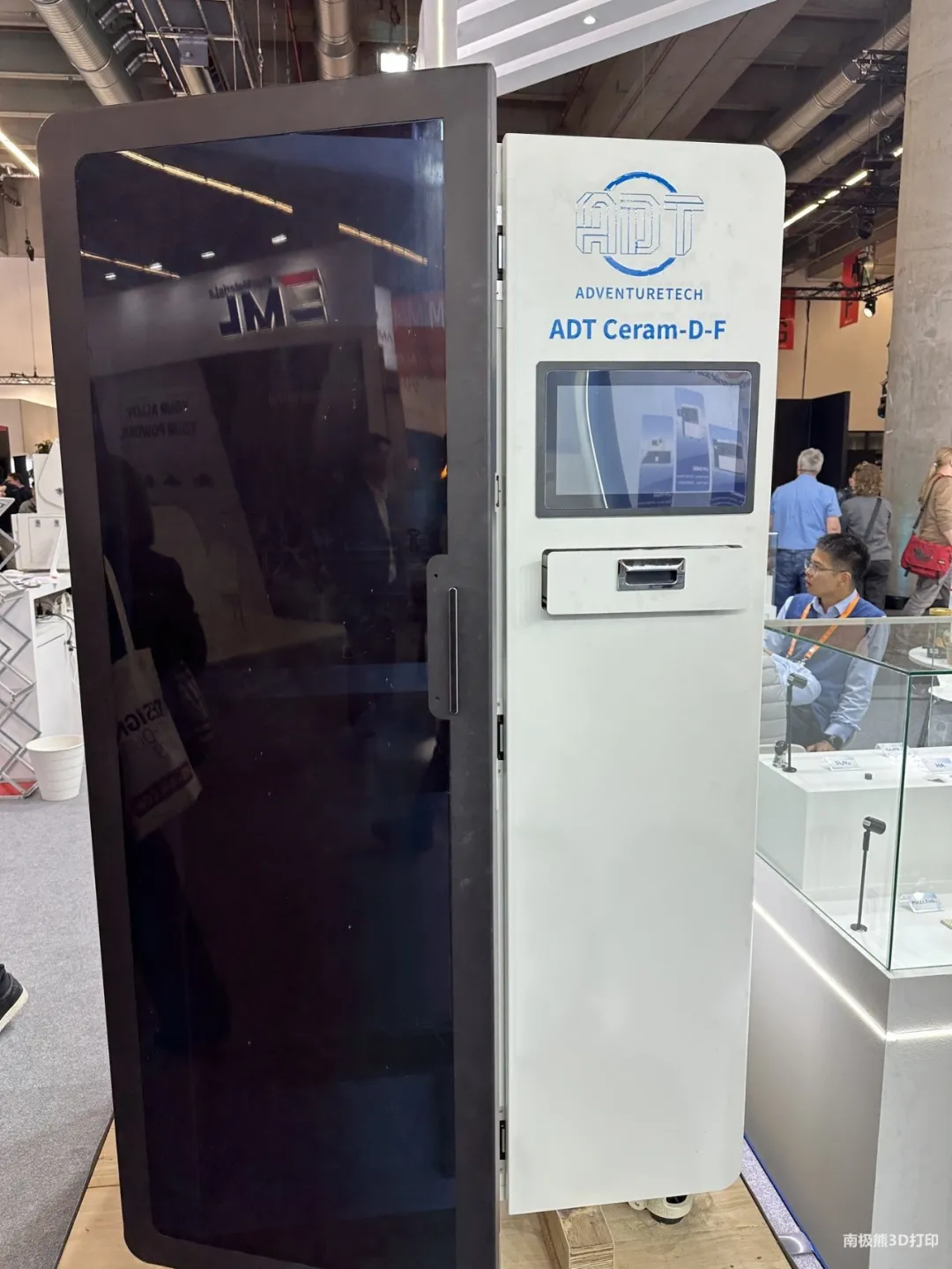
The large system targets batch production. Its larger build area and sensors monitoring slurry remaining in the vat support slurry recirculation in production. A single-piece marble printing platform combines stability with easy cleaning. DLP's area-exposure efficiency is a key selling point. According to staff, discussions with the buyer began online, the sale closed at the show, and shipment was scheduled afterward.
The CEO urges attention to several ceramic-printing applications
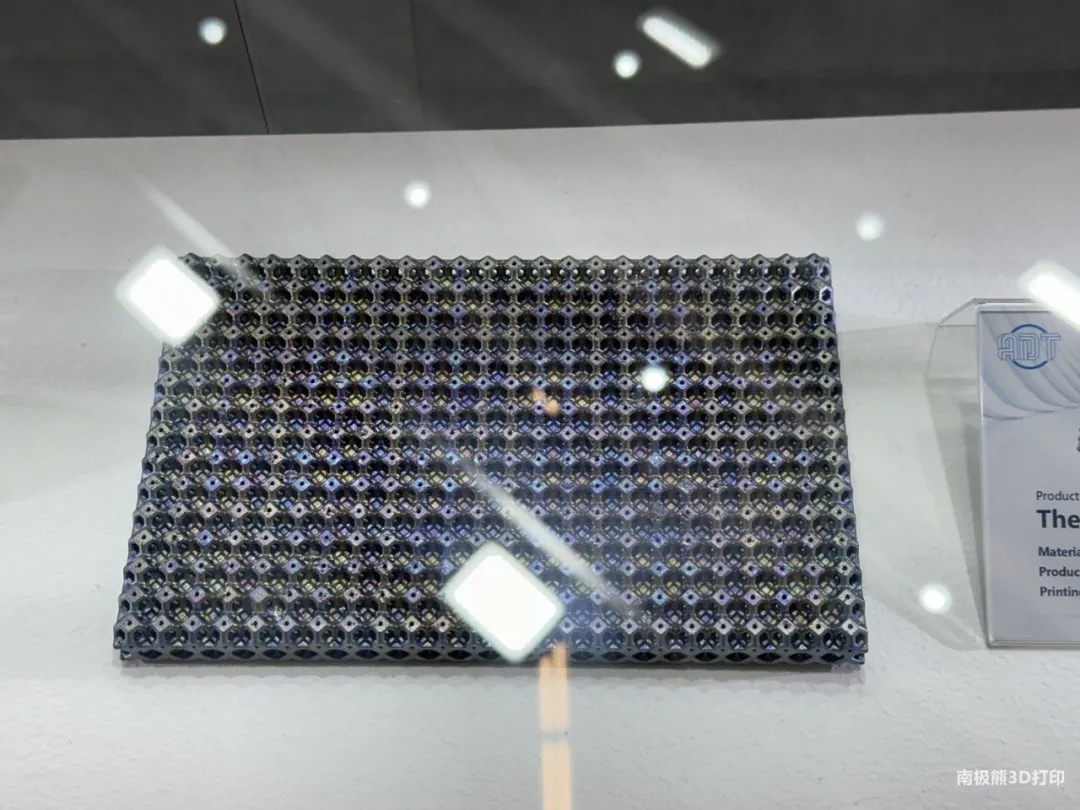
The company showed printing trials involving more than 30 ceramic slurries. Copper–diamond was emphasized. Zhu believes rising AI-chip cooling demands make its high conductivity and complex-shape capabilities a clear application opportunity. The displayed sample contained about 5% diamond. "The more diamond, the better," he said, but copper interferes with photocuring, so composition and process need balancing. Photocuring was chosen for better surface finish than SLS, creating less resistance to liquid-cooling water flow.
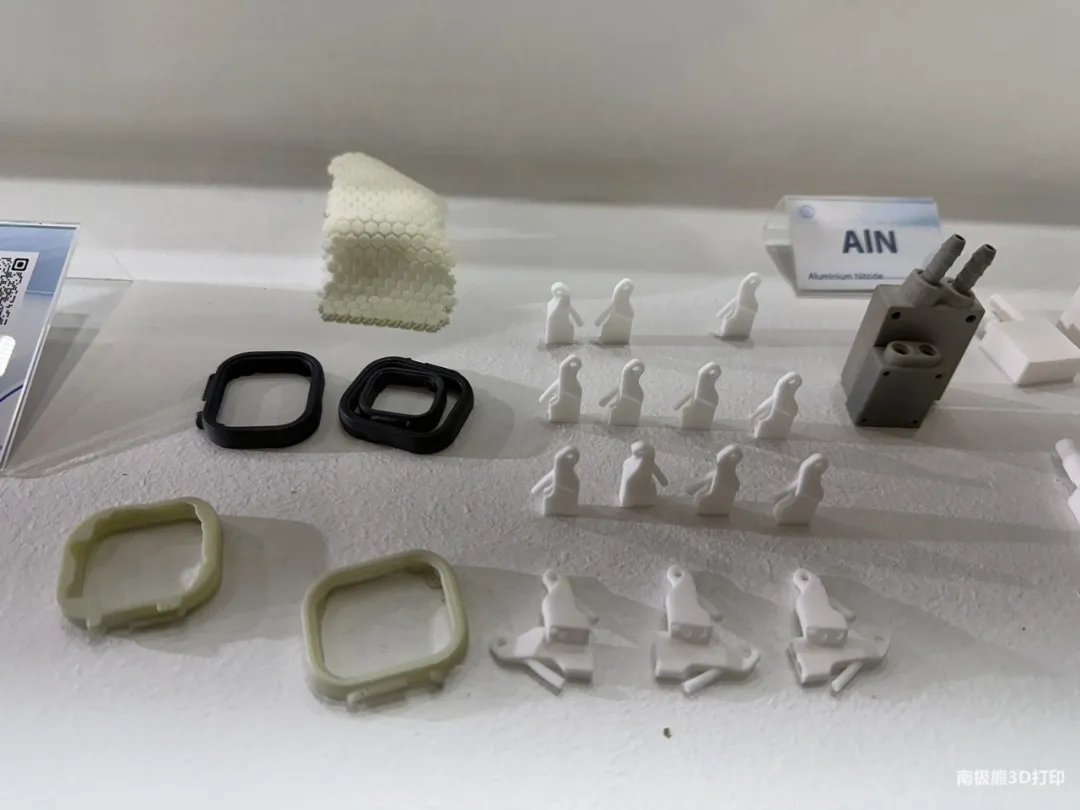
Application examples included alumina and zirconia ceramic-foam high-temperature filters for removing slag during superalloy casting; silicon-carbide heat-radiation panels for thermal engineering; and aluminum-nitride heat-conducting components. The latter have a stated conductivity of 140 W/(m·K), theoretically reaching 200–240, with integrated internal water channels for new-energy and other uses requiring coolant-corrosion resistance and electrical insulation. Complex semiconductor ceramic devices are also being explored, with dimensional tolerances around 20 microns.
Qiyu supplies equipment, material formulations and complete solutions. Zhu quoted alumina slurry at RMB 200/kg and said the next step is to work with the industry to lower equipment prices: "We must bring this technology into every industry."
Biomedicine and consumer products: Two unexpected validation paths
In biomedicine, the interviewee said customer Zhenghai Bio obtained China's first approval in artificial bone repair, with Qiyu equipment used for volume production. According to the interview, Dutch equipment used during development was expensive; Qiyu machines cost about one-fifth as much and offer ten times the efficiency.
The consumer story is lighter. Qiyu has established a ceramic-printing farm in Foshan, producing cultural and creative products such as ceramic dragons, Chang'an lion-dance figures and wind chimes. At the show, dragons priced at RMB 98 in China and from about €20 overseas sold out: "We brought a box, and it was gone." Several days' revenue covered exhibition-period expenses. The interviewee saw more than sales: ceramic printing needs a structural-design ecosystem, and many current models adapt designs from plastic-printing communities. Consumer interest provides positive market feedback: "Making money says more than a thousand words."
Nanjixiong's observations
Qiyu's Formnext message was less a single product launch than a strategic statement: laboratory machines support technology iteration, industrial machines validate batch applications, and creative consumer products sustain cash flow and market awareness. Pursuing all three is pragmatic in an early-stage ceramic-printing industry.
Zhu repeatedly stressed that early stage, saying only about six photocuring ceramic exhibitors appeared across Formnext's three large halls. The counting method was not specified, but the underlying point matters: ceramics' supply chain is much thinner than those of metals and polymers. Equipment costs, materials and structural-design ecosystems are still developing.
The company is acting on "from lab to industry": small machines enter laboratories, large ones go to industrial customers, and ceramic dragons reach show visitors. All three paths are being tested. Nanjixiong will visit the new factory to see which develops first.
AI-translated from an article by Xiaoruanxiong on Nanjixiong, originally published on 2026-11-26. Text and images retain the original source attribution.
Read the original Chinese article |


 Record number | ©2024 panda3dp Team. Powered by panda3dp