Nanjixiong introduction
A four-year-old startup has entered commercial space supply chains through multi-metal DED printing. An environmental review notice now describes a RMB 150 million investment and annual capacity of 6,000 sets of rocket engine parts.
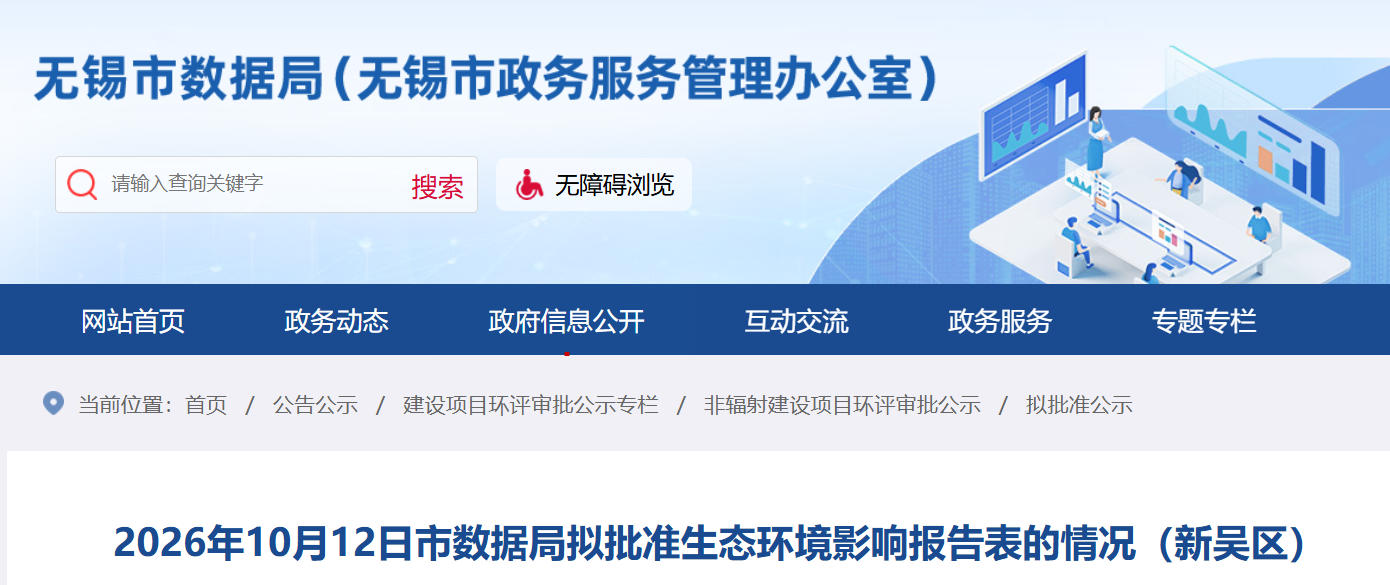
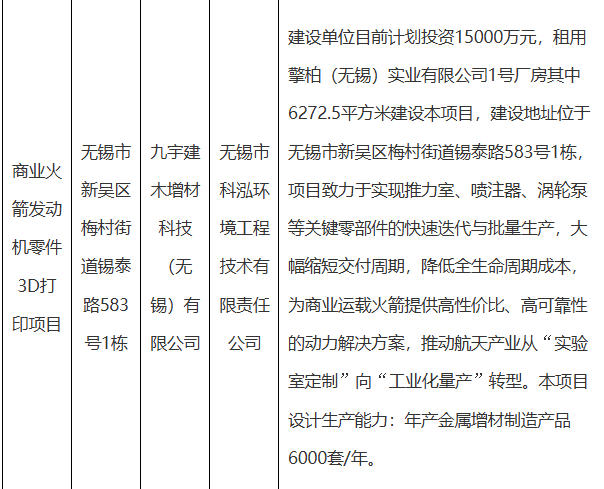
On October 12, 2026, Nanjixiong learned that Wuxi's Data Bureau had published a proposed environmental impact approval notice for Xinwu District. Jiuyu Jianmu Additive Technology (Wuxi) Co., Ltd.'s commercial rocket engine parts printing project will invest RMB 150 million and lease 6,272.5 square meters within factory building 1 of Qingbai (Wuxi) Industrial Co., Ltd. The line will produce 6,000 sets of metal AM products per year.
The notice targets rapid iteration and batch production of critical components including thrust chambers, injectors and turbopumps.
Company background
Jiuyu Jianmu Aerospace Technology (Shanghai) was established in October 2022. Team members include graduates of Beihang and Northwestern Polytechnical University. It applies directed energy deposition (DED) multi-metal printing to rocket engines.
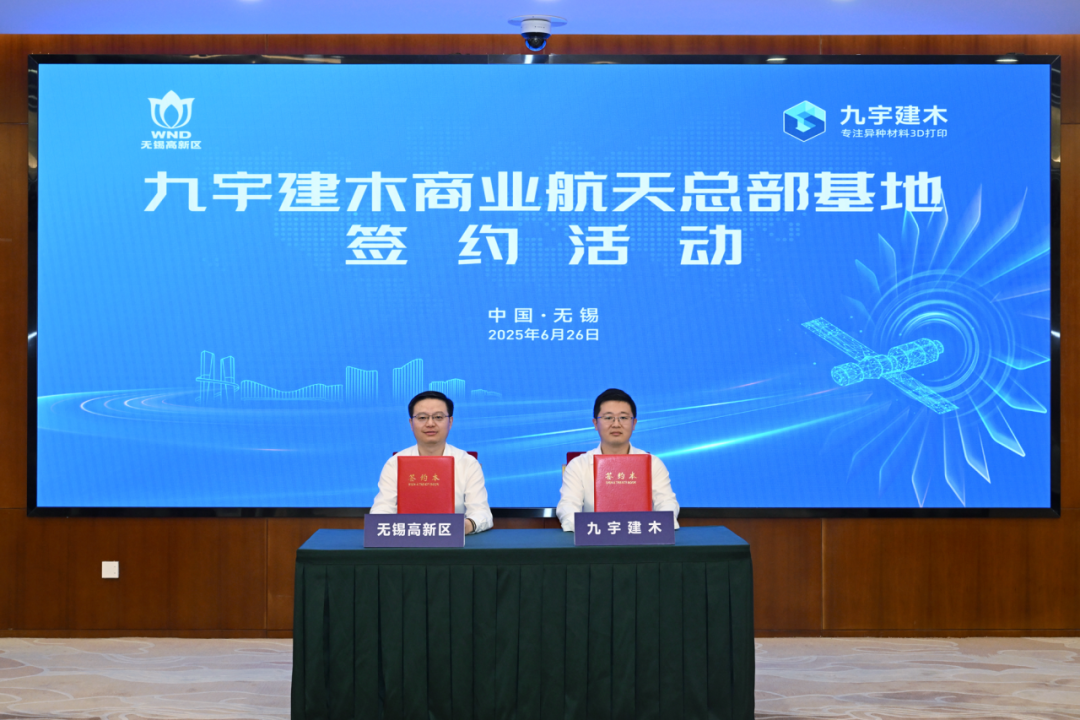
Its Wuxi subsidiary, established June 12, 2025, implements the commercial space headquarters base. The base agreement was signed in Wuxi High-Tech Zone on June 26, 2025, covering DED development, materials, processes, equipment and component manufacturing.
According to its recruitment platform profile, the company has entered supply chains for LandSpace, iSpace and Space Pioneer, described in the source as representative Chinese liquid, solid and reusable rocket developers.
Why choose DED for engine parts?
Metal printing is already established in aerospace, with companies such as BLT delivering batches. Jiuyu instead selects DED rather than the more common LPBF route.
LPBF builds in a powder bed with a laser, offering precision but constraints on size and speed. DED melts wire or powder while motion systems deposit larger parts, potentially several meters in size. Deposition is faster, but surfaces need subsequent machining.
Advantages emerge for large multi-metal parts, such as nozzles with copper-alloy inner walls and superalloy outer walls. An August-end Sealand Securities report identified size and efficiency advantages for DED, particularly for nozzles and large curved surfaces, with adoption expected to increase.
Broker research cited in the source estimates approximately 40% savings compared with SLM plus welding. It assigns a value of approximately RMB 1.2 million to one engine nozzle and approximately RMB 800,000 to connectors, combustion chambers and related components.
The comparison includes extensive LPBF use in SpaceX Raptor engines, consolidating hundreds of parts into a few integrated assemblies. Public descriptions of Deep Blue Aerospace's Leiting-RS engine state that components representing over 85% of its weight are printed as integrated parts. As reusable liquid rockets expand production, engine demand moves from dozens to hundreds annually, making printing increasingly standard.
Investment and partnerships
Jiuyu received Series A investment in January 2026. It said strategic funding reflected market recognition of its commercial space printing technology.
In September 2025, it formed Jiangyu Technology (Jiangyin) with Jiangshun Technology, which holds 75% while Jiuyu holds 25%. Jiangshun specializes in aluminum extrusion tooling and accessories and listed on the Shenzhen Stock Exchange Main Board in April 2025. The venture brings a traditional manufacturer into aerospace printing.
RMB 150 million is substantial for a four-year-old startup. Leasing rather than building a factory suggests an asset-light approach: establish output first and decide later expansion based on orders.
Nanjixiong's observation
The environmental notice indicates progress toward operation. Roughly assuming a liquid engine needs more than ten key printed parts, the source estimates that 6,000 sets annually could support a launch cadence of hundreds of rockets. Commercial space printing is entering competition among production lines.
As engine delivery moves from years to months and printed components per engine rise from a few to dozens, the chain's operating conditions will change.
Original environmental approval notice.
Sources: Wuxi Data Bureau notice, October 12, 2026; Shanghai Securities News; Sealand Securities research; Wuxi High-Tech Zone administration website; Qichacha; Jiangshun Technology's first-half 2026 report.
AI-translated from an article by Beijixiong on Nanjixiong, originally published on 2026-10-13. Text and images retain the original source attribution.
Read the original Chinese article |


 Record number | ©2024 panda3dp Team. Powered by panda3dp