Nanjixiong introduction: Desktop manufacturing tools—3D printers, laser engravers, desktop CNC, and full-color UV printers—are attracting increasing attention. While 3D printing competes on multiple nozzles and color-change speeds, laser engraving is pushing scanning speeds to new heights.
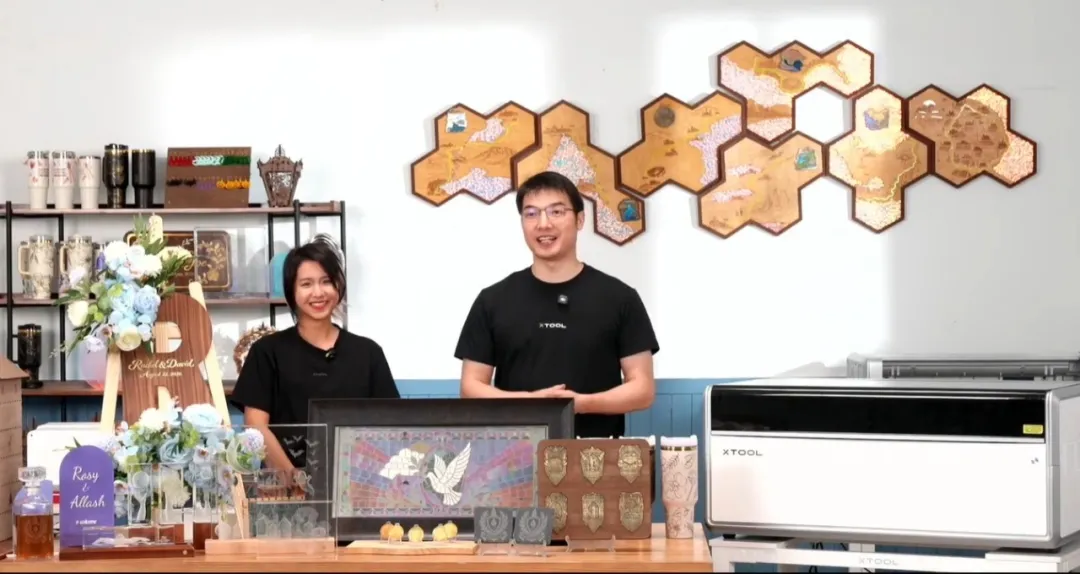
xTool CEO Wang Jianjun, right.
Nanjixiong learned that on the morning of October 29, 2026, xTool held a global livestream in which CEO Wang Jianjun unveiled the next-generation flagship xTool X1 laser platform. Its striking feature is high-speed fine engraving at 6,000 mm/s across a large 615 × 320 mm working area.
With Bambu Lab's R1 launch this year, desktop laser engraving has also gained a major technology hardware player.
Interestingly, Bambu Lab's first printer in 2022 was also called X1. In the four years between these two X1 products, desktop manufacturing has changed dramatically.
Wang Jianjun conveyed an important message: xTool wants to become an underlying platform for personal creative tools, beyond a laser engraver brand. X1 carries this strategy, with capabilities expanded through modular upgrades rather than replacement generations.
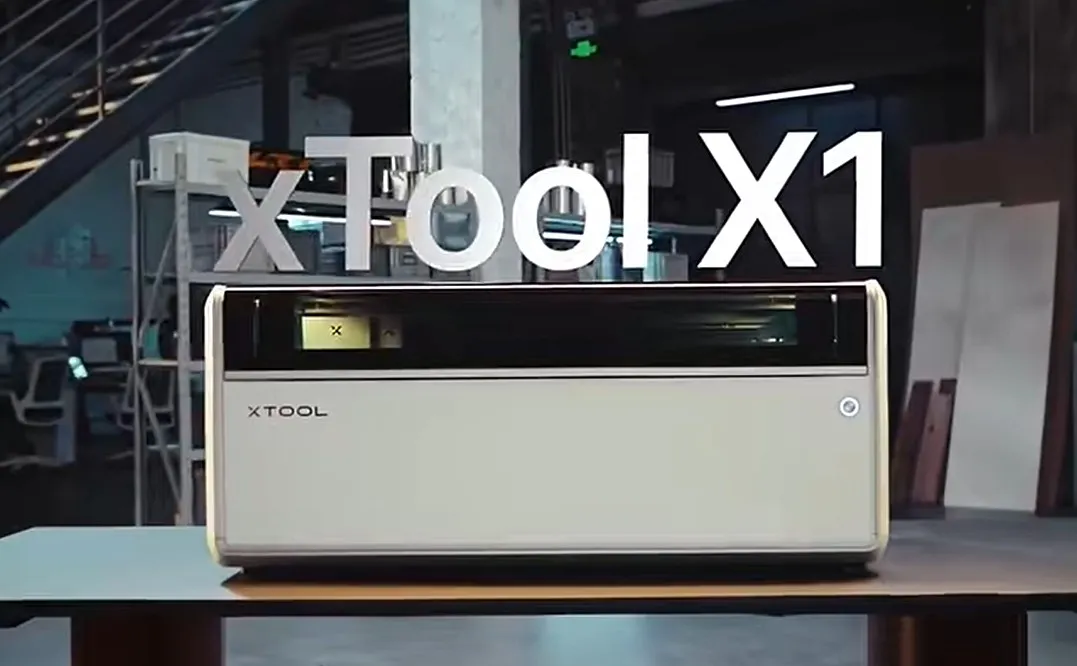
At this launch, Nanjixiong asks: how different are the underlying technologies of 3D printing and engraving, which both turn digital drawings into objects? And what new expectations does xTool's hybrid architecture set for desktop creation?
Gantry Versus Galvanometer: How Difficult Is 6,000 mm/s Across a Large Area?
Controlling printhead movement along a path is fundamental to 3D printing. Engraving poses a different precision challenge.
A small printing deviation affects dimensions and surface quality. A 1 mm engraving error, such as off-center lettering on a ring, may ruin the piece. Photo engraving places even greater demands on scan-line continuity.
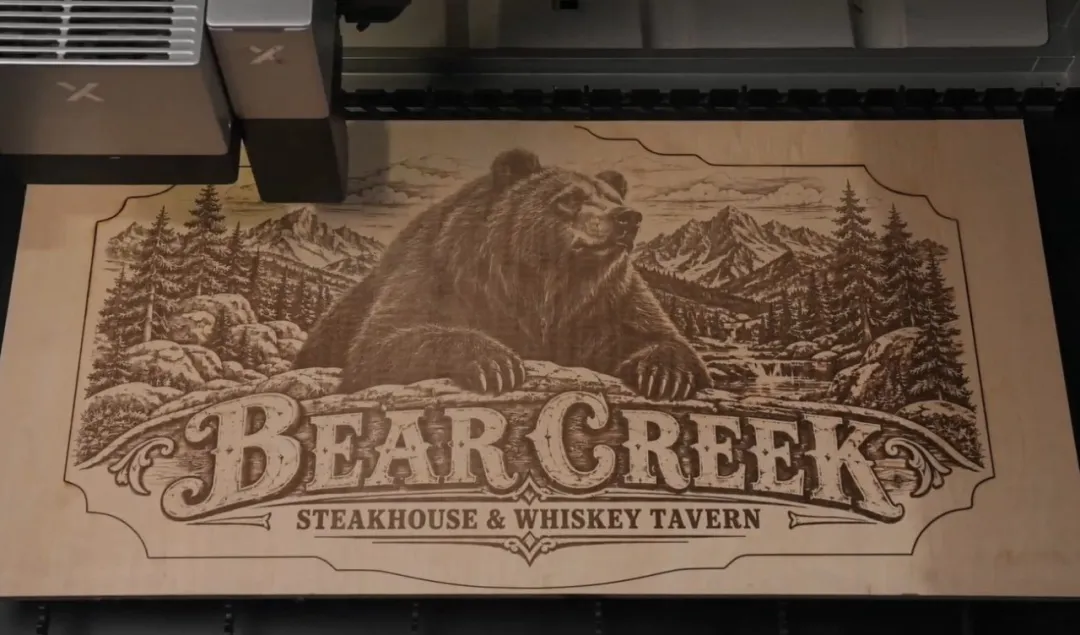
Maintaining precision while enlarging the area and raising speed has long been a difficult trade-off.
Conventional approaches are a gantry, which moves the laser mechanically over a large area but is limited by inertia; or a galvanometer, which rapidly moves mirrors to steer the beam but usually covers a small region.
Combining them sounds ideal and exists industrially, but is extremely difficult on a desktop. Galvanometer modules weigh far more than ordinary laser heads, adding substantial load. Rapid stops and turns with this weight, while preserving beam accuracy, challenge motion control. Mechanical gantry motion and optical scanning also have very different responses and controls.
xTool's answer is Hybrid Motion.
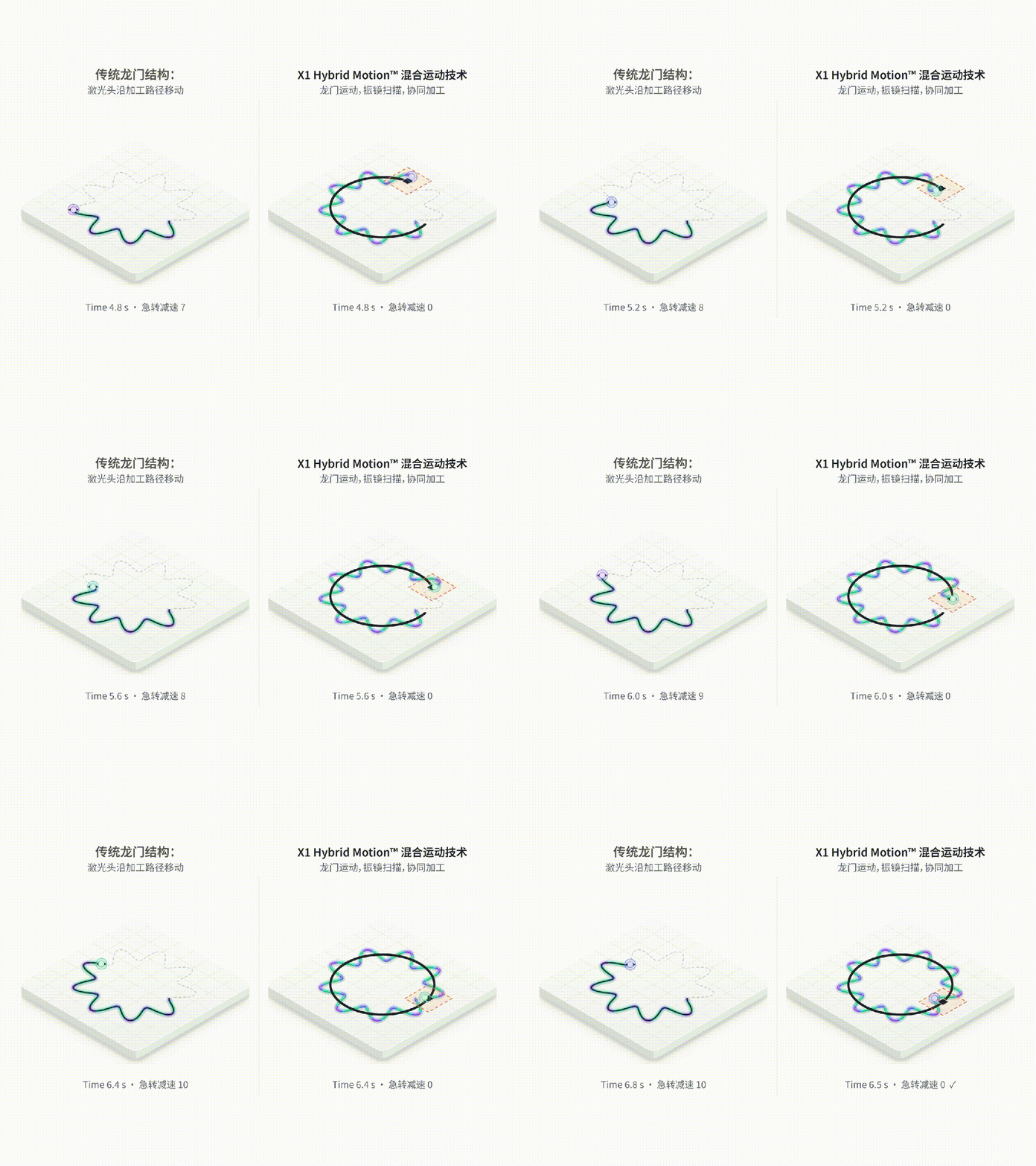
It integrates the gantry and galvanometer into one four-axis coordinated system, achieving what the company presents as the first desktop fine engraving at 6,000 mm/s across 615 × 320 mm. Users need not sacrifice speed for size or buy several machines to expand capability.
Nanjixiong also noticed the X1 replaces conventional assembled sheet metal with an integrated aluminum alloy frame made using 4,000-tonne high-pressure die casting. A structure of nearly 100 parts and 268 screws becomes three die-cast parts. The aim is to reduce assembly tolerances and prevent long-term precision drift.
The Deep Challenges of Multi-Source Integration
Printing controls extruders and nozzle temperature; engraving manages light with different wavelengths and characteristics.
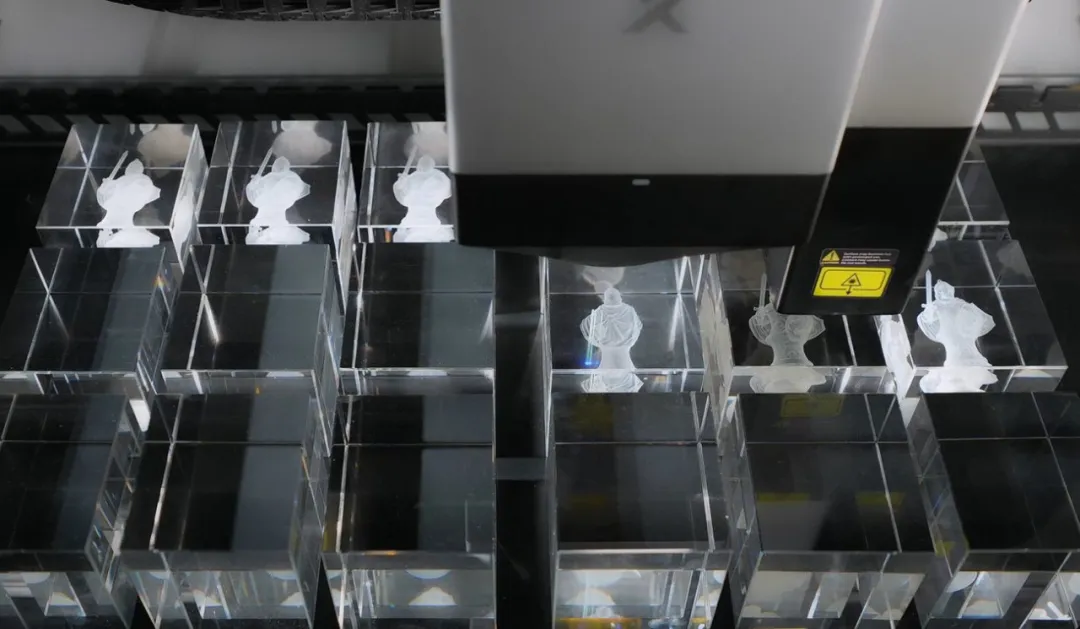
Wood, metal, and glass respond very differently to wavelengths. Interchangeable modules are an obvious way to provide multiple laser capabilities, but interchangeability does not ensure accurate operation in one machine. Different sources have different optics and processing requirements. After switching, how can they align with the same location and satisfy their individual focusing requirements?
X1 uses xTool's LaserSwap multi-source architecture. Official disclosures cite more than 50 optical-path design iterations and over 1,000 calibration tests.
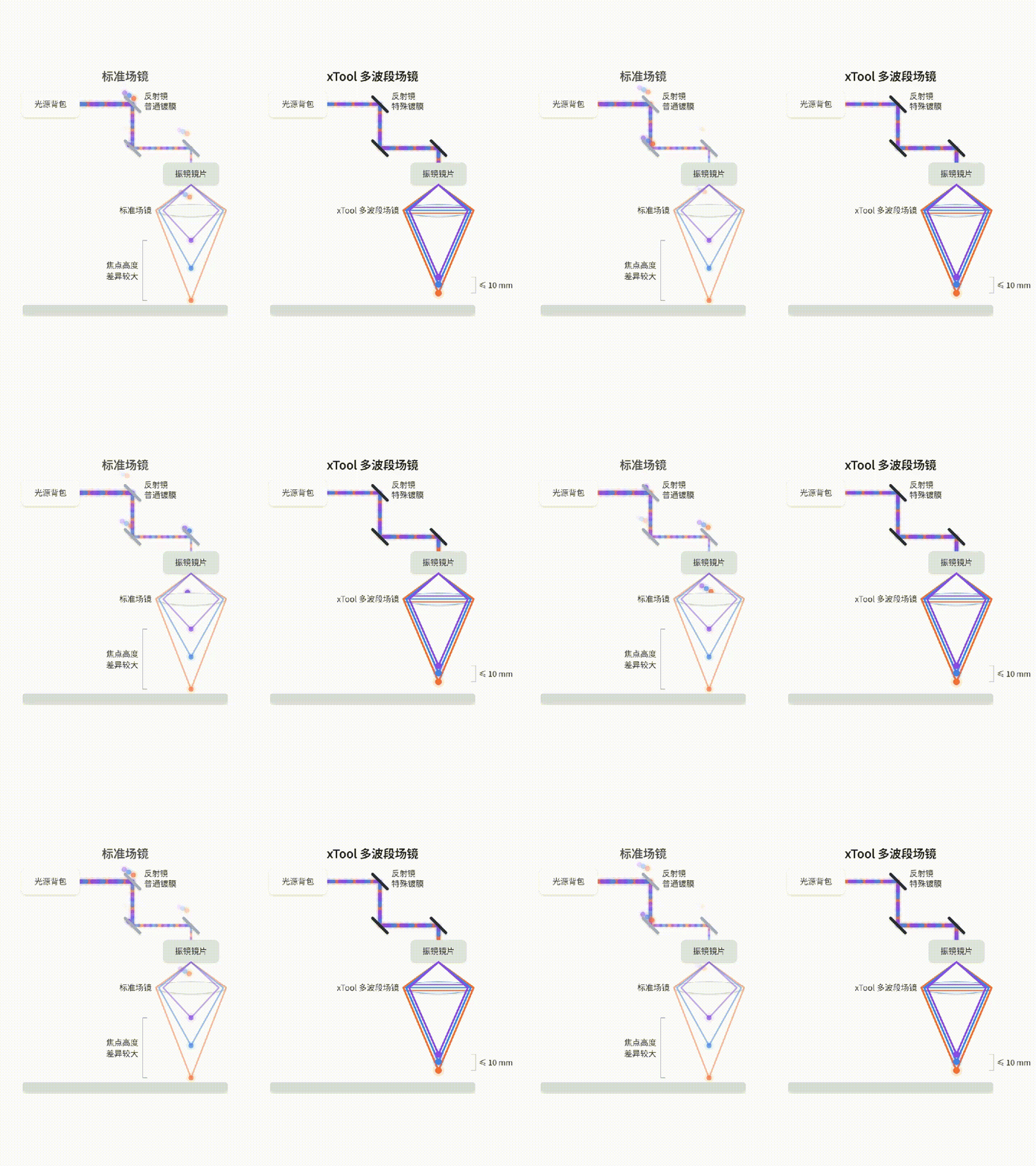
Putting different sources into a desktop machine is relatively straightforward; making them cooperate throughout the system is difficult. It tests expertise in precision optics, laser processes, and integration.
From Cutting Wood to Engraving Almost Anything: The Materials Library as an Invisible Advantage
Printing consumables are relatively standardized—PLA, PETG, ABS, TPU—selected in a slicer.
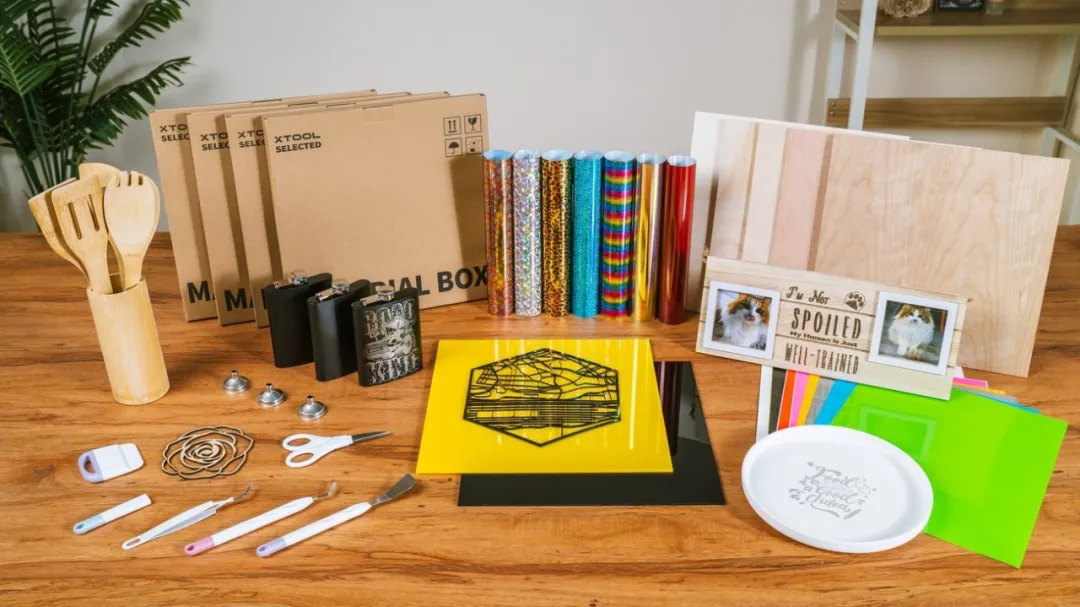
Engraving handles an enormous variety of existing objects, from wooden boards to insulated cups and leather. Even boards vary in thickness, color, density, and coatings, changing required parameters.
Knowing the material is only the start. Finding optimal parameters is the central barrier.
xTool draws on tens of thousands of material parameter sets accumulated over years. This less visible asset helps beginners achieve results with less trial and error.
The Future of Desktop Creation
A strong individual technology is not enough. Reliable performance after complete-system assembly is the real test.
Faster printing requires extrusion, cooling, and quality to be matched again. In engraving, gantry vibration affects beam position, switching sources requires absolute positional consistency, and surface height changes affect focus.
Safety is even more critical. Laser processing involves high-energy beams, combustion, and toxic fumes. Different materials at different powers pose different risks. An enclosure alone is insufficient: real-time monitoring must detect abnormalities and respond immediately, demanding sophisticated sensing and control.
Nanjixiong's Commentary
The X1 reminds desktop equipment manufacturers that the logic of cross-category competition has changed. Companies are compressing industrial capabilities into desktop sizes and prices.
What most impresses Nanjixiong is the system-level engineering ability demonstrated by Chinese manufacturers in making a difficult hybrid architecture work, beyond the 6,000 mm/s figure or 50 iterations.
Integrating gantry and galvanometer, combining sources in one platform, and making parameter optimization easy require substantial R&D investment and demanding supply-chain and manufacturing engineering.
Wang Jianjun's central message was that xTool has redesigned desktop laser equipment's underlying architecture. Hybrid Motion addresses speed versus area; LaserSwap addresses source coordination; UniCast Frame addresses lasting precision. Each is difficult alone. Achieving all three in one desktop device is X1's real technical barrier.
AI-translated from an article by Xiaoruanxiong on Nanjixiong, originally published on 2026-10-29. Text and images retain the original source attribution.
Read the original Chinese article |



 Record number | ©2024 panda3dp Team. Powered by panda3dp