On November 9, 2026, Nanjixiong learned that filament maker Protopasta recently clarified the difference between conductive and static-dissipative filaments for 3D-printed electronics. Conductive materials have low resistance and carry current, making them suitable for low-voltage circuits and capacitive-touch buttons. Dissipative materials have higher resistance and slowly bleed off static charge. They are used for parts near sensitive components, such as PCB trays, assembly fixtures, and device enclosures. Protopasta cautions that using a conductive material indiscriminately is not appropriate for ESD protection; material selection should follow the part's function.
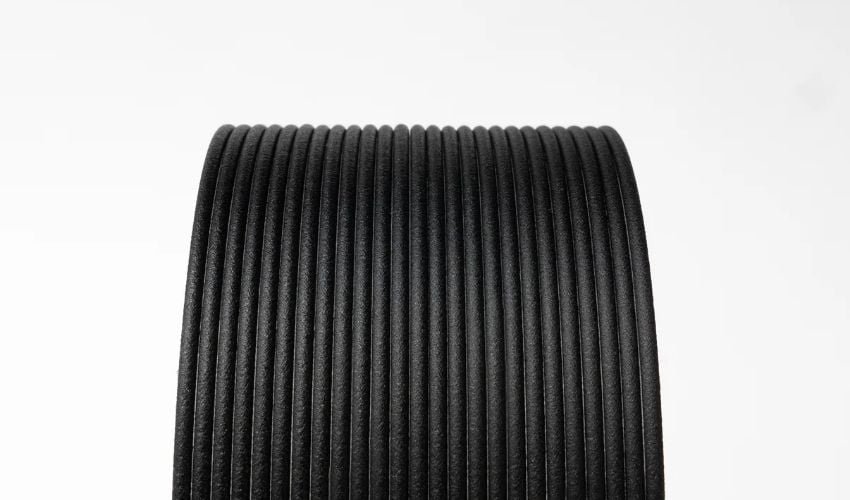
Using its conductive PLA as a base, Protopasta developed three static-dissipative filaments: Static Dissipative PLA, Static Dissipative Carbon Fiber PLA, and Static Dissipative PETG. Their surface resistance ranges from 10⁴ to 10⁶ Ω, within the ESD application range. The carbon-fiber version is stiffer and is recommended for use with an abrasion-resistant nozzle. All three can be printed with ordinary PLA/PETG settings and work on mainstream desktop printers. Since June 2026, Protopasta has also changed its spools to recyclable plastic sides with a paper core, compatible with automatic material systems such as Bambu Lab AMS. The company purchases raw materials, compounds the pellets itself, uses carbon black to tune resistance, and measures resistance batch by batch before shipment.
Nanjixiong's view Factories making electronics fixtures can now directly 3D print ESD parts instead of machining them from aluminum on a CNC machine.
AI-translated from an article by Kuaixiong on Nanjixiong, originally published on 2026-11-09. Text and images retain the original source attribution.
Read the original Chinese article |



 Record number | ©2024 panda3dp Team. Powered by panda3dp