Editor's note: Cultural-tourism merchandise has long faced a challenge: when heritage-inspired products rely on conventional molds and injection molding, costs and lead times are high, and it is difficult to customize products for individual visitors.
Nanjixiong learned that a 3D printing booth attracted many visitors at the cultural-products exhibition of the 9th Silk Road (Dunhuang) International Cultural Expo. According to Xinhua News Agency, the products come from a 3D printing company on the outskirts of Dunhuang. By closely combining 3D printing with Silk Road culture, the company is giving the ancient culture of Dunhuang a more vivid form for visitors.
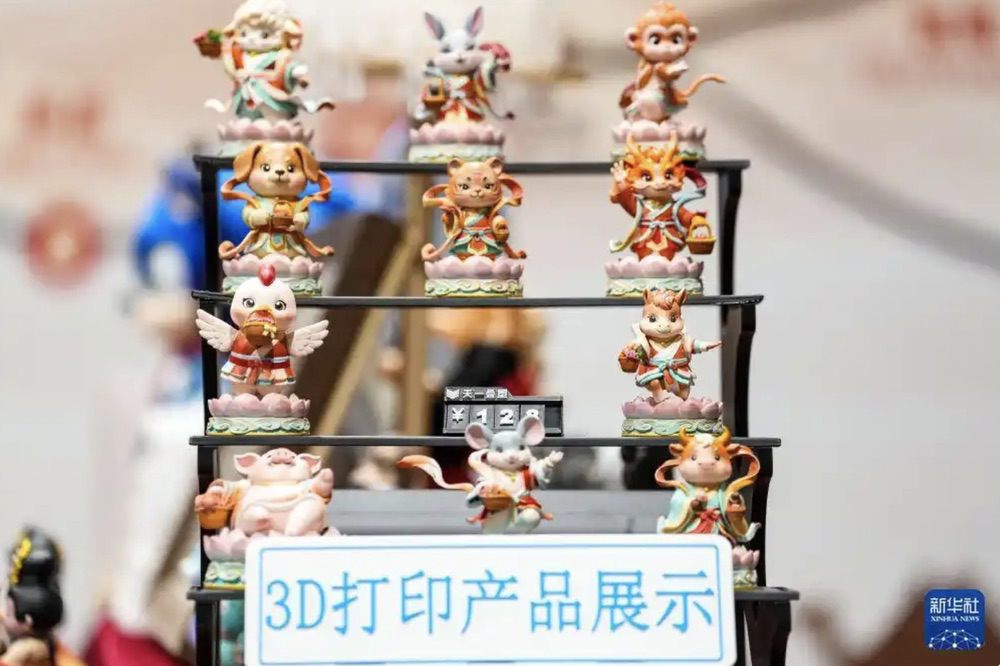
△ A 3D printing booth displaying cultural products at the cultural-products exhibition of the 9th Silk Road (Dunhuang) International Cultural Expo, photographed on November 3. (Photo by Xinhua News Agency reporter Lang Bingbing)
On site: a complete workflow from digital modeling to physical color finishing
Xinhua's photographs show the complete production chain for 3D-printed cultural products:
Design and parameter tuning: Staff use computers to create 3D models of cultural products while adjusting operating parameters on the 3D printers. This means that complex patterns from murals and fine folds in a Buddha statue's garments, for example, can first be converted precisely into digital models.
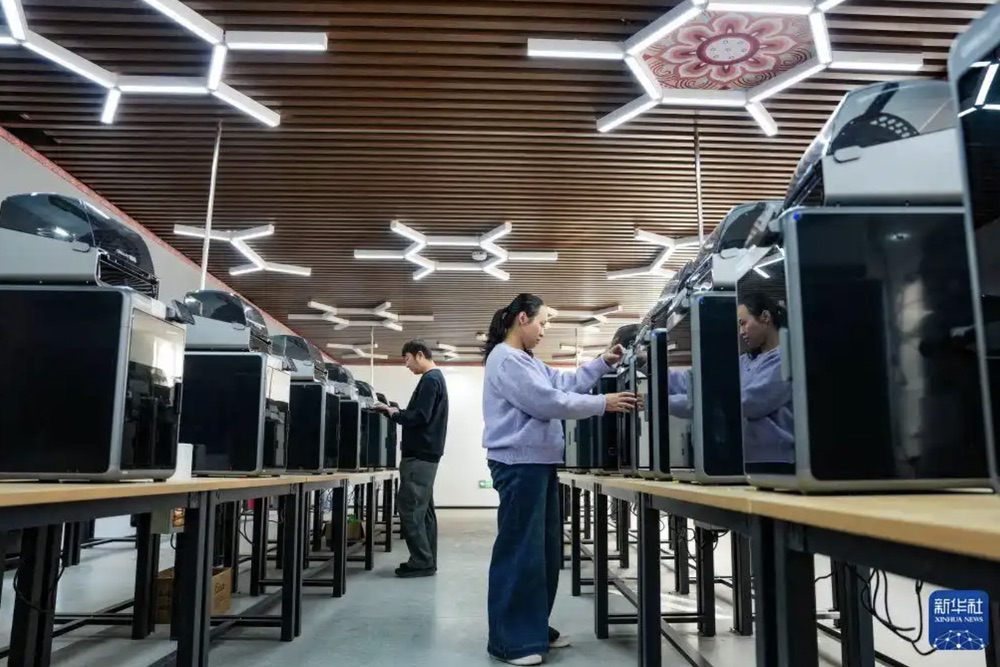
△ A staff member adjusts the operating parameters of a 3D printer. (Photo by Xinhua News Agency reporter Lang Bingbing)
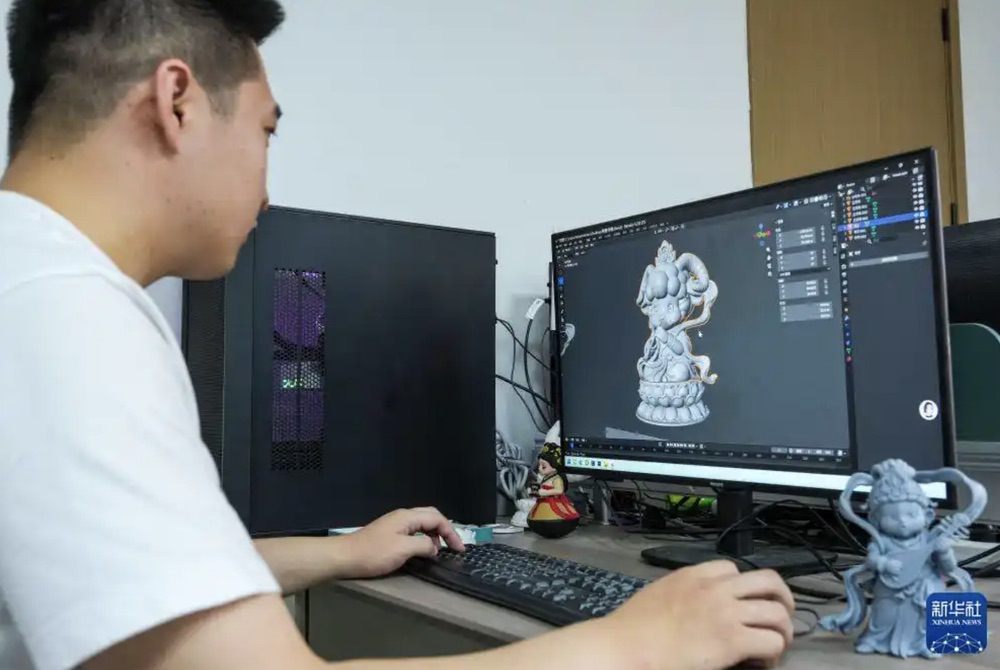
△ A staff member creates a 3D model of a cultural product. (Photo by Xinhua News Agency reporter Lang Bingbing)
Printing and forming: As the equipment runs steadily, the intricate cultural products begin to take shape.
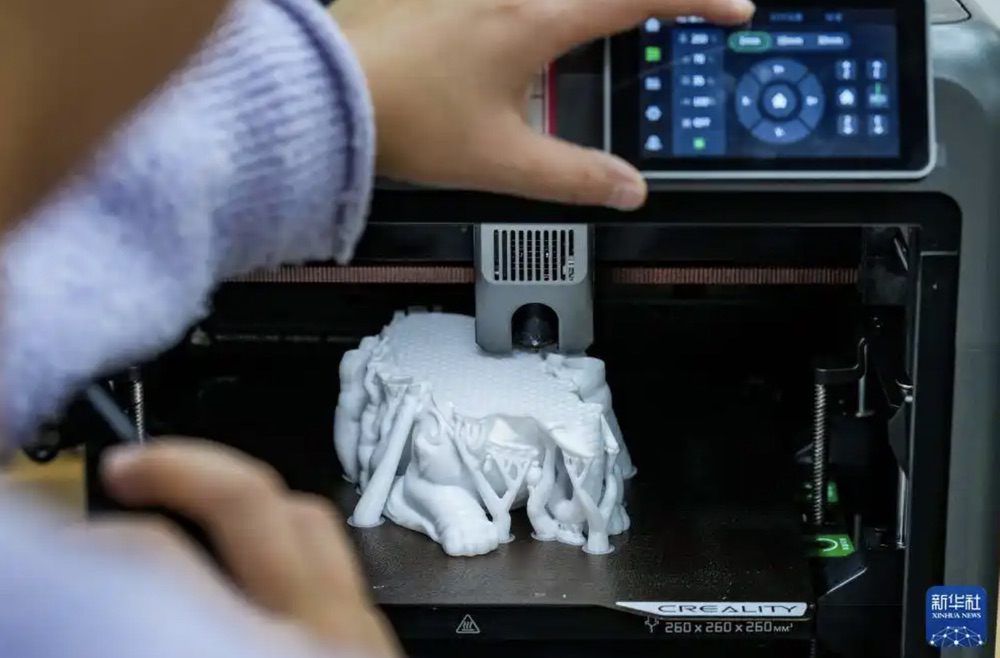
△ A staff member observes the 3D printer in operation. (Photo by Xinhua News Agency reporter Lang Bingbing)
Finishing and coloring: Freshly printed, uncolored parts are carefully spray-painted and colored by staff. Classic Dunhuang elements such as the Nine-Colored Deer are transformed from single-color models into vivid, lifelike pieces.
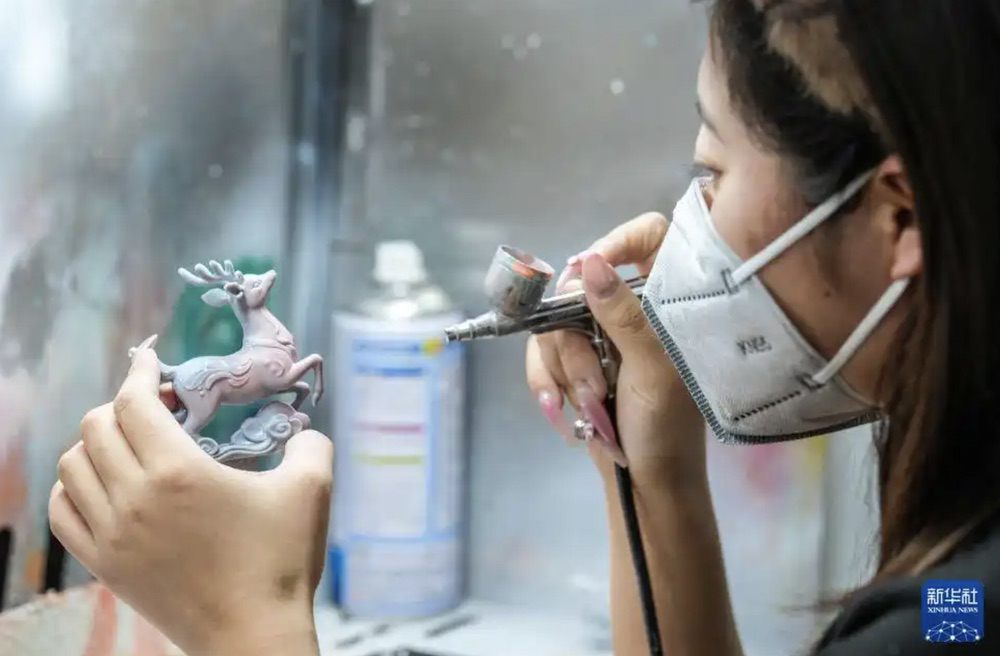
△ A staff member spray-paints and colors a Nine-Colored Deer cultural product. (Photo by Xinhua News Agency reporter Lang Bingbing)
At the exhibition, the distinctive cultural products were neatly displayed and successfully drew the attention of many visitors. They demonstrate the appeal of modern technology and show how technology can bring new life to Silk Road culture.
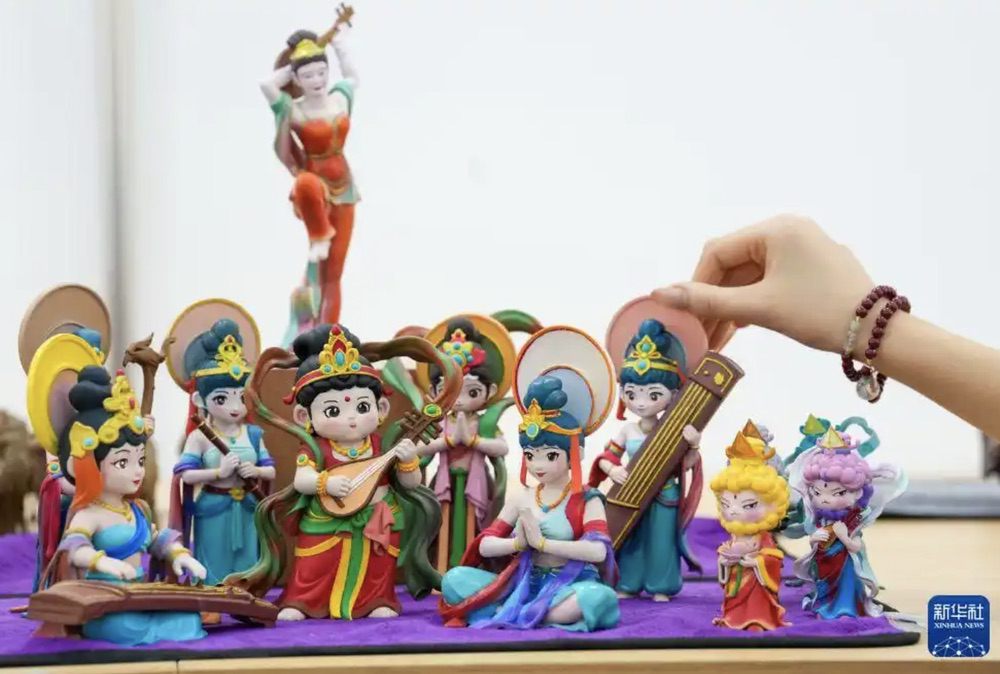
△ A staff member arranges a group of products featuring Dunhuang cultural elements. (Photo by Xinhua News Agency reporter Lang Bingbing)
Nanjixiong's observations: 3D printing is becoming a standard tool for cultural-tourism products
For a long time, souvenirs at cultural and tourist attractions have often been highly homogeneous, much like mass-produced goods from the Yiwu small-commodities market. Distinctive, well-made products that truly reflect local culture have often been difficult to bring to market because of the high cost of molds.
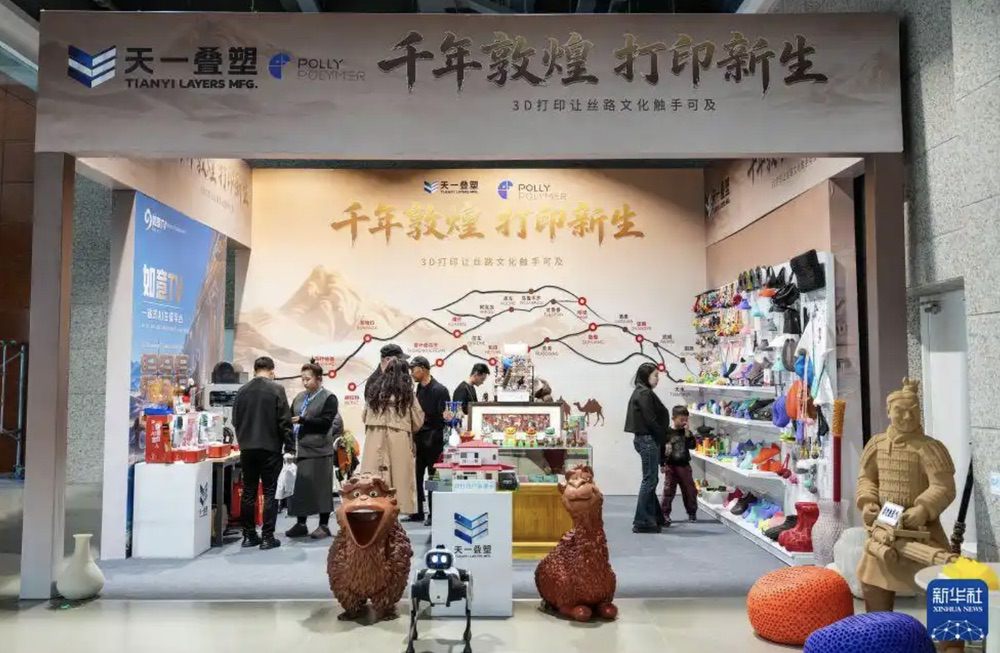
△ Visitors view cultural products at a 3D printing booth. (Photo by Xinhua News Agency reporter Lang Bingbing)
This company, based on the outskirts of Dunhuang and entering the cultural-tourism sector through 3D printing, offers a practical approach for the industry:
• Complex geometry: Dunhuang motifs such as the Nine-Colored Deer, flying apsaras, and caisson ceilings have highly complex artistic forms that can be difficult to reproduce in fine detail with conventional molds. 3D printing—particularly vat photopolymerization or high-precision FDM—can work directly from digital models and faithfully reproduce the original designs.
• Less inventory pressure: Cultural-tourism products have clear peak and off-peak seasons. With 3D printing, products can be made on demand and in small batches. Attractions do not need to place large orders months in advance and tie up capital in inventory; they may even be able to take orders and print products at the exhibition itself.
• Customization: Combined with 3D scanning and human modeling, the technology could let visitors buy more than a standard Nine-Colored Deer: they could incorporate their own stories and connection to Dunhuang into a product, enabling truly personalized customization.
From 3D-printed replicas displayed as concepts in museums several years ago to a production tool now taking center stage at cultural expos, the commercialization of 3D printing in the cultural sector is becoming clearer. When the unique character of ancient culture meets the flexibility of modern manufacturing, the 3D printing business in cultural tourism is only just beginning.
Images and information: Xinhua News Agency
AI-translated from an article by Xiaoruanxiong on Nanjixiong, originally published on 2026-11-12. Text and images retain the original source attribution.
Read the original Chinese article |


 Record number | ©2024 panda3dp Team. Powered by panda3dp