“Can we still make money with multicolor printing?”
That was the question Jinqi Toys' factory manager asked general manager Zeng Hao when the company began experimenting in 2025. Less than a year later, it had an answer.
The previous wave of print farm growth rewarded businesses that quickly followed popular models. The new opportunity increasingly favors those able to deliver difficult products reliably and at low cost. Operators are asking which products command higher prices, how to save material and where profits come from.
Jinqi Toys uses more than 2,000 Snapmaker U1 machines for multicolor production. In under a year, multicolor products rose from approximately 5% to over 50% of sales.
Less than 30% of SKUs, more than 50% of sales
Among its thousands of SKUs, multicolor items represent under 30% but contribute over half of sales. Before the U1 was introduced in 2025, they accounted for approximately 5%.
Historical 2025 prices were about RMB 0.4, 0.6 and 0.8 per gram for two-, three- and four-color products, versus about RMB 0.15 for single-color items, offering more pricing room.
Note: These are the customer's historical prices, not industry benchmarks. Comparisons by weight do not account for differences in model complexity or post-processing.
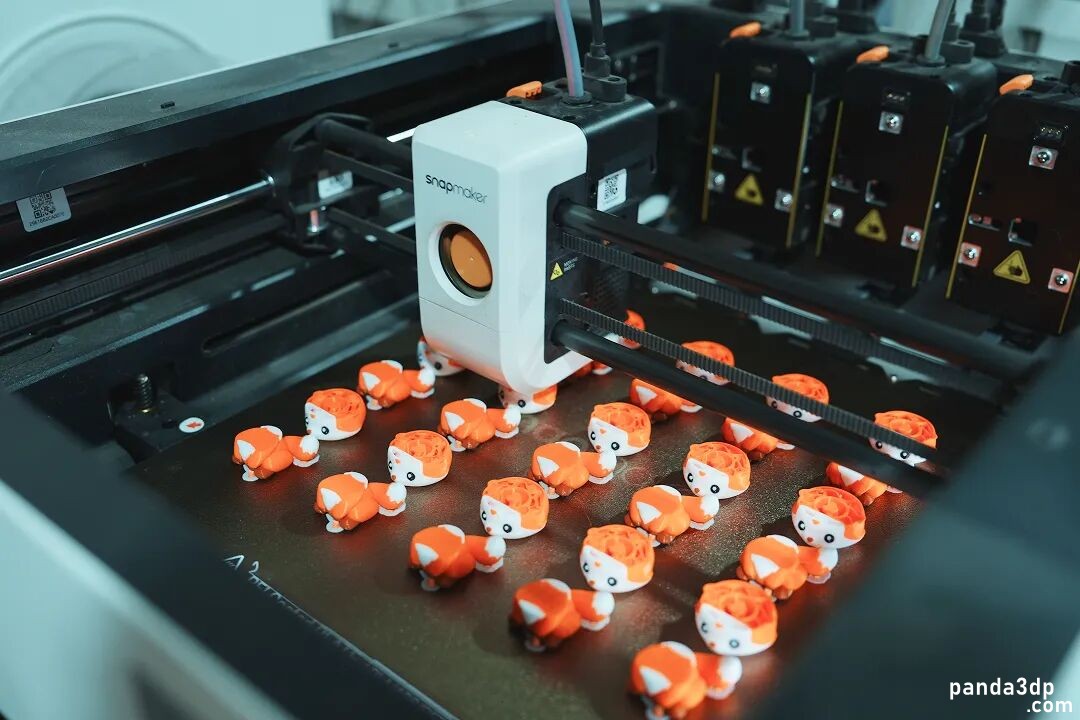
Multicolor orders in production at Jinqi Toys.
Higher prices do not automatically mean higher profits
Initially, Jinqi introduced approximately 300 single-head printers that changed filament through one nozzle. Color changes became a major obstacle. Every change required loading and purging material. On some orders, purge waste exceeded the filament used in the model itself.
Across 300 machines and tens of thousands of jobs, this waste eroded margins. Remembering the bags and baskets discarded, Zeng recalled the factory manager questioning whether multicolor printing could be profitable.
Estimated annual waste savings of RMB 2,000–3,000 per machine
Snapmaker U1 provided an alternative. Its SnapSwap system has four independent printheads, each loaded with a different color or material. Switching heads takes five seconds without the filament purging associated with a shared nozzle, allowing near-zero purge waste.
Zeng initially backed ten U1s on Kickstarter and tested them on real orders.
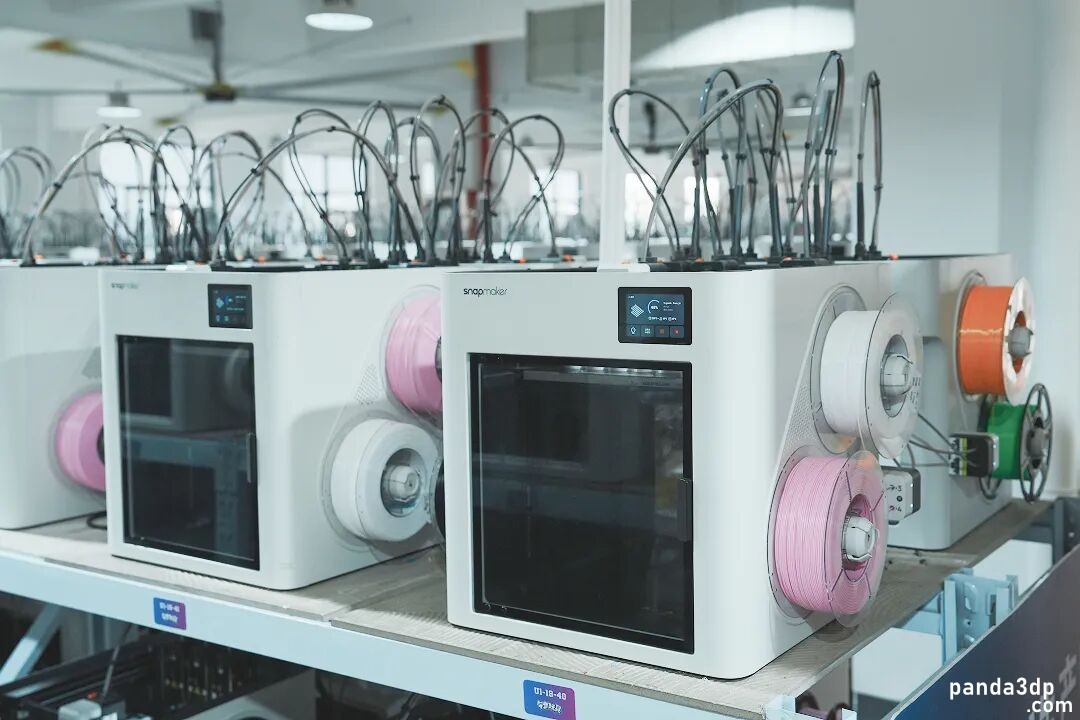
The first trial machines remain in use.
The initial results were encouraging. Jinqi estimated that material waste savings alone could reach RMB 2,000–3,000 annually per machine in its production environment, nearly half the cost of a machine, according to Zeng.
Note: This annual saving is the customer's estimate for waste costs alone.
Depreciation and rent are relatively fixed in the short term, while material expenditure rises with production and color changes. With other conditions similar, less waste lowers unit cost and improves order gross margins.
The independent toolheads also reduce a color change from 120 seconds to five seconds, improving production efficiency.
Note: Switching figures are typical results from Snapmaker laboratory testing.
From ten test machines to approximately 2,300
Beyond lower waste and greater speed, reliability exceeded expectations. Zeng described bright colors, fine layer lines and good tolerance control for precision products.
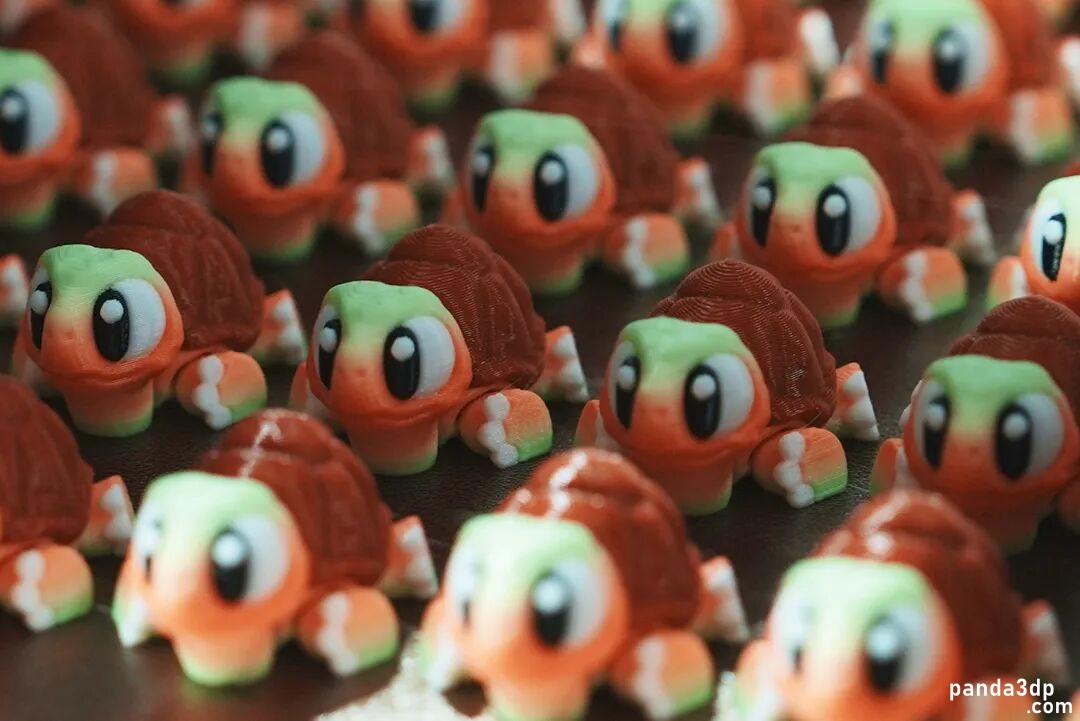
Products batch-printed with the U1.
Snapmaker's automatic multi-head offset calibration holds offset error to approximately 0.04 mm as the four heads alternate, supporting precise color blocks and clean edges. Intelligent calibration, more than ten fault-detection sensors and AI monitoring for spaghetti failures and foreign objects on the bed provide additional confidence for farm operations.
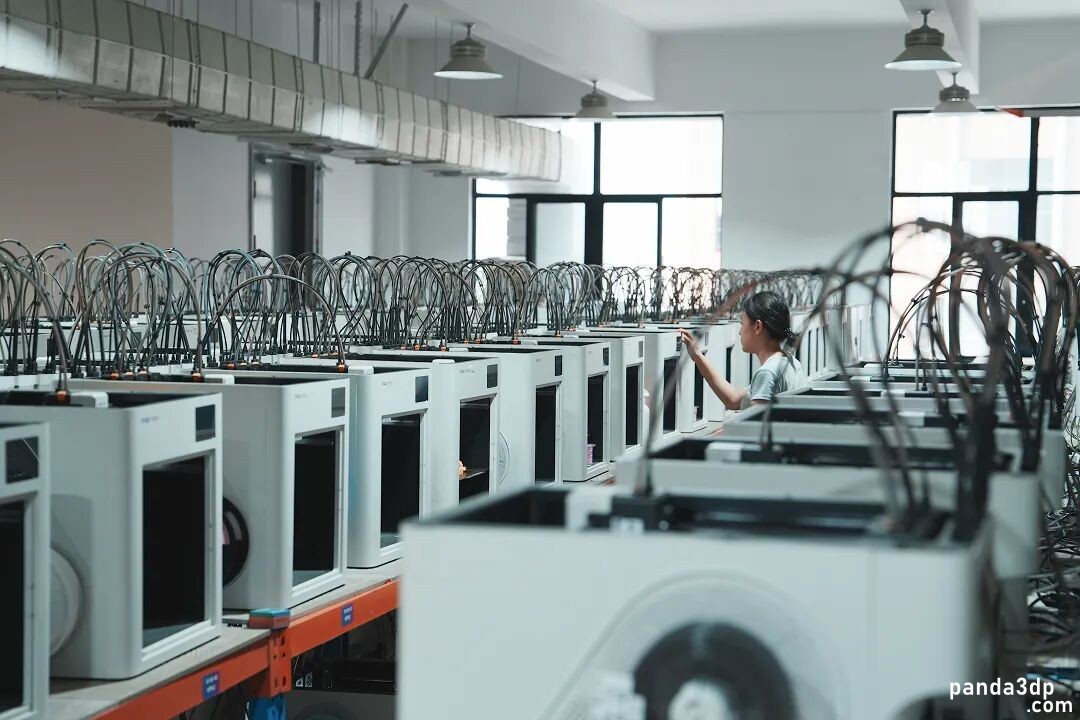
A Jinqi employee checks print jobs.
Jinqi said some products require 700–800 or even more than 1,000 color changes, which the U1 can complete without failure. Zeng said the first U1s had run reliably for 5,000–6,000 hours. In comparison, its single-head machines would typically experience several faults during 300–400 changes.
An occasional fault can be addressed manually on one machine, but at hundreds or thousands of machines the management cost grows and efficiency declines.
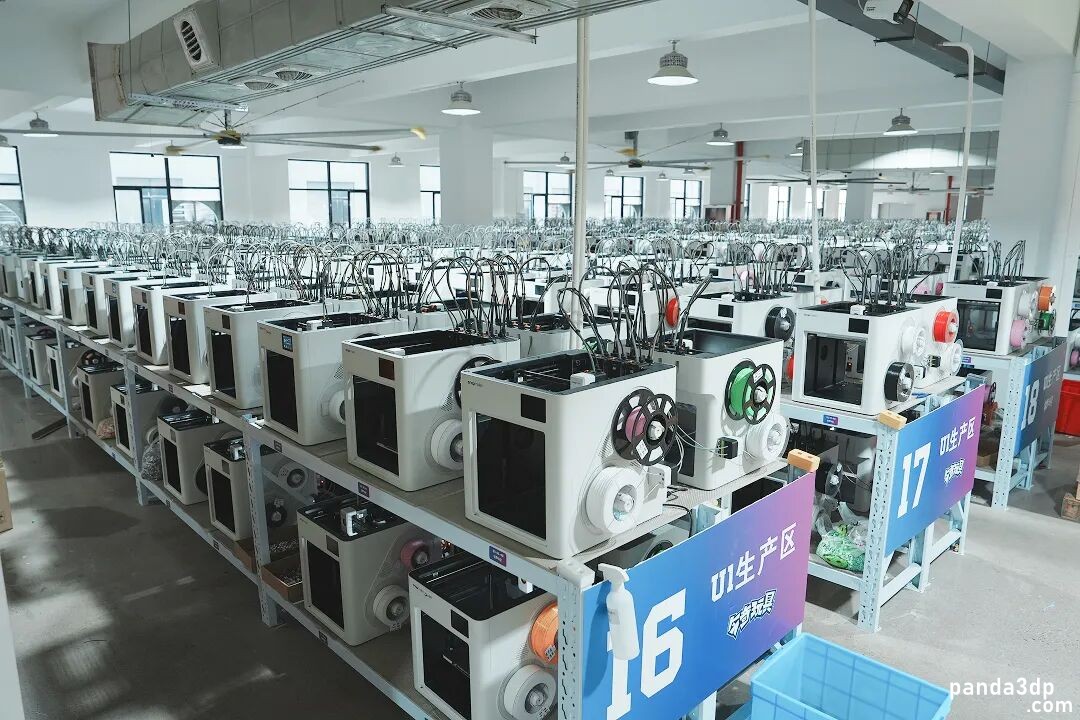
The expanded U1 fleet in operation.
To meet demand and handle frequent changes reliably, Jinqi expanded from ten tests to an initial deployment of 2,000 U1s and now approximately 2,300. The company said space constraints limit expansion; its current demand could otherwise require 5,000.
More color changes allow more flexible designs
Savings, speed and reliability also expanded design possibilities. An office reference book records models with different forms and colors. Since March, its main R&D effort has focused on multicolor products, including rainbow, two-color and three-color combinations.
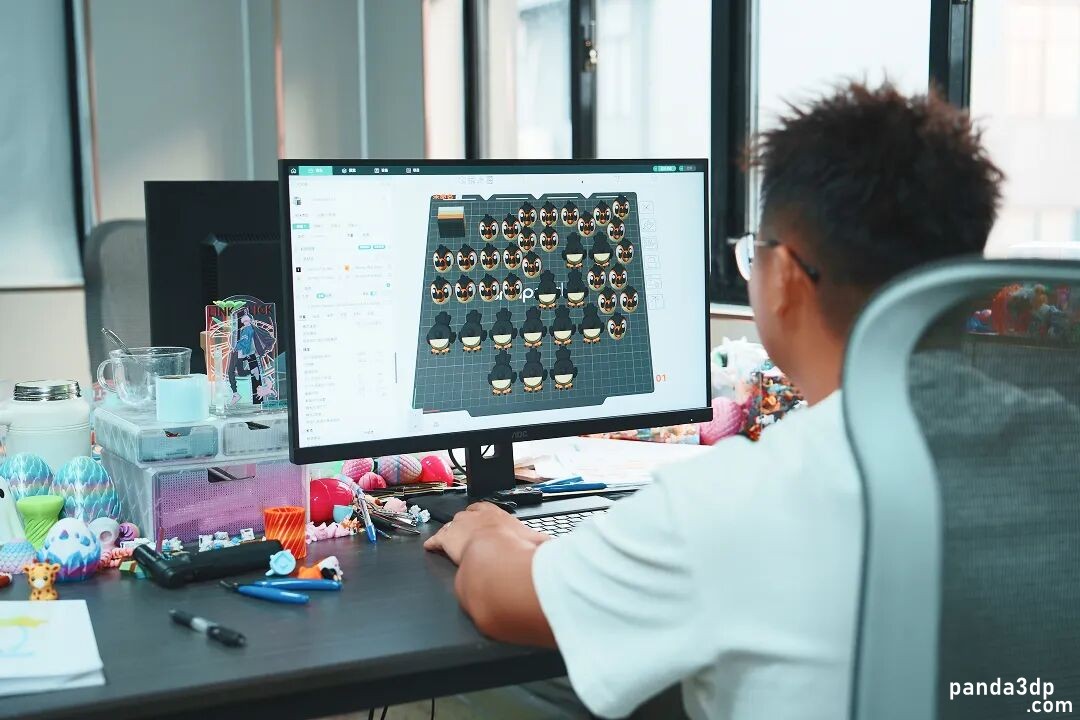
A designer adjusts a multicolor model.
With previous single-nozzle machines, products generally used only 30–40 changes because time, waste and fault risks accumulated. Current multicolor products can involve 400–500 changes, more than ten times the previous level. Designs once considered too costly or risky have become candidates for scaled production.
Note: These counts are estimates from model slicing, not the machines' maximum capability.
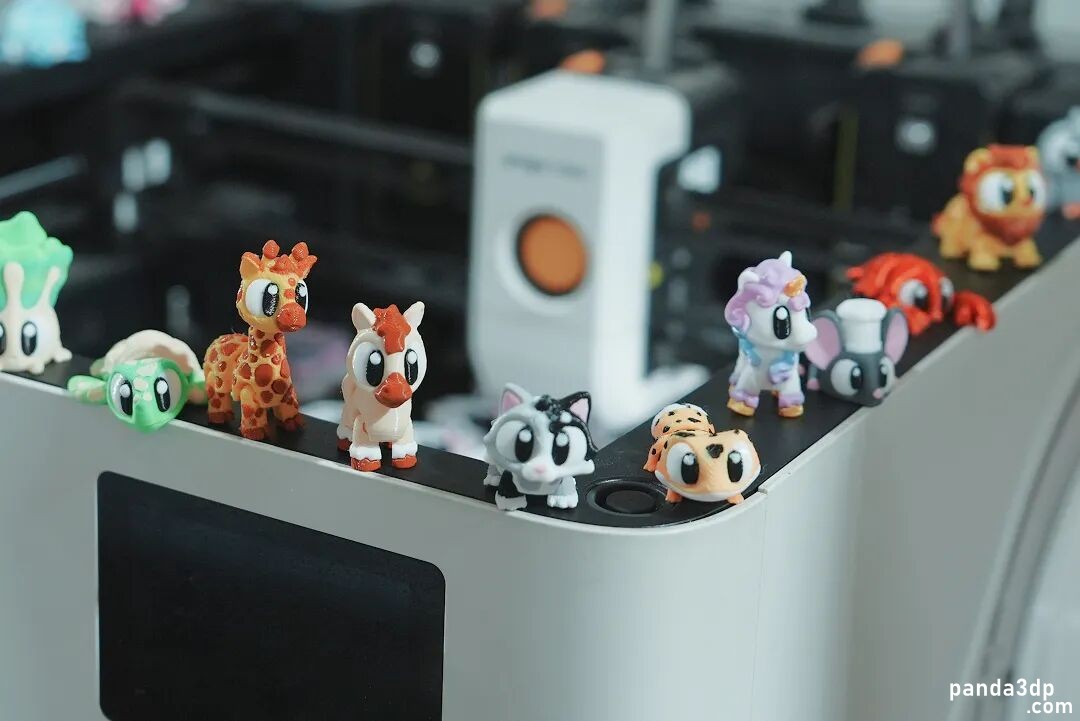
Multicolor animals printed on the U1.
Products are sold domestically and internationally, including articulated animals on 1688 and Amazon and customized ornaments. Zeng said experienced overseas customers were still surprised by their print quality, appearance and color, describing the products as “best on the market.”
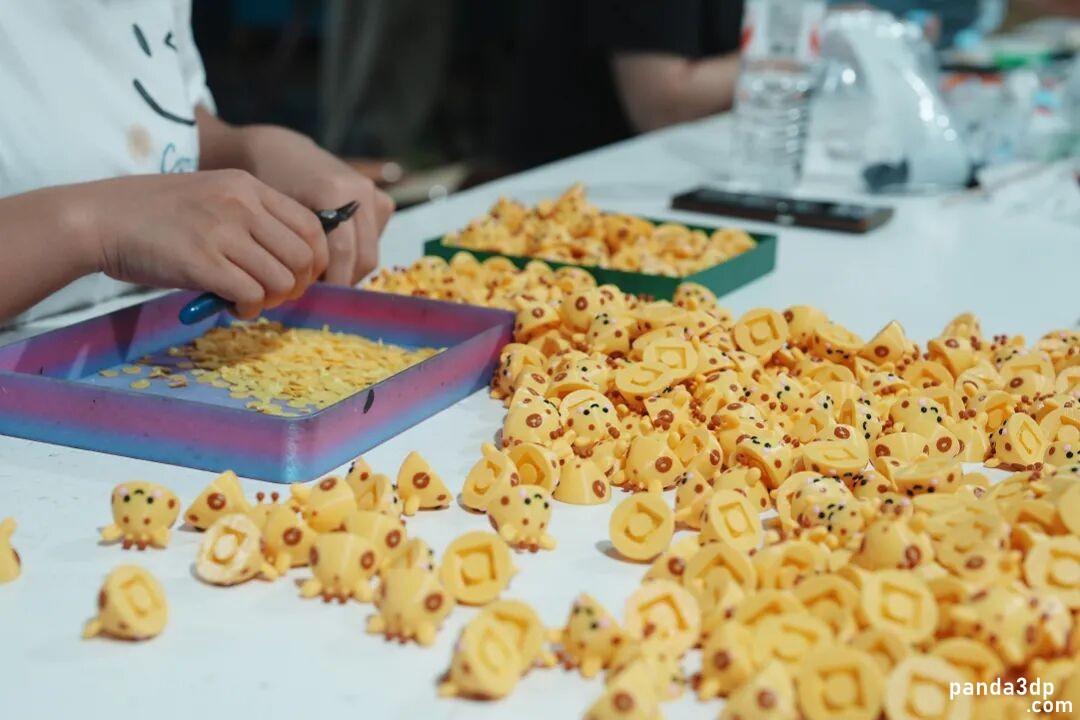
Employees process multicolor products.
Earlier capacity expansion with single-head machines proceeded cautiously—from five to ten, 50, 100 and eventually over 1,000. For multicolor, Zeng moved faster by introducing 2,000 U1s at once. Other farms need not replicate that scale or investment. They can begin with one machine and a real model to test whether the approach offers a new growth path.
AI-translated from an article by Kuaixiong on Nanjixiong, originally published on 2026-10-08. Text and images retain the original source attribution.
Read the original Chinese article |



 Record number | ©2024 panda3dp Team. Powered by panda3dp