From process specialists building their own agents to connecting customer needs with manufacturing execution, Quick AI is becoming an important platform for UnionTech's industrial AI applications.

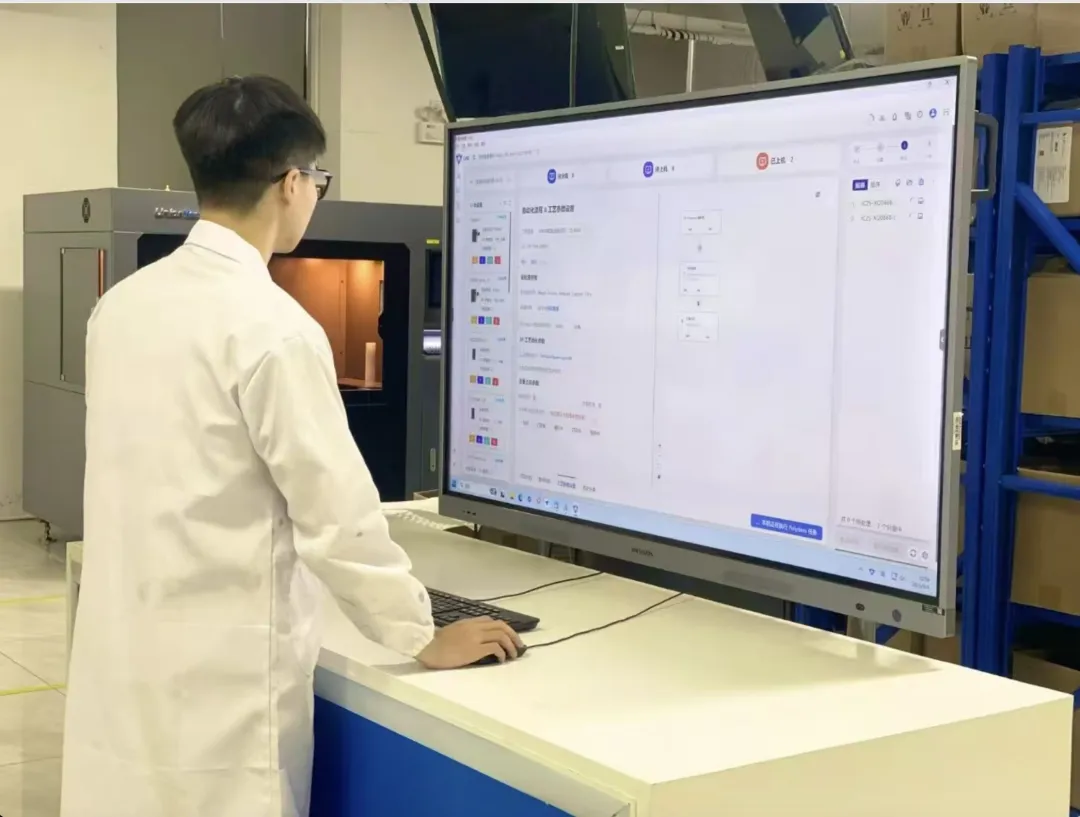
A complex part model does not immediately become a print job. Engineers must judge material suitability, orientation, supports, potential deformation and parameter adjustments, then test a feasible solution. At UnionTech, that previously took hours or days.
For projects supported by similar cases and experience, specialists can now use their own process agents to generate an initial plan within minutes. Engineers review it and arrange validation of key risks. This happens on Quick AI, UnionTech's enterprise Agent OS.
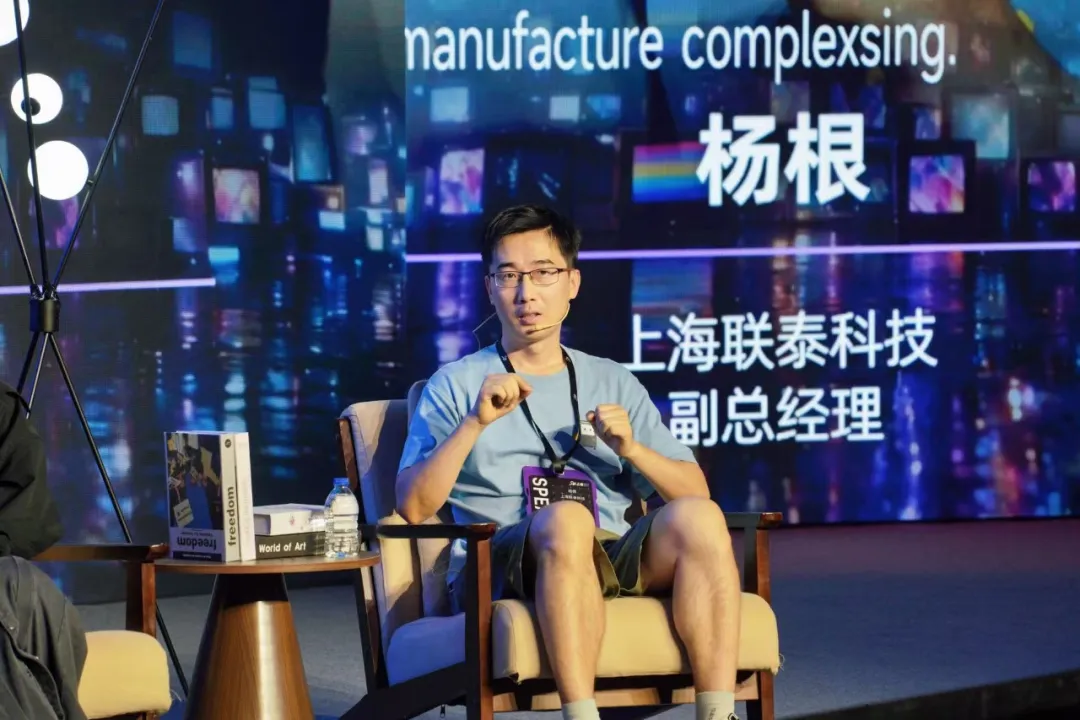
Yang Gen, deputy general manager and head of the digital center and AI operations, believes industrial printing is entering a new competitive stage. Equipment can produce increasingly complex parts, while customers require consistent small-batch delivery.
“Equipment determines what we can make, but quickly developing a solution for a complex project and delivering reliably also depend on engineering experience and workflow coordination,” Yang said. “Our AI work aims to organize these capabilities more effectively.”
Process experts turn experience into agents
Much important manufacturing knowledge resides in people's experience. The same material may need different treatment depending on wall thickness, geometry and use. Participants often know best why an adjustment worked or a support design failed.
Years of such experience form technical capability, but new projects still require finding knowledgeable engineers, searching records and making fresh judgments. Quick AI offers a new vehicle for that knowledge.
Specialists can create agents and continuously record processes, experiments and experience: materials, parameters, problems, adjustments and outcomes all become references for subsequent projects.
“In the past, a completed project usually left the final solution,” Yang said. “The reasoning in between is valuable too—why a part was oriented that way, why parameters changed, and which approaches were tried without success.”
Agents use records and similar cases to organize suggestions, helping engineers identify paths worth testing first.
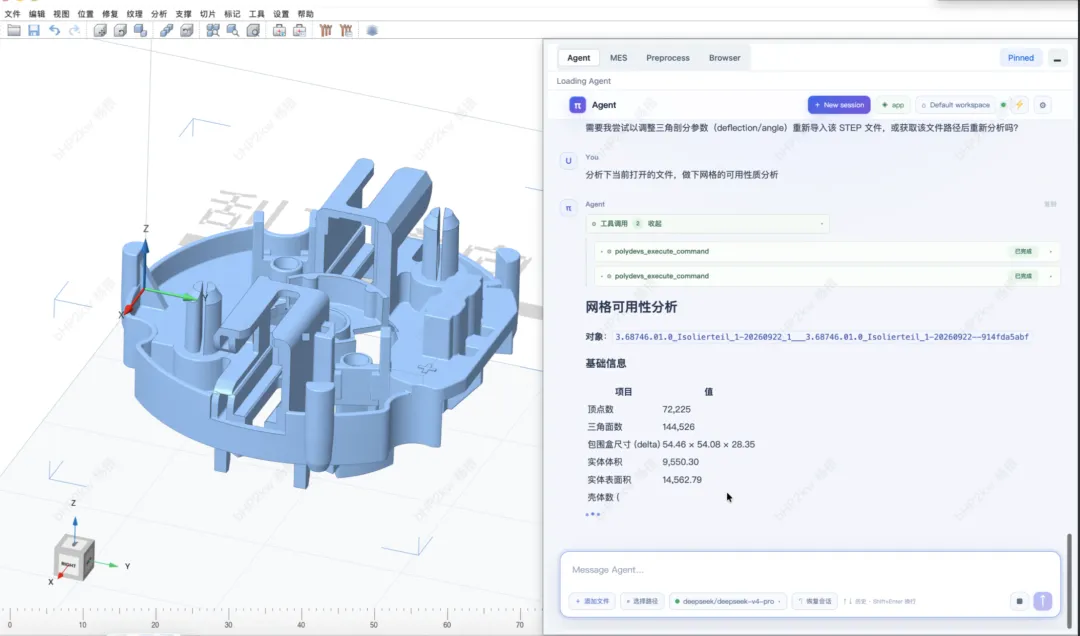
For projects with relevant history, preparation that previously involved extensive searching, discussion and exploration can be compressed to minutes. Engineers can focus on new structures, materials and critical risks.
“Minutes” refers to generating a plan, not completing all process validation. Complex work still needs review and testing. The difference is a faster, evidence-based starting point with less repeated trial and error.
“We want every project a specialist has completed to help the team handle the next one better,” Yang said.
AI needs a connected data chain
Process agents are an entry point. Broader manufacturing involvement also requires connections among business systems.
Customer requirements may be in emails, quotation information in another system, production progress at the factory and quality records with different staff. Even if AI understands each item, it must know the order, part and version to which it belongs.
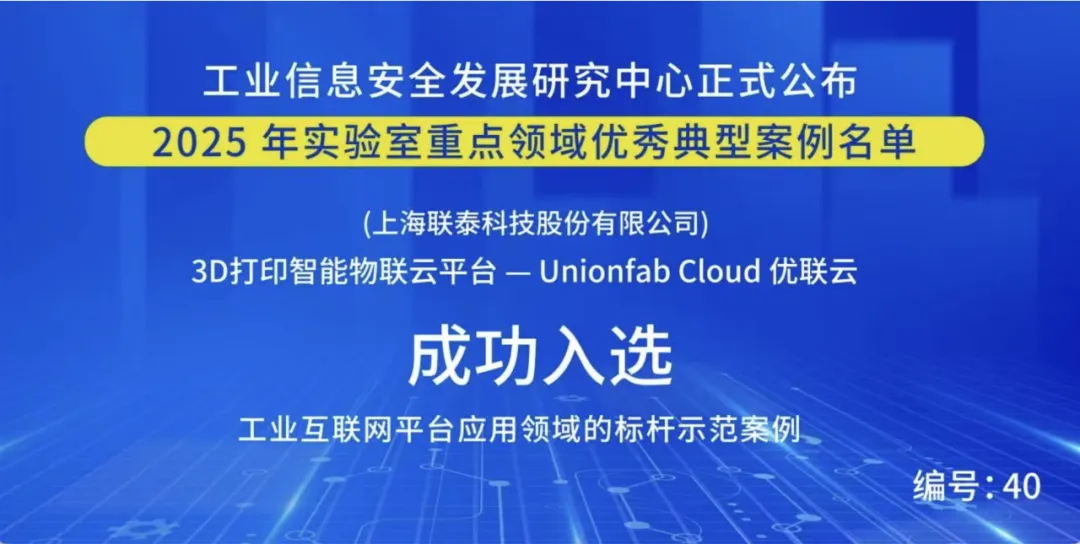
Nearly a decade of UnionTech digitization provides a foundation. Unionfab Cloud coordinates customers, inquiries, quotations, orders and supply chains. Unionfab ONE connects model processing, process configuration and equipment operation. The Auto product line develops dedicated algorithms and intelligent applications.
Quick AI organizes collaboration among agents, knowledge and business tools on top of this system, making existing capabilities easier to access. Cloud and ONE continue to handle commercial and manufacturing workflows, while Quick AI provides an interface for task understanding, knowledge retrieval and tool coordination. As interfaces and workflows improve, agents can participate in more activities.
“UnionTech has accumulated software tools, manufacturing experience and process data—nearly five million industrial part models and associated parameters,” Yang said. “Quick AI should help business users find and use these capabilities so AI connects with actual work.”
Quotation is an operating starting point. Unionfab uses automated quotations for some standardized needs, combining geometry, materials, process rules and cost calculations to reduce waiting. Special requirements and complex projects go to manual review.
These tools support future agents assisting with requirement interpretation, material selection and quotation preparation. Price commitments, key processes and quality decisions still need applicable rules and human confirmation.
Applications therefore progress through defined business tasks: solve a specific problem, validate it in real workflows, then expand use.
Unionfab brings AI into contact with real orders
UnionTech's overseas manufacturing service platform is an important validation setting. Requests begin with online contact and inquiries, move through automatic or manual quotations, orders and supply-chain coordination, and then production, inspection and logistics. Some jobs use UnionTech's own industrial printers; others use a network of hundreds of providers managed through Unionfab Cloud.
Each stage raises practical questions. Why did a customer reject a quotation? Which models repeatedly need manual modification? Was a quality requirement completely transferred to production? Why did an exception affect delivery?
These questions establish technical priorities and help assess whether tools work. If engineers still repeat extensive checks after a feature launches, improvement is needed. If preprocessing takes fewer steps but manufacturing is no more stable, further validation is required.
“Customers will not lower their quality and delivery expectations because we use AI,” Yang said. “They care whether the solution works, responses are faster and parts meet requirements.”
Unionfab provides real demand and feedback for R&D. Agent suggestions must be tested against production conditions, costs and quality, while new experience feeds process records.
UnionTech has also validated combinations of equipment, materials, software and processes in projects such as tire molds. Those practices support further intelligence. Its service platform and production settings form a continuous loop: business identifies problems, technology supplies tools and manufacturing results test effectiveness.
Manufacturing results allow experience to accumulate
Industrial AI must determine whether its judgments are effective. A model being processable in software does not guarantee reliable production. Finished-part quality, cost and lead time are the measures of process choices.
UnionTech is linking model features, materials and parameters, equipment conditions, quality and delivery outcomes. This helps explain why decisions succeeded or failed and which experience can be reused.
Within authorization and data security requirements, records can support knowledge capture, rule improvements and algorithm optimization. Quick AI's long-term value depends on this feedback. Richer project references and more complete validated experience improve support for new tasks.
“What we most want to retain is experience that helps the next decision,” Yang said. “After a project, the team's capability should also advance.”
Senior engineers' personal knowledge can gradually become accessible organizational capability. New staff can learn more quickly, and mature processes can be validated and extended across equipment, factories and customers.
UnionTech's AI approach aims to replicate manufacturing capability
UnionTech treats AI development as central to long-term competitiveness. Equipment and materials provide the foundation, software organizes executable processes, Unionfab supplies demand and delivery feedback, and Quick AI offers new ways to access engineering knowledge and tools.
Value ultimately depends on business outcomes: faster customer application adoption, engineers handling more projects, consistent quality and delivery, and mature solutions reaching more customers.
As Quick AI connects with existing digital systems, the company aims to link customer requirements, process judgments, equipment execution and outcome feedback so capability accumulates and can be replicated.
Industrial printing competition now extends beyond individual machines. Understanding needs quickly, delivering reliably and reusing experience effectively will increasingly influence growth. UnionTech's integration of AI into manufacturing addresses these issues.

AI-translated from an article by Beijixiong on Nanjixiong, originally published on 2026-10-13. Text and images retain the original source attribution.
Read the original Chinese article |



 Record number | ©2024 panda3dp Team. Powered by panda3dp