Introduction: From TPU-95A and TPU-85A to foamed TPU, the PEBA series and single-component elastic resin, eSUN's flexible-material portfolio is moving from simply covering a range of hardness levels toward segmentation by application.
On October 19, 2026, Nanjixiong learned that eSUN had officially launched its new-generation high-resilience flexible material, TPE-95A. Its positioning is clear: it does not replace TPU, but offers an alternative within the balance of feel, rebound and print speed.
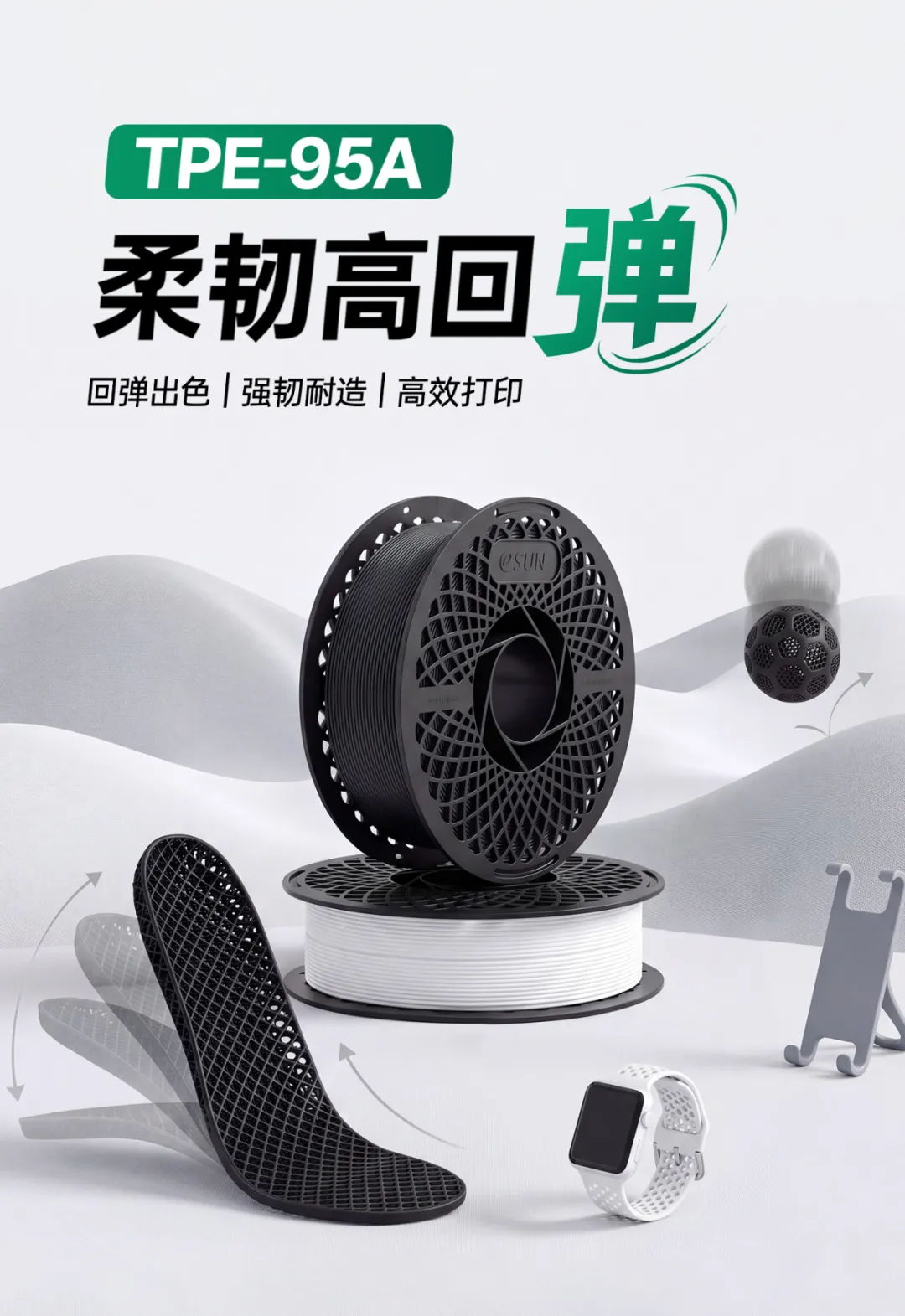
TPE-95A is not "softer TPU," but a more advanced material option
TPU has long dominated flexible 3D printing. Its strengths include tear resistance, strong support and long-term stability, making it suitable for applications repeatedly subjected to load, such as footwear, sports protective gear, cushioning parts and seals. In its flexible-material selection guide, eSUN's website states that TPU-95A has been validated in extensive real-world applications and offers stable performance and reliability; it is also recommended for people new to flexible materials.
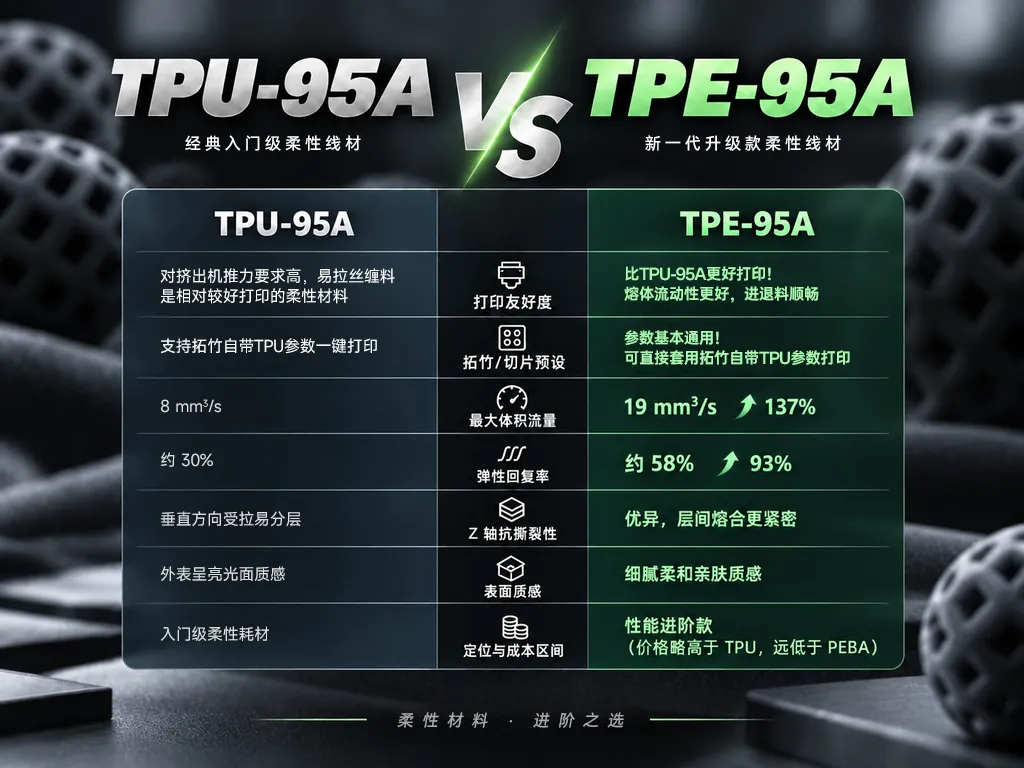
TPE-95A follows a different, more advanced route. eSUN identifies its key characteristics as higher resilience, greater comfort against the skin and faster printing. Its rebound rate is approximately 58%, and suitable applications include phone cases, watch bands, flexible models and cushioning structures.
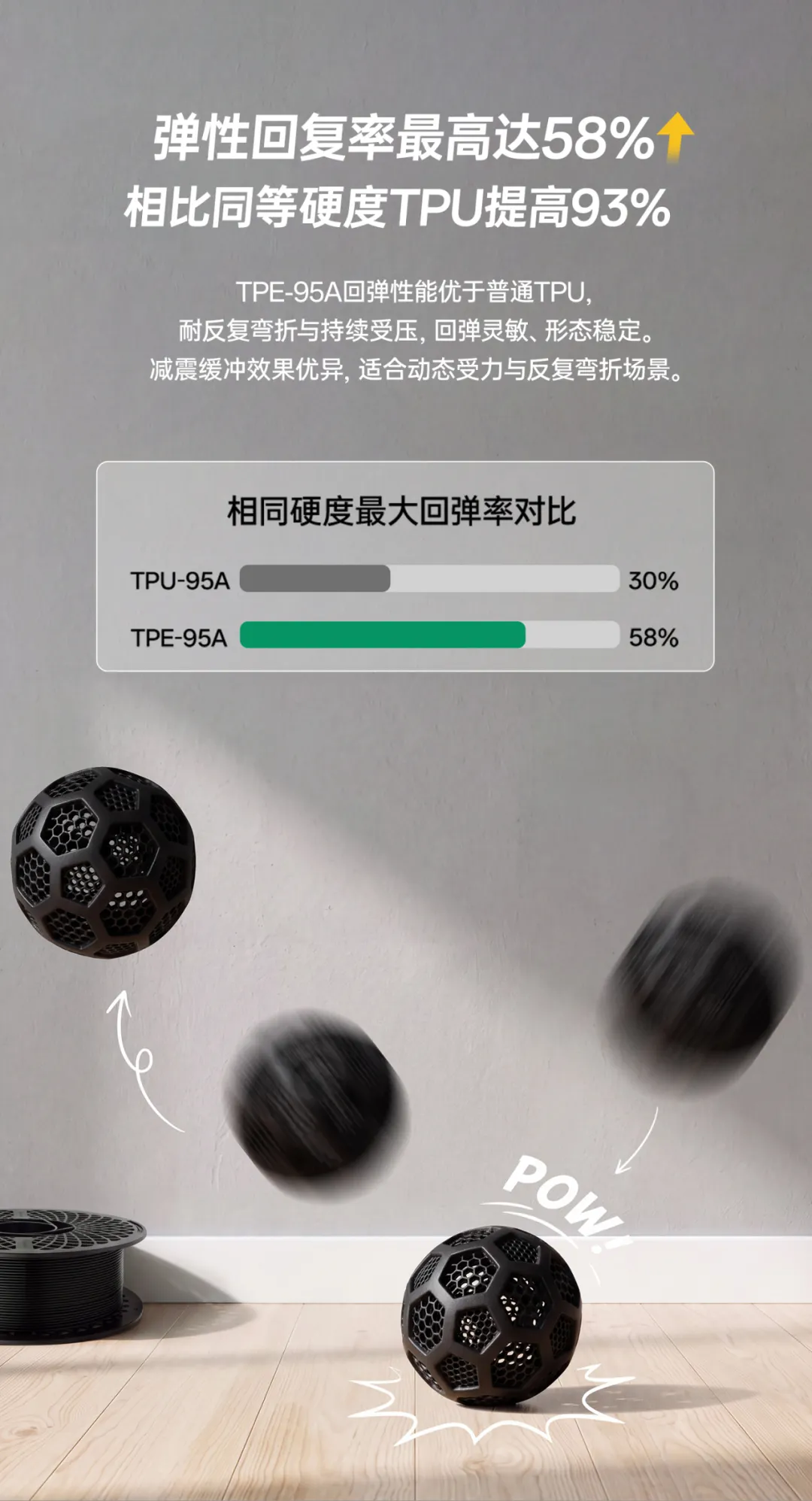
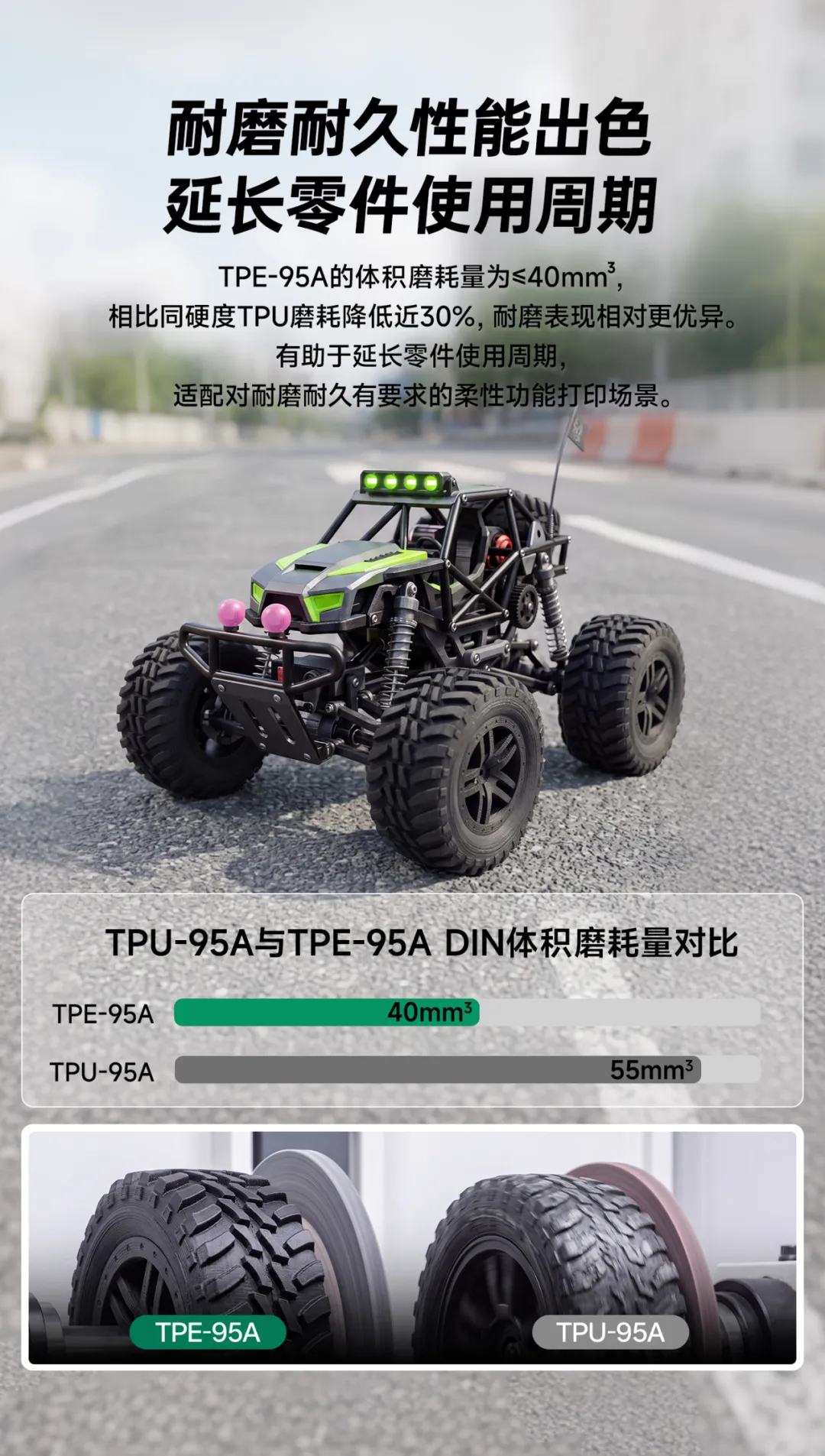
The industry has generally considered TPU more wear-resistant than TPE. However, based on engineers' actual test feedback, TPE-95A performs better in wear resistance. While TPU-95A is more about durable softness, TPE-95A offers a gentler surface feel and faster recovery after deformation, while its superior wear resistance challenges the conventional belief that TPE is not wear-resistant.
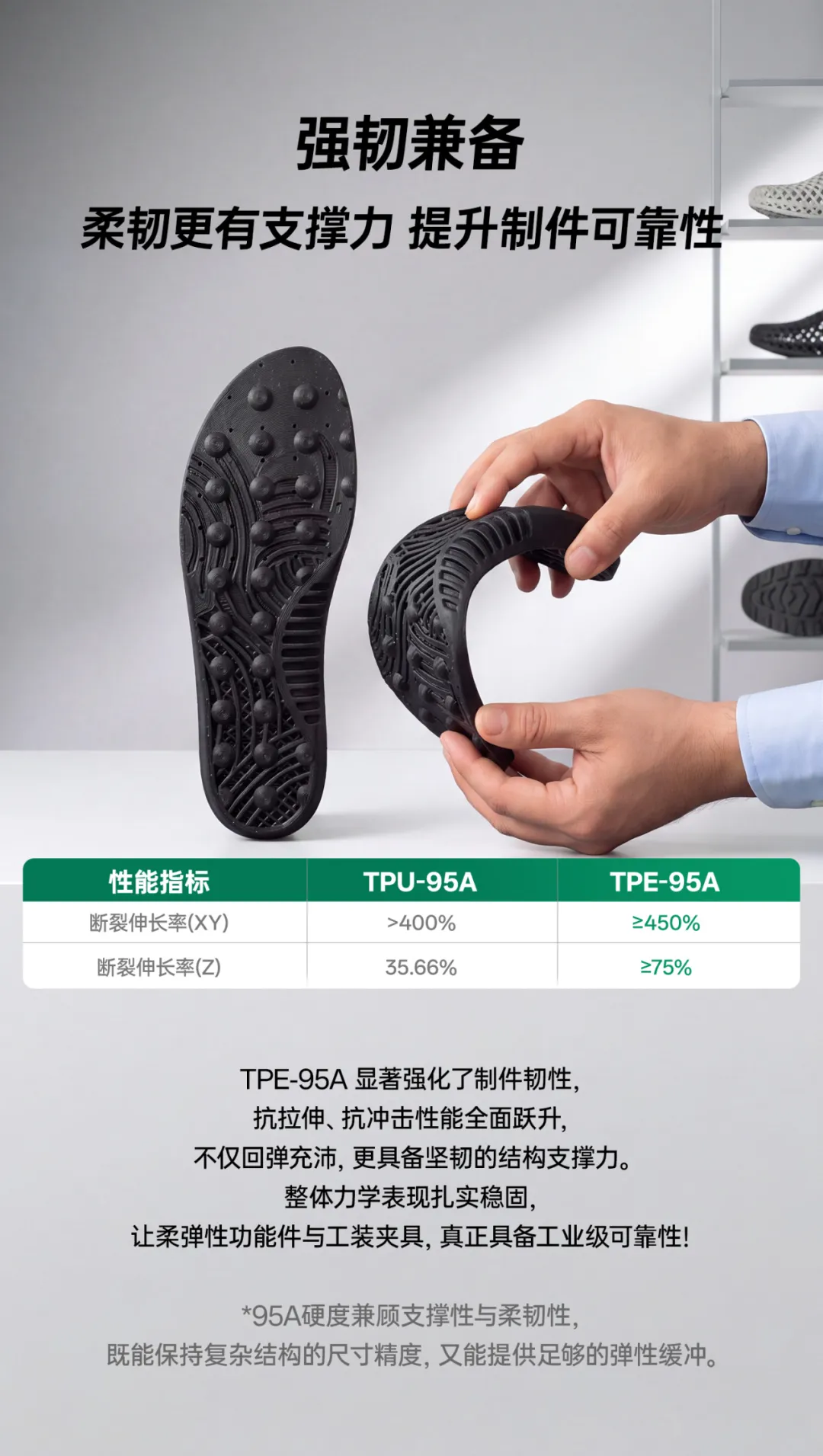
In simple terms, TPE-95A is fully capable in applications requiring high durability and relief from the difficulty of printing flexible materials, and can even offer an experience beyond TPU-95A. It is an especially precise fit for applications that prioritize a softer feel against the skin and high-speed forming.
Faster: the speed window for flexible printing is opening
Flexible materials have long been considered slow and difficult to print. The recommended printing speed for conventional TPU is usually 20–50 mm/s. Bowden-extruder machines may need to slow to 20–30 mm/s to extrude consistently, and are highly prone to clogging and stringing.
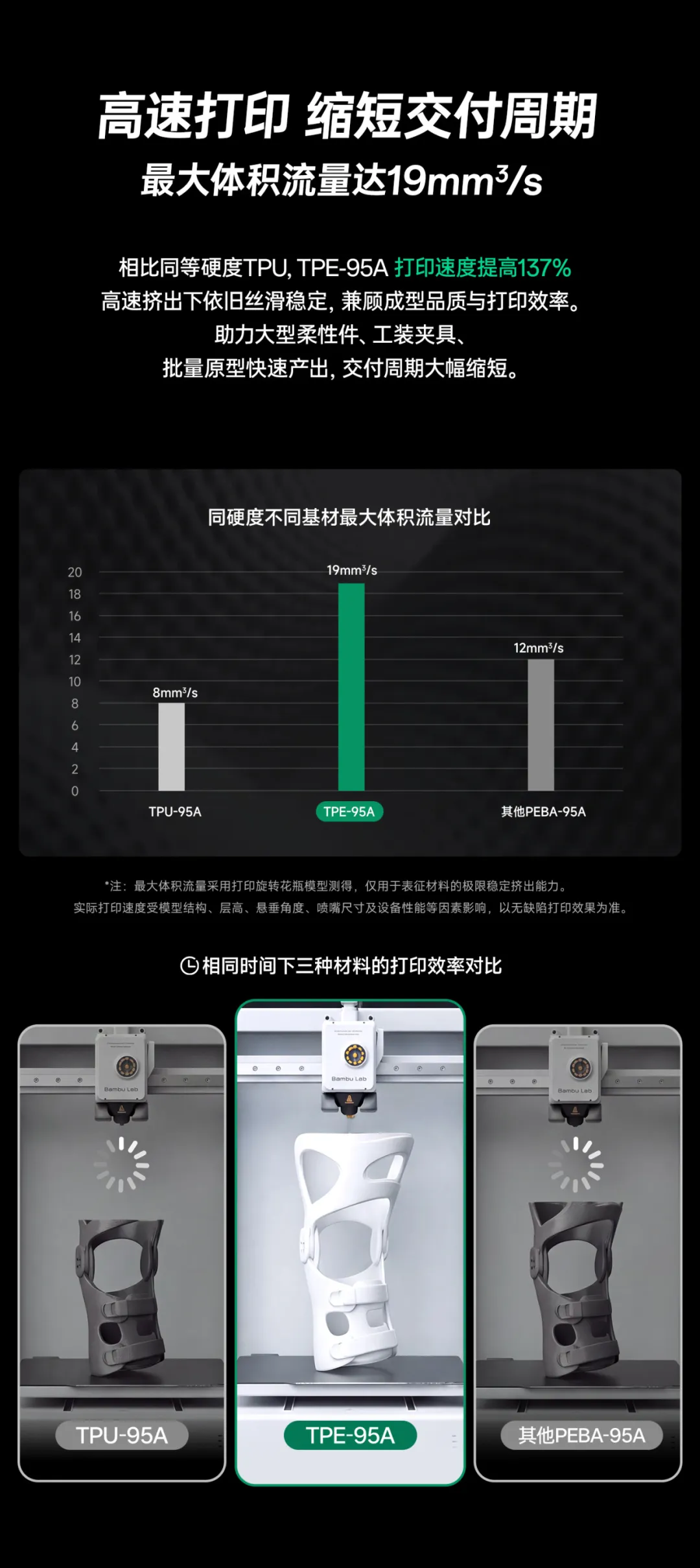
TPE-95A's greater speed is a materials-side response to this trend. eSUN explicitly lists faster printing as one of TPE-95A's key differences from TPU-95A.
More importantly, engineers report that it is "even easier to print than TPU-95A." This means TPE-95A tolerates higher speed limits while also providing better flexibility in filament feeding, extrusion stability and interlayer bonding, greatly reducing trial-and-error costs in flexible printing. A phone case that used to take several hours and could easily fail can now be prototyped or produced in small batches reliably within a shorter window.

Flexible materials are becoming a set of application-specific answers rather than one material
In previous coverage of eSUN's flexible-material lineup, Nanjixiong noted that the next phase of competition in flexible 3D printing is not about who can print the softest part, but who can turn flexible materials into a product line selectable by application. TPU-95A addresses durability; TPU-85A/80A covers softer feel; foamed TPU addresses lightweighting; the PEBA series targets high-rebound footwear; and TPE-95A fills the niche of comfortable skin contact, rapid rebound and high-speed forming.
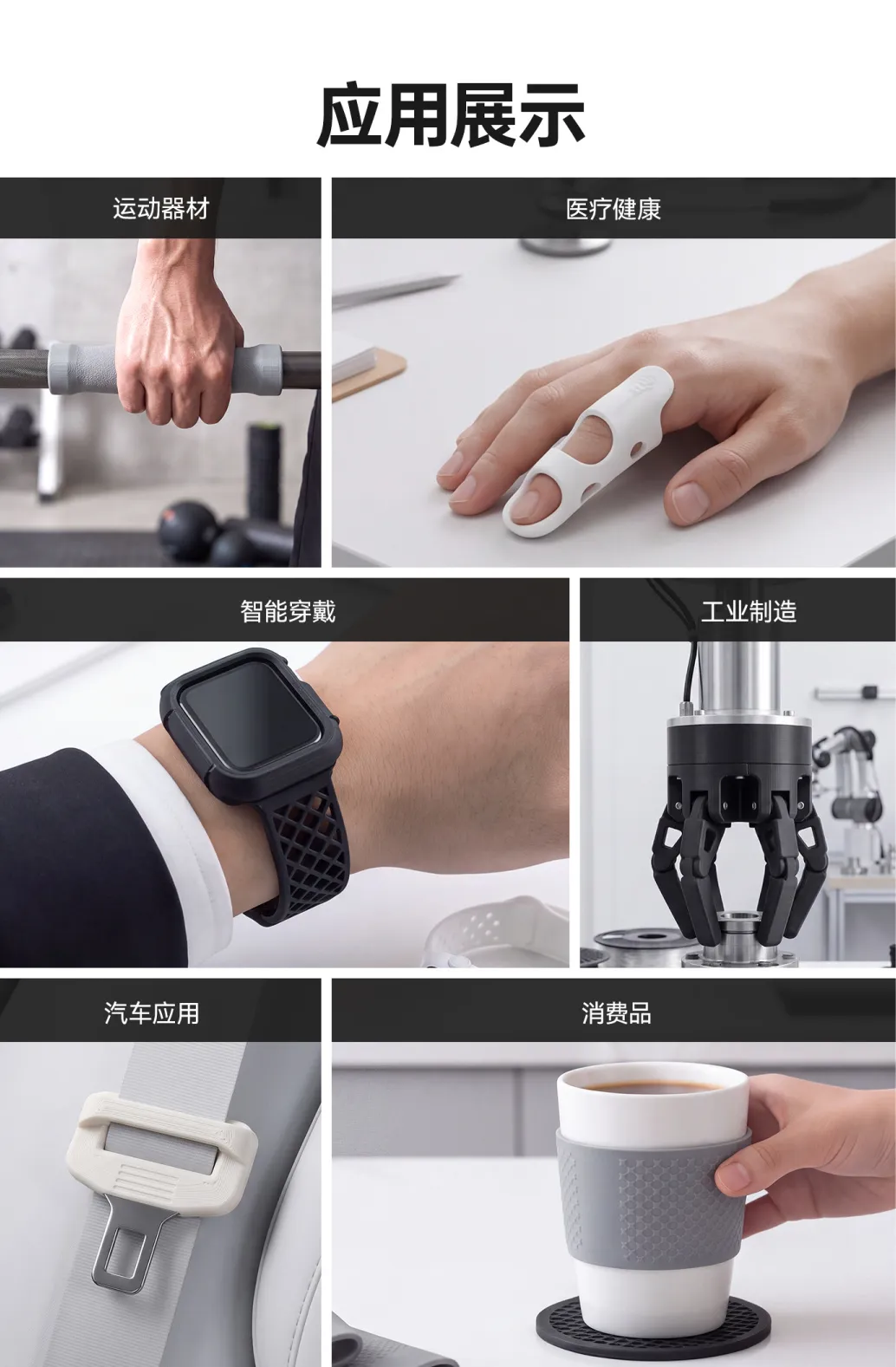
When a materials supplier segments flexible materials by rebound rate, feel and printing speed instead of relying on hardness alone to cover every need, the application boundaries of flexible 3D printing can truly expand. TPE-95A is another step in refining this product-line logic—not an exaggerated claim, but a clear direction.
TPE-95A is now available in eSUN's Tmall flagship store. Search for "eSUN" on Taobao to find the official store.
AI-translated from an article by Xiaoruanxiong on Nanjixiong, originally published on 2026-10-19. Text and images retain the original source attribution.
Read the original Chinese article |



 Record number | ©2024 panda3dp Team. Powered by panda3dp