The sixth Aerospace Additive Manufacturing Conference was held in Shanghai's Minhang District from October 21 to 23, 2026, under the theme “From Validation to Mass Production: Additive Manufacturing Enables Scaled Aerospace Applications.” More than 40 industry experts delivered presentations, and over 600 representatives attended from domestic aerospace prime contractors, research institutes, universities, and companies across the supply chain. The event provided a high-level platform for academic exchange, technical discussion, presentation of results, and matching industrial demand with suppliers.
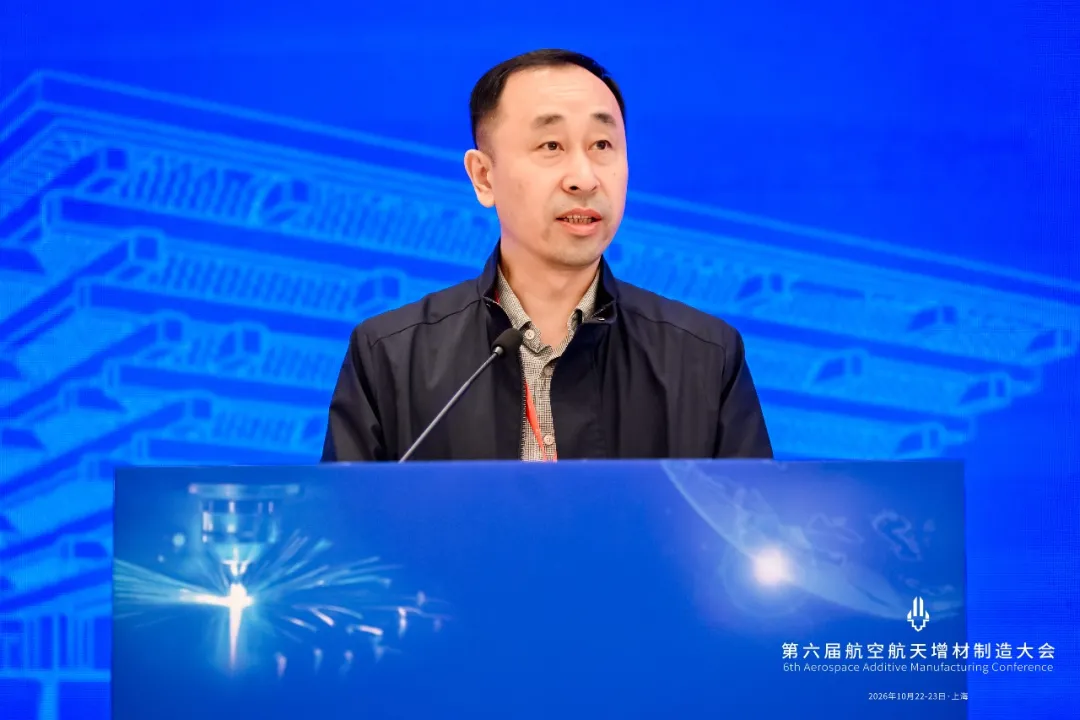
At the opening ceremony, Gao Songtao, Director of the Science and Technology Committee of China Aerospace Science and Technology Corporation's Commercial Rocket Company, said commercial space is an important field for developing new productive forces and building a strong space industry. As a core manufacturing technology supporting rapid commercial-rocket iteration, lightweight structures, cost and efficiency improvements, and product reliability, additive manufacturing is becoming strategically more important as commercial space industrializes.
Additive manufacturing can form complex components as integrated parts, reducing part counts, shortening development cycles, and lowering structural weight. Gao said it offers an indispensable route toward rapid development, low cost, and high reliability in commercial rockets. He also noted that much work remains before additive manufacturing can achieve stable, large-scale batch production. Key challenges include powder consistency, process consistency, nondestructive defect inspection, quality systems, production capacity, and standards. The entire supply chain must coordinate materials, equipment, processes, inspection, standards, and applications to remove bottlenecks, move from one-off prototypes toward scaled, batch, and engineered applications, and build an ecosystem in which companies of all sizes innovate and upstream and downstream partners collaborate.
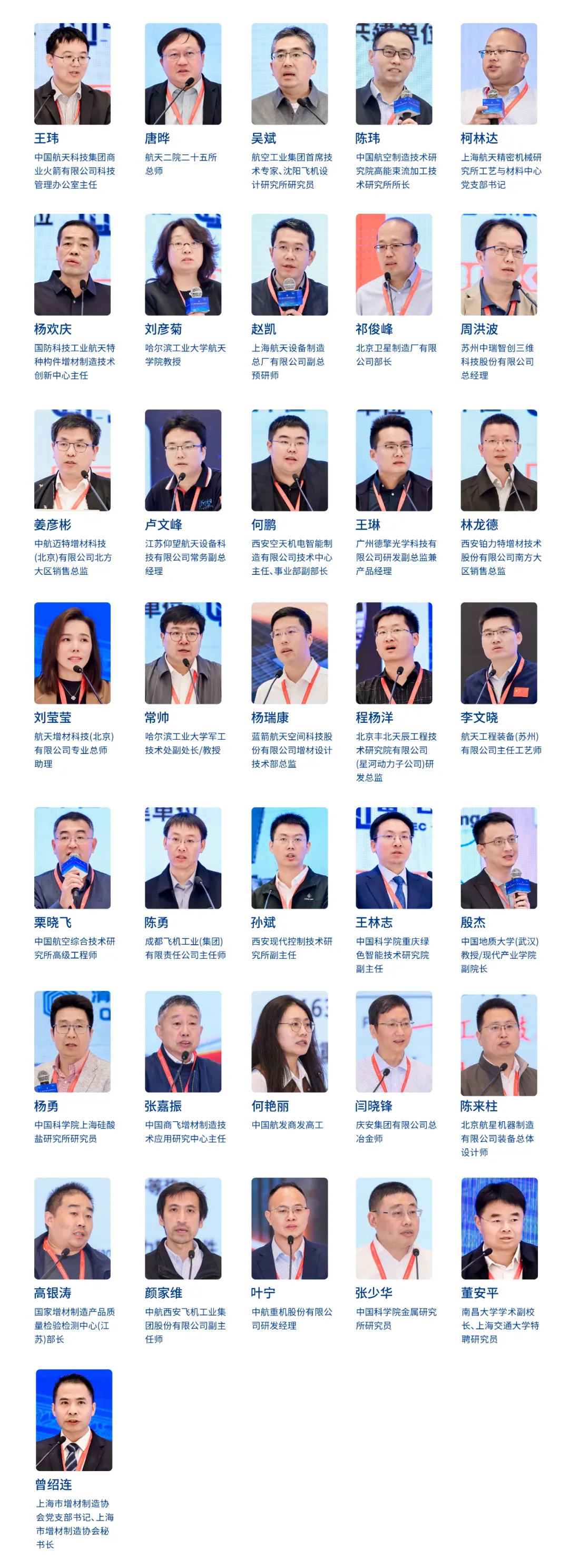
The conference was jointly chaired by Zeng Shaolian, Secretary-General of the Shanghai Additive Manufacturing Association; Dong Anping, Vice President for Academic Affairs at Nanchang University and a distinguished researcher at Shanghai Jiao Tong University; Ke Linda, Party Branch Secretary of the Process and Materials Center at the Shanghai Institute of Aerospace Precision Machinery; Liu Yingying, Assistant to the Chief Professional Engineer of Aerospace Additive Technology (Beijing) Co., Ltd.; and Zhang Shaohua, researcher at the Institute of Metal Research, Chinese Academy of Sciences.
More than 40 experts presented in turn, representing organizations including CASC's Commercial Rocket Company, the Second Academy of China Aerospace Science and Industry Corporation, Shenyang Aircraft Design and Research Institute, AVIC Manufacturing Technology Institute, Shanghai Institute of Aerospace Precision Machinery, Shanghai Aerospace Equipment Manufacturer, Beijing Spacecrafts Manufacturing Factory, Aerospace Additive Technology, LandSpace, Galactic Energy, COMAC, Chengdu Aircraft, Xi'an Aircraft, Suzhou Zhongrui Zhichuang, AVIMETAL, Xi'an Aerospace Electromechanical, Guangzhou Deqing Optics, Xi'an Bright Laser Technologies (BLT), and others.
Topics included materials innovation for reusable rockets; development of additively manufactured aircraft structures; aerospace applications of magnesium alloys; dissimilar-metal additive manufacturing; 4D printing; commercial-space industrialization; process monitoring; precision polishing; liquid-oxygen/methane rocket-engine components; copper-alloy liner manufacturing; friction-stir additive manufacturing; industry standardization; civil-aircraft and aero-engine AM; and large-component production. The presentations examined technical bottlenecks and shared engineering case studies across materials, processes, equipment, and quality control.
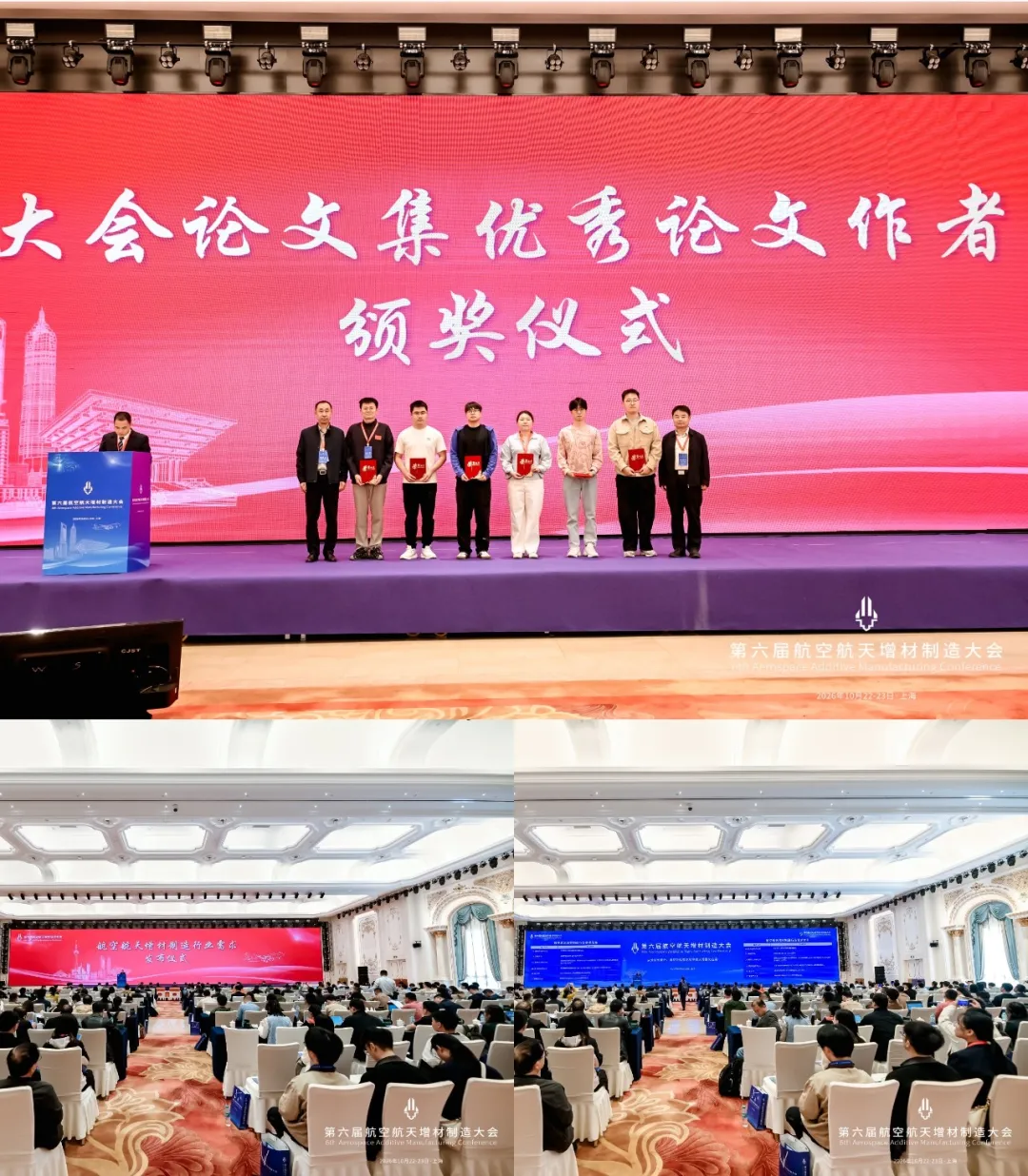
The opening ceremony also included publication of aerospace AM industry requirements and presentation of outstanding-paper awards. The awards recognized authors in the conference proceedings and encouraged academic exploration and innovation. The requirements announcement consolidated real technical needs from major aerospace application organizations, improving information flow between research and application and providing direction for commercialization.
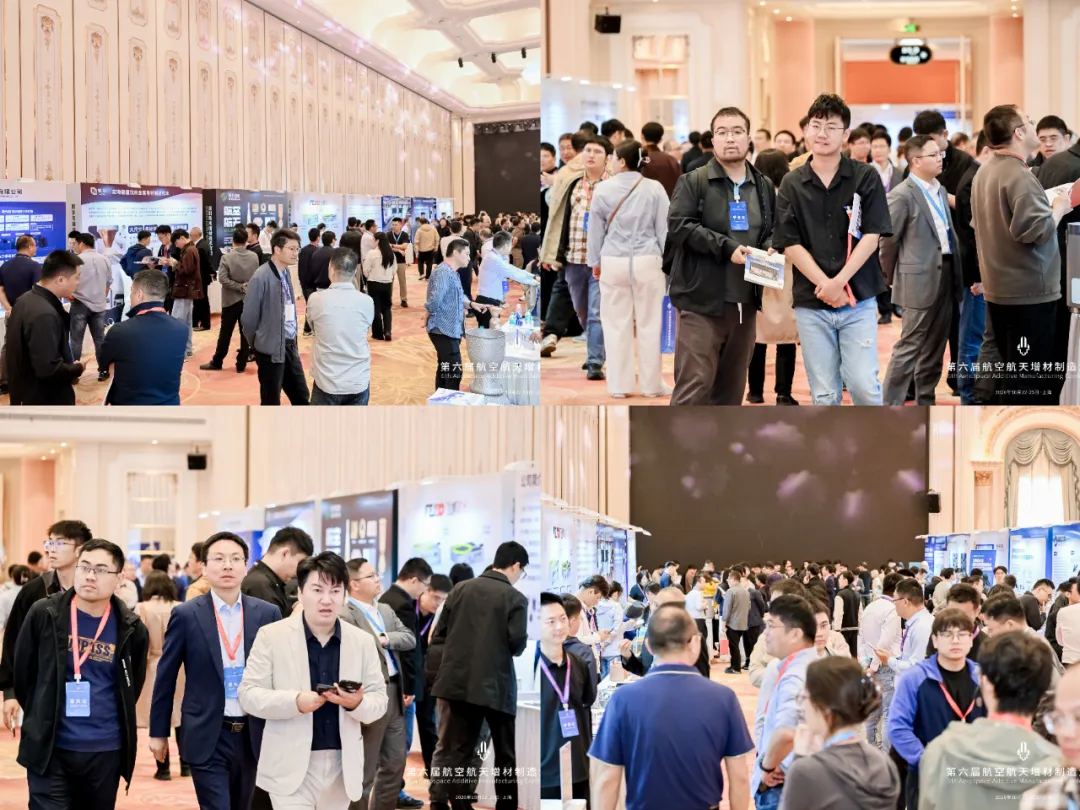
A concurrent exhibition featured 27 companies displaying metal additive manufacturing equipment, specialty metal powders, complete process solutions, quality inspection equipment, and other products. Attendees examined the technologies and held face-to-face business discussions, strengthening links among industry, academia, research, and users and opening channels for translating technology into aerospace programs.
The conference addressed practical needs in aerospace equipment development while covering both fundamental research and industrial engineering. It brought universities, research institutes, and industry together to discuss common challenges such as standardization, batch production, airworthiness validation, and component reliability. Participants broadly agreed that additive manufacturing is a key technology for developing lighter and more complex aerospace equipment. Continued application-driven work is needed to address gaps in processes, equipment, and standards and accelerate adoption at scale.
The successful event strengthened industry consensus, promoted coordination across the supply chain, and supported further technological progress and high-quality growth in China's aerospace additive manufacturing sector.
AI-translated from an article by Xiaoruanxiong on Nanjixiong, originally published on 2026-10-27. Text and images retain the original source attribution.
Read the original Chinese article |


 Record number | ©2024 panda3dp Team. Powered by panda3dp