Introduction
TCT Shenzhen opened on October 14, 2026, bringing together hundreds of companies across the printing supply chain. Nanjixiong is covering the event as a strategic media partner.
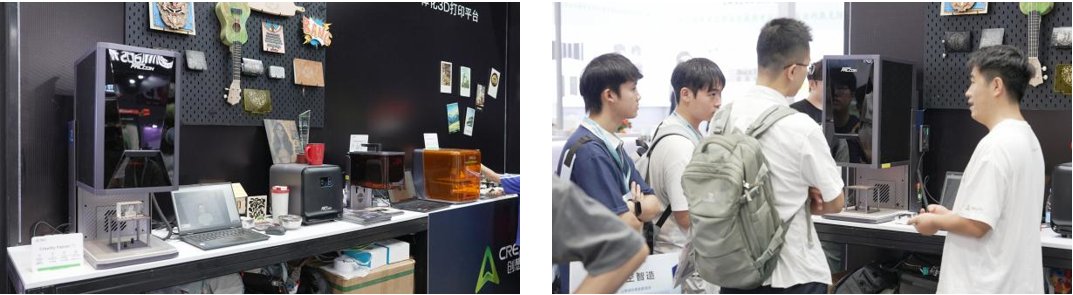
Consumer printing company Creality is presenting its product portfolio and applications at booth E50, Hall 15, Shenzhen World Exhibition & Convention Center in Bao'an, highlighting its AI and ecosystem strategy.
The exhibition focuses on developments in additive manufacturing. Creality's display includes K3, SPARKX i8 and HALOT-X1 Max printers; Pika and Sermoon scanners; Falcon laser engravers; and the M1&R1 desktop filament production and recycling system. It also demonstrates connections between Creality Cloud AI creation tools and printing equipment, alongside end-use applications such as footwear.

K3 and SPARKX i8 bring different approaches to multicolor printing
Both machines aim to reduce switching time and material waste. K3 uses multiple nozzles, while SPARKX i8 combines four channels in one printhead.
The flagship K3 uses internally developed KliTek multi-nozzle technology with four independent hotends and feed paths. Switching the appropriate nozzle enables different colors or materials while reducing waits and purging losses.
Four 0.4 mm nozzles are standard. Separate accessory sets with 0.2, 0.6 and 0.8 mm nozzles will follow, expanding coordinated printing across diameters. Smaller nozzles handle detail, while larger ones perform infill and other speed-focused tasks, balancing fidelity and efficiency.
Its S-Drive dual-drive feeding system improves flexible filament stability. The standalone machine supports TPU 95; an optional TPU kit adds hardness grades including 85A and 90A.
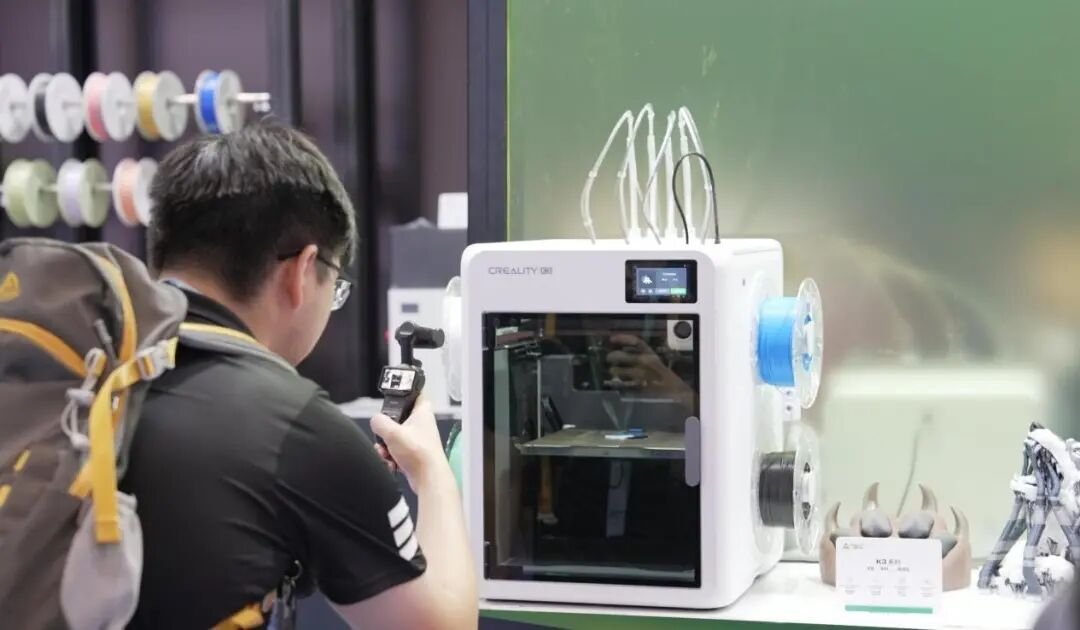
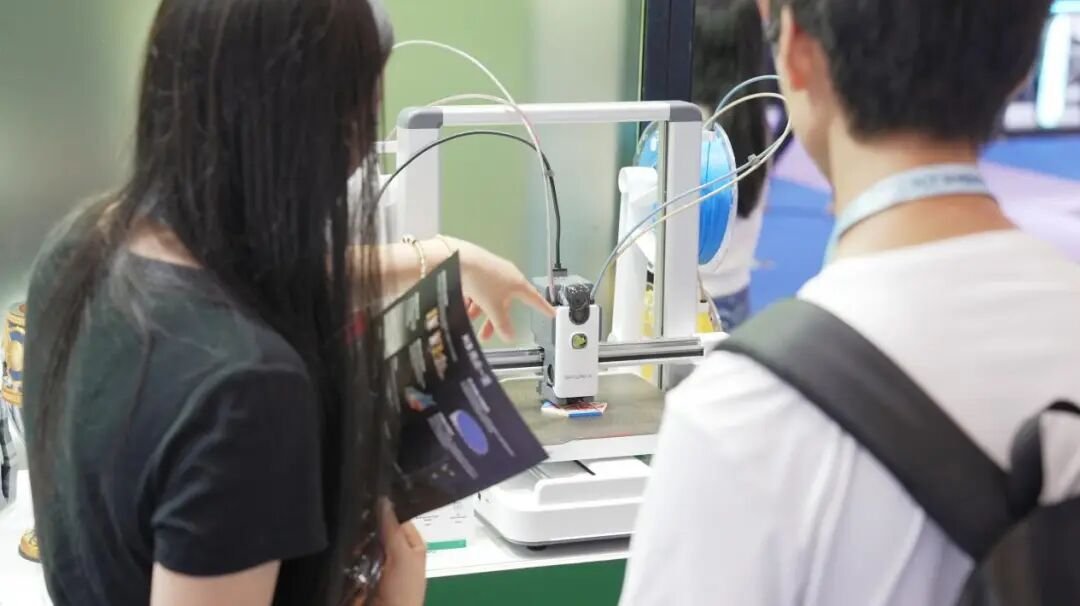
SPARKX i8 targets everyday multicolor creation by simplifying changes so the hardware and experience resemble straightforward single-color printing.
Its proprietary QuarTeks four-channel extrusion system integrates four independent melt paths in one head, enabling four colors on a standalone machine. Changes switch channels inside the head without long filament loading and unloading movements, taking less than one second.
QuarTeks reduces the shared end of the four paths to under 1 mm, minimizing residual color structurally. With suitable internal-purging conditions and slicing algorithms, necessary purging can be incorporated into model infill, allowing zero externally discarded purge waste and no wipe tower.
A broader digital creation portfolio
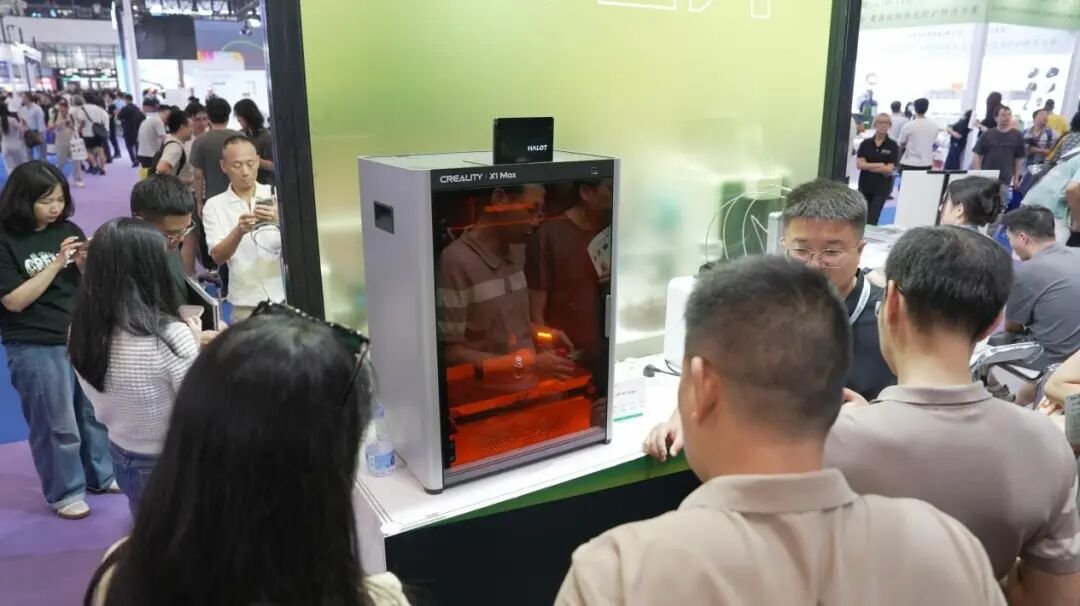
The HALOT-X1 Max resin printer uses four lead screws and four linear rails, an actively controlled 40°C chamber and a 16K screen. Its 302.4 × 161.98 × 350 mm build volume supports detailed and larger models. AI camera monitoring, residual-material detection and air purification are included. An optional five-liter automatic feed system supports larger prints and continuous production.
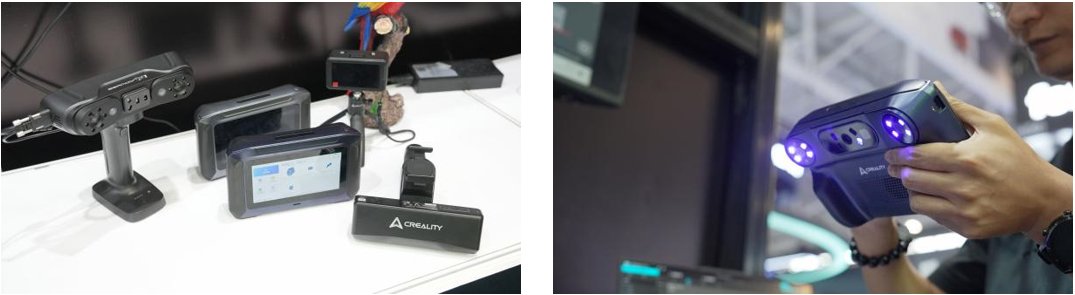
Scanning products include Pika, Sermoon P1S and Sermoon X1. Compact Pika supports wireless mobile scanning, wireless PC operation and a fully featured wired mode, serving outdoor capture and studio work. Sermoon models address professional requirements for precision, efficiency and sustained operation.
For laser processing, the portfolio spans home DIY and commercial customization. Entry-level Falcon A1C offers interchangeable 5 W and 10 W blue-light modules and a 1.2 W infrared module, with autofocus, an intelligent lifting platform and a lightweight body.
The flagship Falcon T1 supports five expandable laser modules, selectable by material and process. Applications include engraving inside glass, colored metal engraving, 3D reliefs and curved surfaces, providing professional users with broader processing options.
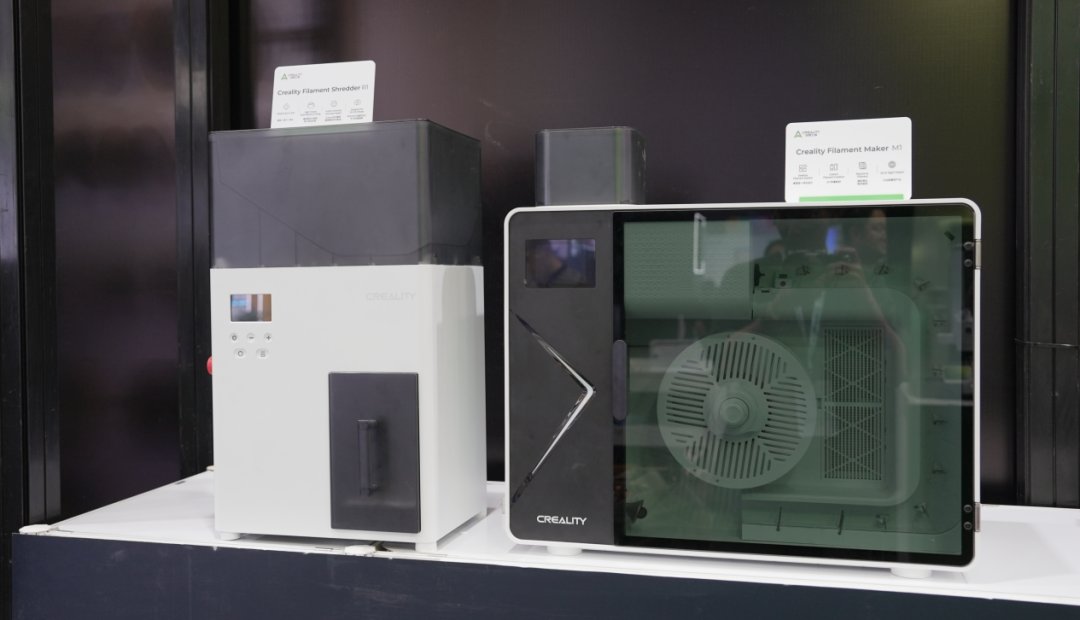
The M1&R1 recycling system links recovery with filament regeneration and reuse. R1 shreds and dries eligible printed waste and supports, while M1 extrudes the resulting pellets into filament.
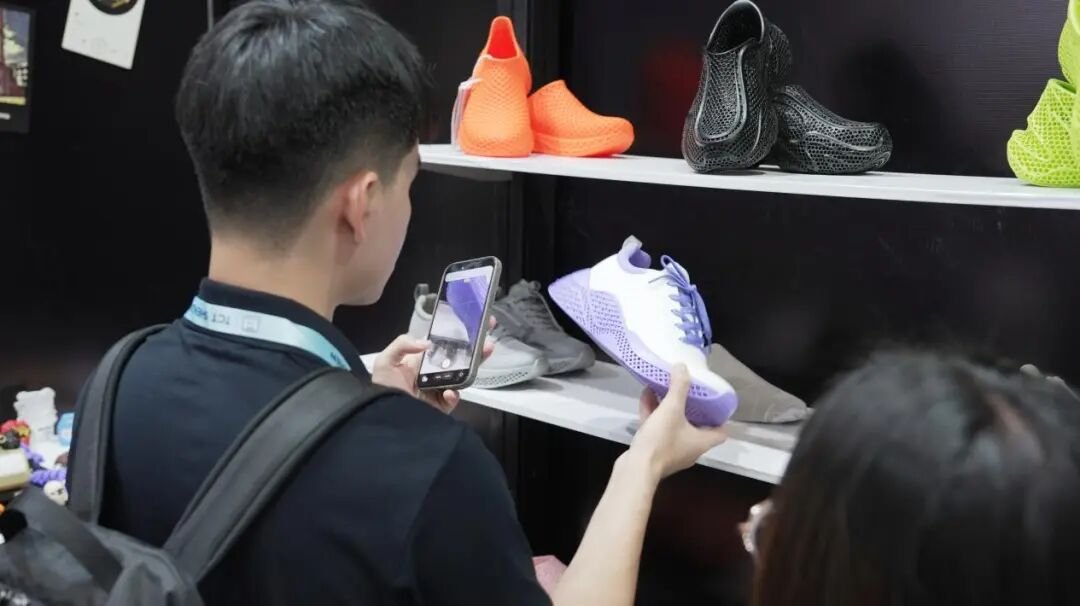
Printed fashion footwear demonstrates applications in shoe design and consumer products, illustrating the potential for personalization and product innovation.
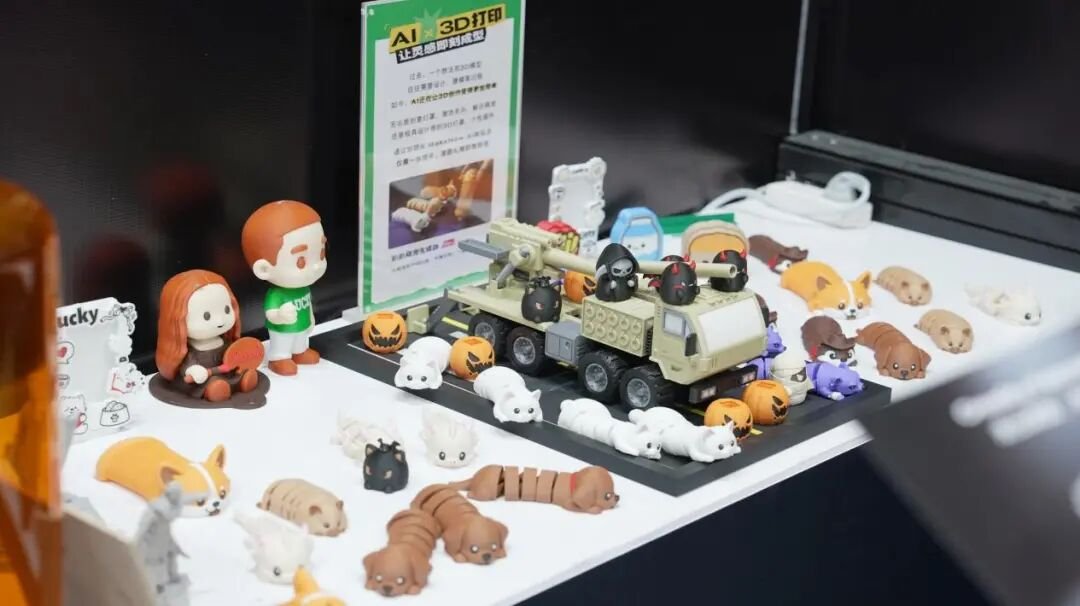
AI and ecosystem coordination lower creation barriers
Creality incorporates AI into idea generation, asset processing and printing to simplify operation and modeling.
On the creation side, Creality Cloud's users, content, slicing and equipment connectivity support image understanding, image-to-3D generation, automatic model repair and printability optimization. The workflow connects image upload or idea input with generated models, cloud slicing and one-click printing.
AI also assists scan processing. When connected to a PC, CrealityScan provides AI retexturing and hole filling. Automatic texture remapping reduces manual adjustment, while intelligent completion of missing areas reduces subsequent repairs and makes scan data easier to use.
Laser software includes AI contour tracing, background removal, intelligent filling and AI filters, spanning asset processing, layout and machining. Its app supports one-click AI photo engraving and remote monitoring. Cloud storage, image libraries and platforms including MakerMuse, CraftSeek and FanForge support exploration of text-to-vector generation, image-to-3D and connectivity across devices, connecting content, software and equipment.
On the hardware side, Creality has developed AI print-defect recognition and uses AIForge to connect data, algorithms, validation and iteration. The technology covers five typical defect categories, including spaghetti failures, foreign objects and hotend material buildup, and is used in relevant production models.
Usage is growing. By June 2026, use of its AI applications was 85.6% higher than in January. In the first half of 2026, Creality Cloud's new registrations grew 77.1% year on year, active creators grew 94.3% and newly published models grew 137.6%.
The exhibition brings together printing, scanning, laser processing, material recycling and AI creation. It continues through October 16. Visitors can explore the products and creation workflows at booth E50 in Hall 15, Shenzhen World Exhibition & Convention Center, Bao'an.
Source: Nanjixiong 3D Printing public account.
AI-translated from an article by Kuaixiong on Nanjixiong, originally published on 2026-10-14. Text and images retain the original source attribution.
Read the original Chinese article |



 Record number | ©2024 panda3dp Team. Powered by panda3dp