Introduction
A significant share of the cost of SLS nylon 3D printing comes from powder recycling. Most conventional SLS nylon powders require at least a 40% proportion of virgin powder to maintain quality. After more than ten reuse cycles, recycled powder can cause orange-peel texture, warping, and declining performance. Waste powder accumulates, making it difficult to reduce material costs.
Nanjixiong learned in October 2026 that Xingsheng Technology has launched its own SLS PA12 nylon polymer powder. It is compatible with mainstream SLS 3D printers and is designed for high-cycle reuse, high sphericity and even powder spreading, and stable performance after repeated sintering. The product is aimed at production applications, with current monthly capacity of 10 tonnes.
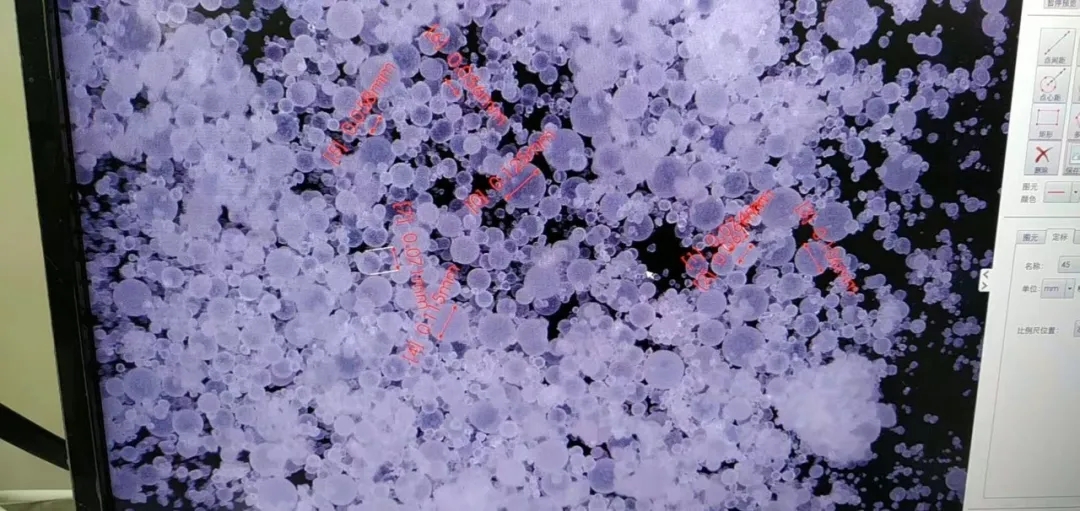
High-cycle reuse: sustained recycling at new-to-reused powder ratios of 2:8 or even 1:9
Xingsheng's PA12 powder supports production using very high proportions of mixed virgin and recycled powder. It is designed to avoid orange-peel defects over repeated cycles and maintain consistent surface quality. The company says the process achieves “zero leftover powder” accumulation, without the need to dispose of excess waste powder.
For production facilities, this is not only environmentally beneficial but also directly reduces costs. Higher material utilization substantially lowers material cost per part. It also avoids frequent large-scale powder replenishment and waste handling, reducing routine workload.
High sphericity: even powder spreading and finer part surfaces
Powder morphology directly affects the uniformity of powder spreading and the surface quality of finished parts. Xingsheng's PA12 powder has high sphericity, with particles close to spherical and excellent flowability. It spreads evenly and smoothly, reducing bridging, powder shortages, and uneven layer thickness to produce smooth, fine surfaces.
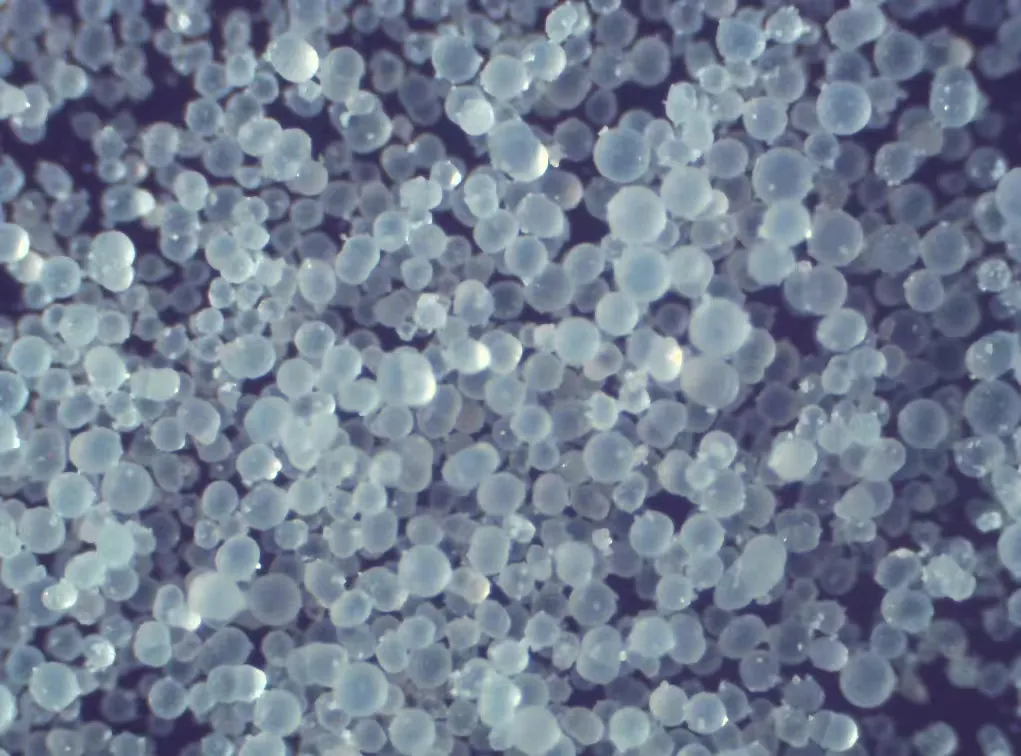
△ Microscopic morphology of Xingsheng PA12 powder, showing highly spherical particles
Oxidation stability: performance remains at about 80% of virgin powder after repeated sintering
Each time nylon powder undergoes high-temperature sintering in the powder bed, its molecular chains are at risk of degradation. Xingsheng PA12 uses a stable antioxidant system intended to limit chain degradation after repeated high-temperature sintering and maintain mechanical properties. According to data provided by the company, parts printed from mixed powder retain about 80% of the mechanical performance of parts printed with virgin powder, with relatively little variation between reuse batches.
On machines with relatively high oxygen content, including some EOS systems, white PA12 can remain bright white for an extended period. Black PA12 can absorb the wavelength of fiber lasers and is compatible with both fiber-laser and CO₂-laser systems.
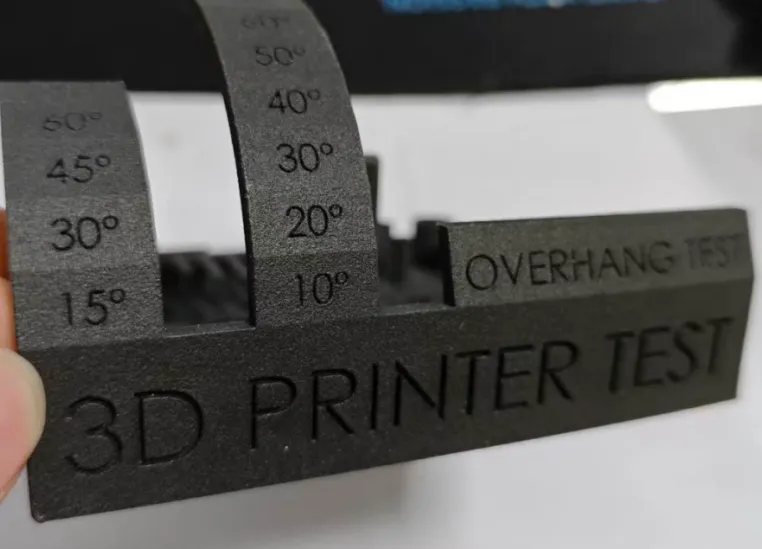
△ Black PA12 overhang-angle test part, showing clearly formed details
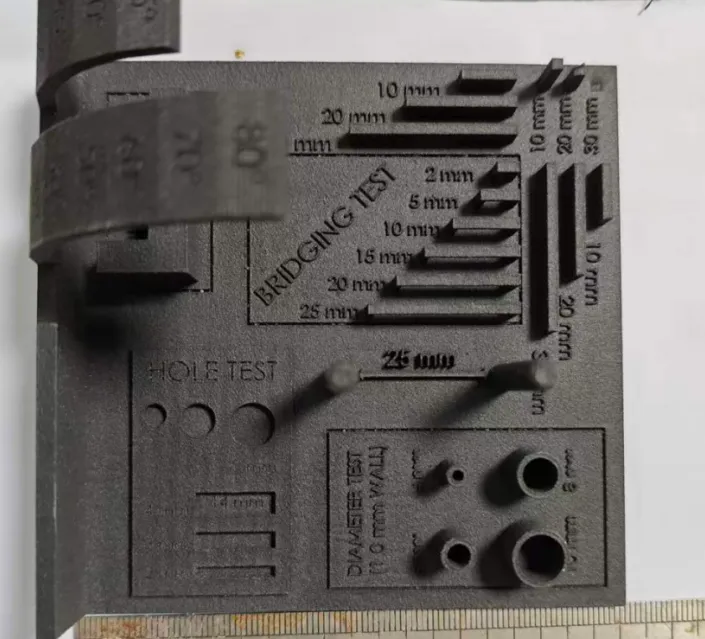
△ Black PA12 comprehensive test plate, showing clear details and textures for bridges, holes, diameters, and wall thickness, with reliable dimensional accuracy
After multiple reuse cycles, decreases in tensile and impact strength are controllable, and the mechanical properties of finished parts remain stable. Users do not need to replace an entire batch of powder frequently because of declining performance, helping maintain consistency in production.
Multiple material grades compatible with mainstream SLS machines
Xingsheng currently supplies white PA12, black PA12, glass-fiber-reinforced PA12-GF, nylon with aluminum powder, and other SLS nylon powder grades. Particle sizes are in the 50–60 μm range, and process parameters are designed to be user-friendly. The powders can be used directly on mainstream SLS machines, lowering the barrier for customers to test and switch materials.
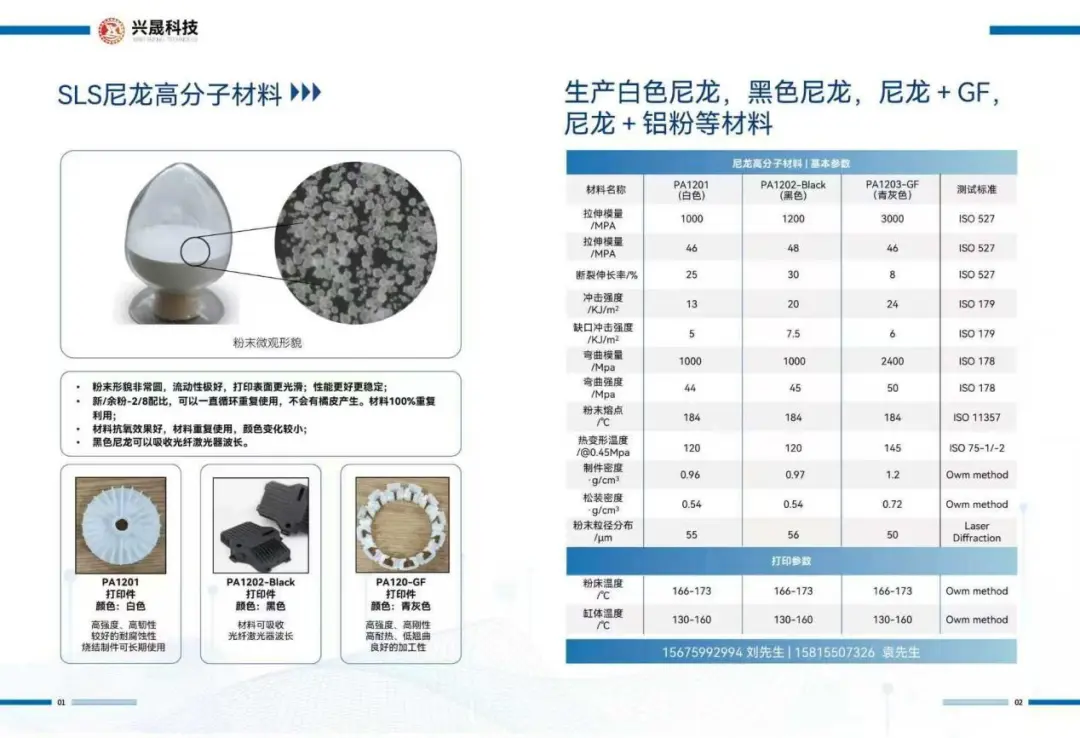
△ Xingsheng SLS nylon material grades and mechanical properties (data provided by the company)
Nanjixiong's observations
At its core, the cost of SLS printing depends on whether powder can be recycled reliably. Sphericity, the antioxidant system, and the virgin-to-recycled powder ratio determine how many parts can be produced from a batch. Xingsheng's approach is clear: increase material utilization while maintaining print quality and help customers reduce consumable costs. Powder may be less eye-catching than equipment, but it is a daily cost calculation for production facilities. Materials suppliers that work on stable powder recycling often understand factories' real challenges well.
AI-translated from an article by Xiaoruanxiong on Nanjixiong, originally published on 2026-10-26. Text and images retain the original source attribution.
Read the original Chinese article |


 Record number | ©2024 panda3dp Team. Powered by panda3dp