Nanjixiong introduction: Desktop metal 3D printers are becoming an important part of the desktop tool ecosystem.
On October 28, 2026, Nanjixiong learned that Studio 3e8, a startup at Boston-area Greentown Labs, had just launched its Mesa 1 desktop metal 3D printer, with crowdfunding prices starting at USD 3,500, approximately RMB 23,000. The introductory sentence in the Chinese source says the machine requires a laser but no binder; later in the same source, the process is explicitly described as laser-free and binder-free. The Kickstarter campaign is scheduled for December 1.
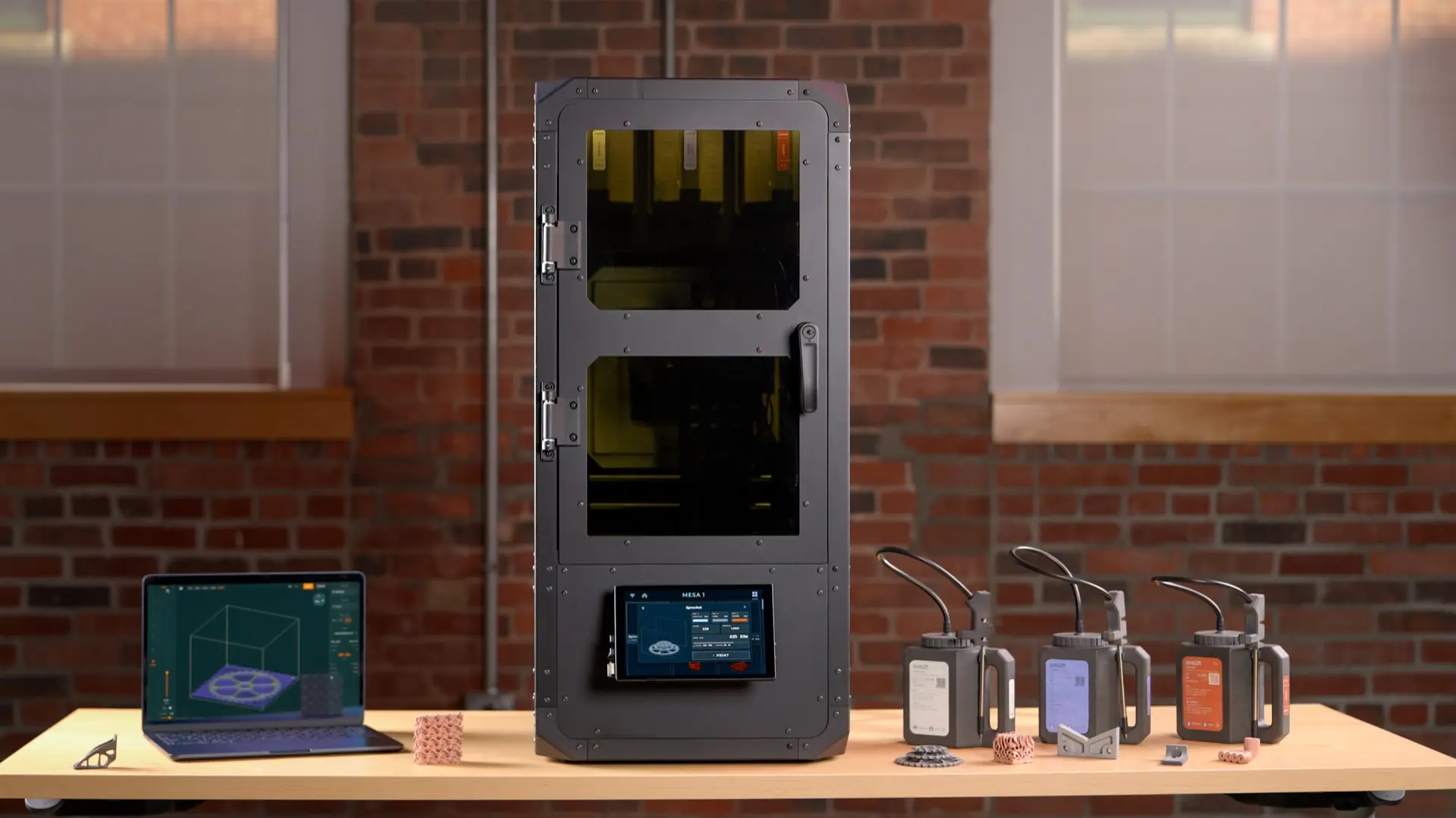
At first glance, it resembles previously seen desktop metal printers. Internally, however, it takes a different technological route, using a process not previously seen in the industry.
Understanding the Process First
Mesa 1 takes a different approach from mainstream desktop metal printing. There are three common routes:
• Metal FDM / fused filament fabrication, used by Markforged, Desktop Metal, Shenghua 3D, and others: print binder-containing metal filament, then debind and sinter.
• Binder jetting, used by Desktop Metal, ExOne, Yizhi Technology, and others: a printhead deposits binder to join powder, and the whole part is then sintered in a furnace.
• Selective laser melting (SLM), used by GelaiBo, Meiguang Suzao, Tanxue Technology, and others: industrial SLM technology is brought to smaller machines, using a laser to sinter metal powder into a part.
Mesa 1 follows another route: direct powder extrusion. The official video appears to show the printer depositing metal powder through a nozzle in the required locations, then sintering it together into a metal part.
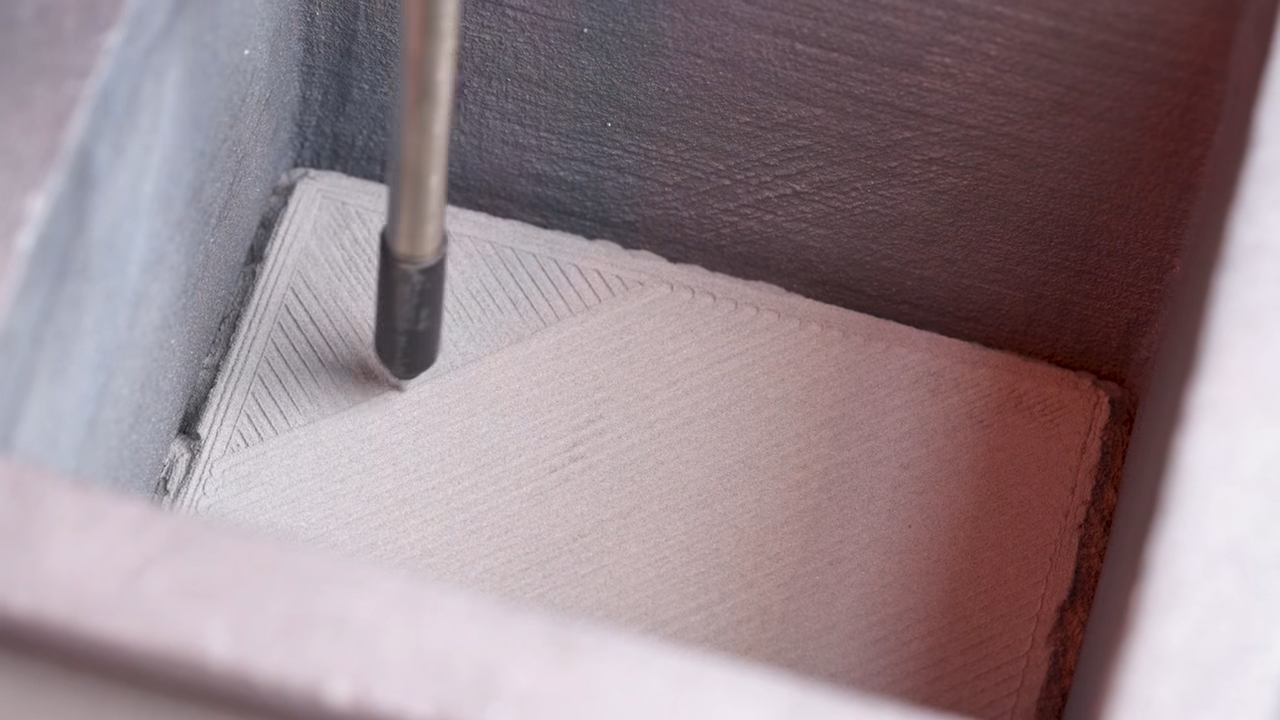
The build chamber is a crucible.
The printhead deposits two materials simultaneously: metal powder, either carbon steel or copper, and support material. The metal forms the part, while the support holds overhangs, following the same logic as printing PLA with PVA supports in FDM.
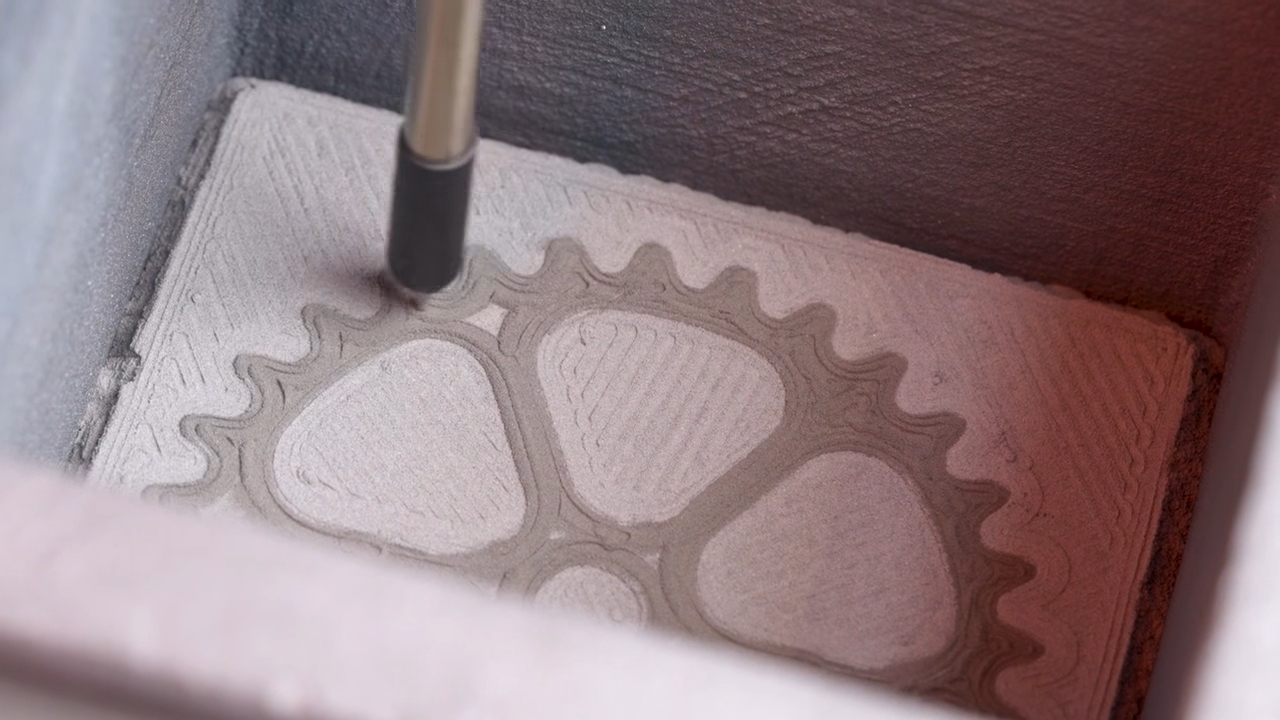
The white material appears to be support, while the gray material is the metal powder being printed.
The key difference is post-processing. After printing, the part stays in the crucible, which is pushed into Mesa 1's built-in sintering furnace. The furnace automatically heats for sintering. Users never handle loose metal powder or remove supports. During sintering, the metal powder joins into a part, while the support material does not sinter. The company appears not to have disclosed what that support material is.
The entire workflow has three steps: slice, print, and sinter. Slicing runs on the user's laptop, and the machine plugs into a standard 120 V household outlet.
Details Worth Examining
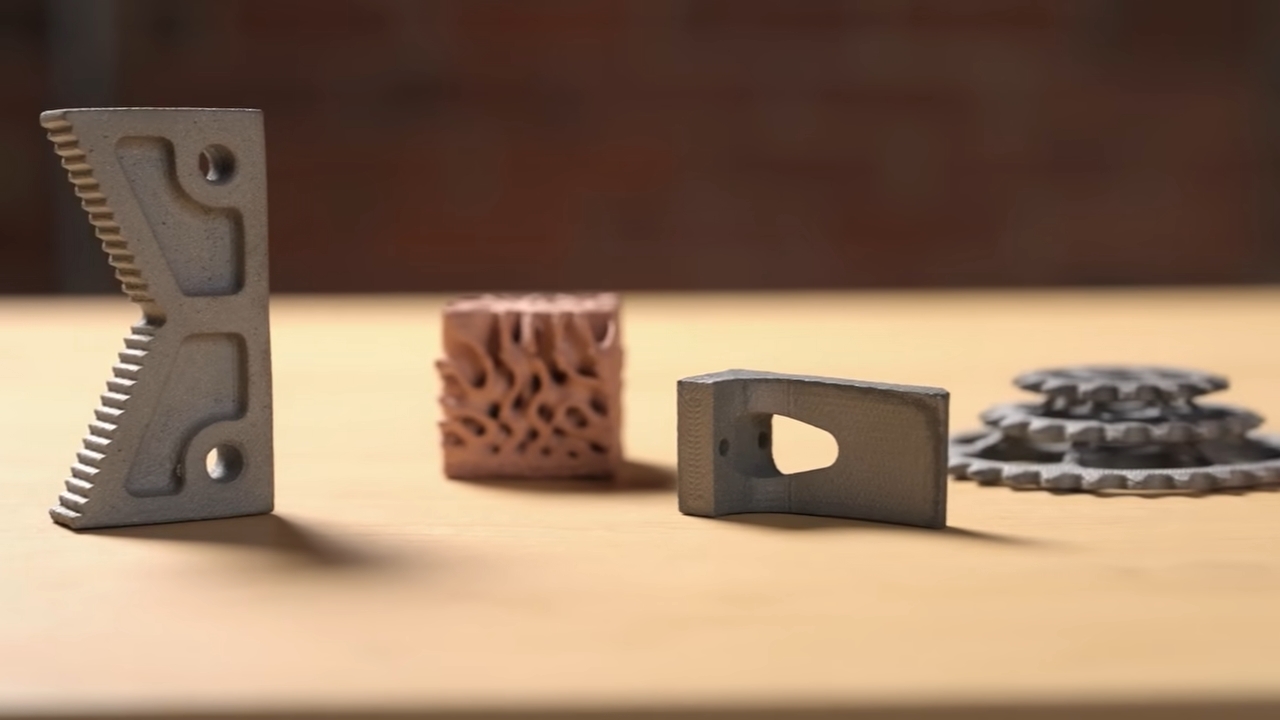
Materials: Only carbon steel and copper are available initially, two major industrial material categories that are relatively easy to sinter to density.
Cartridges: Fully sealed powder cartridges prevent users from seeing the powder, a central reason the machine can be positioned for offices and laboratories.
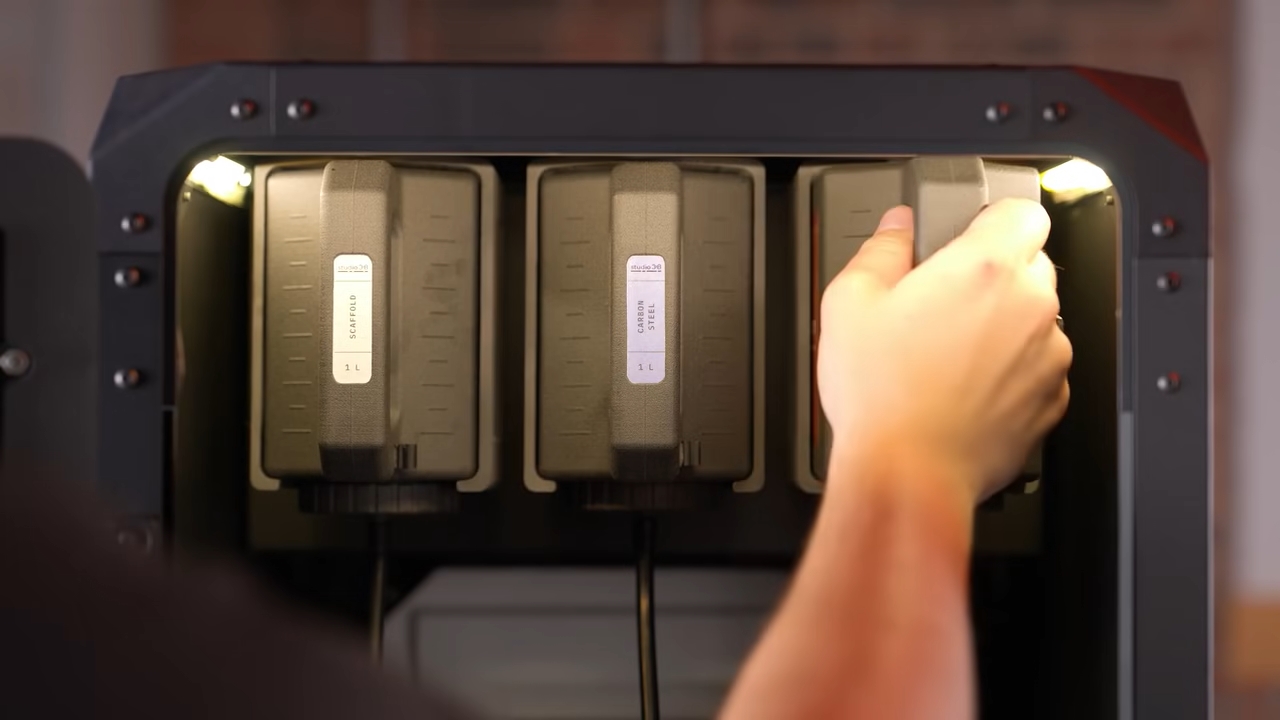
Material cartridge.
No laser and no binder: this means no inert-gas chamber, no powder exposure, and no debinding step.
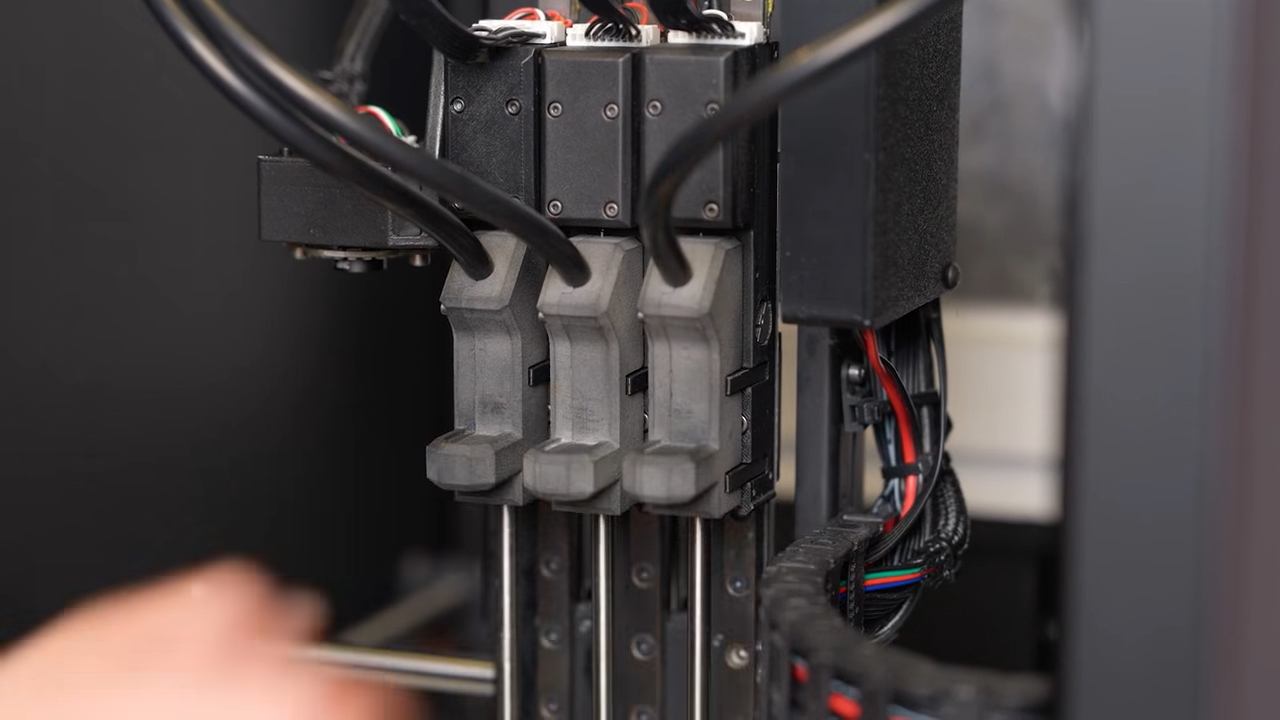
The machine has three printheads.
Pricing tiers: USD 3,500 is likely an extremely limited early-bird tier. Regular early-bird pricing will probably be in the USD 8,000–12,000 range.
Team Background
Studio 3e8 was founded in 2023, with CEO and co-founder Casey Johnson and CPO Cassie Lowell. Johnson says he worked in industrial 3D printing and manufacturing systems, saw firsthand the barriers to metal printing, and built the machine he wanted. The company moved from an attic to a garage and then Greentown Labs, and joined Harvard Innovation Labs' Launch Lab X accelerator.
Nanjixiong's Observations
Desktop metal printing has consumed substantial capital over the past decade. Desktop Metal went public through a SPAC in 2020, reaching a peak valuation above USD 3 billion, and was acquired and taken private by Schütze in 2025. Markforged has recorded losses year after year, with its share price falling 99%.
Mesa 1 makes the opposite bet: use straightforward dual-material extrusion and a built-in sintering furnace to bring equipment into consumer FDM pricing and reduce operation to slicing, printing, and waiting for sintering. Its choice of carbon steel and copper is restrained too: instead of pursuing titanium or superalloys, it starts with two of the most mature metals with the steadiest demand.
AI-translated from an article by Beijixiong on Nanjixiong, originally published on 2026-10-29. Text and images retain the original source attribution.
Read the original Chinese article |


 Record number | ©2024 panda3dp Team. Powered by panda3dp