Nanjixiong introduction: Swaptek™ multi-head switching, integrated overhead AMS 3H feeding, and a variable-diameter extruder combine to deliver what Bambu presents as two consumer firsts: reliable 75A TPU printing and practical layered-color printing. H3C aims to make visually rich, multi-textured, industrial-quality objects accessible at home.
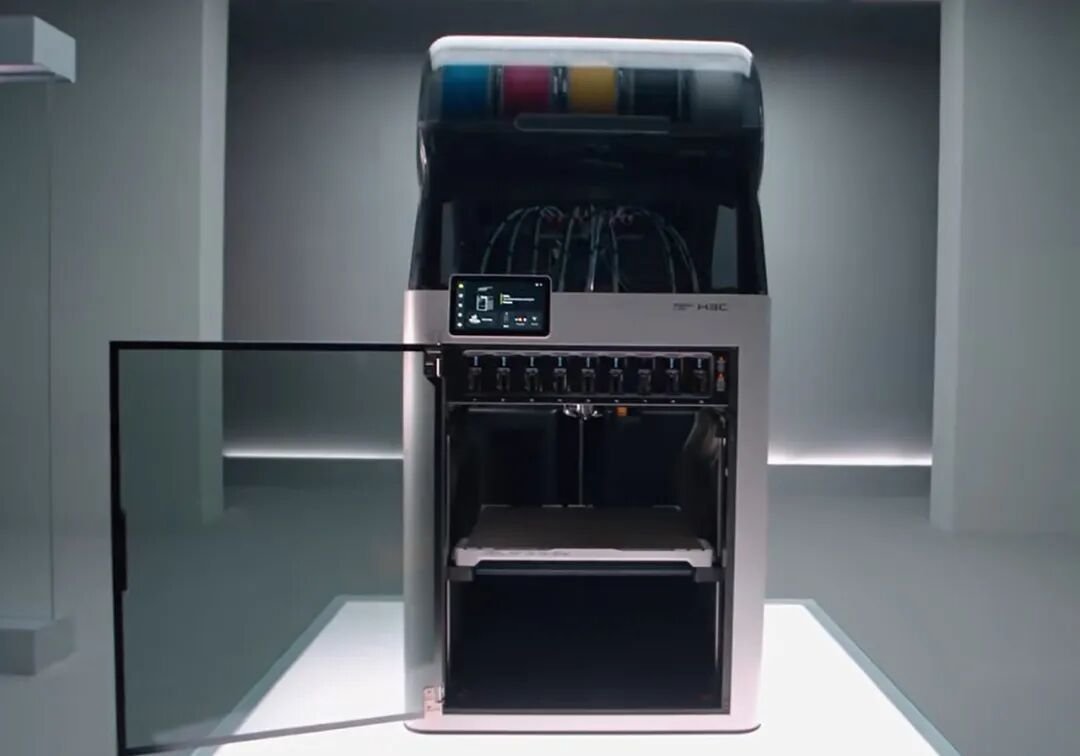
After Snapmaker U1's independent four-head success in 2025, several manufacturers introduced four-head systems. Users waited to see Bambu's response. It skipped directly past four heads.
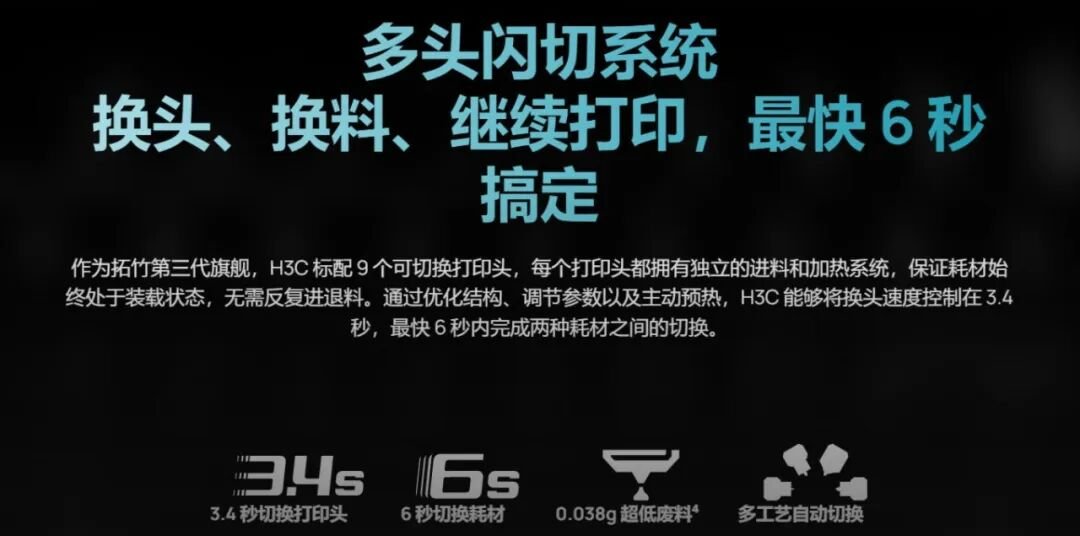
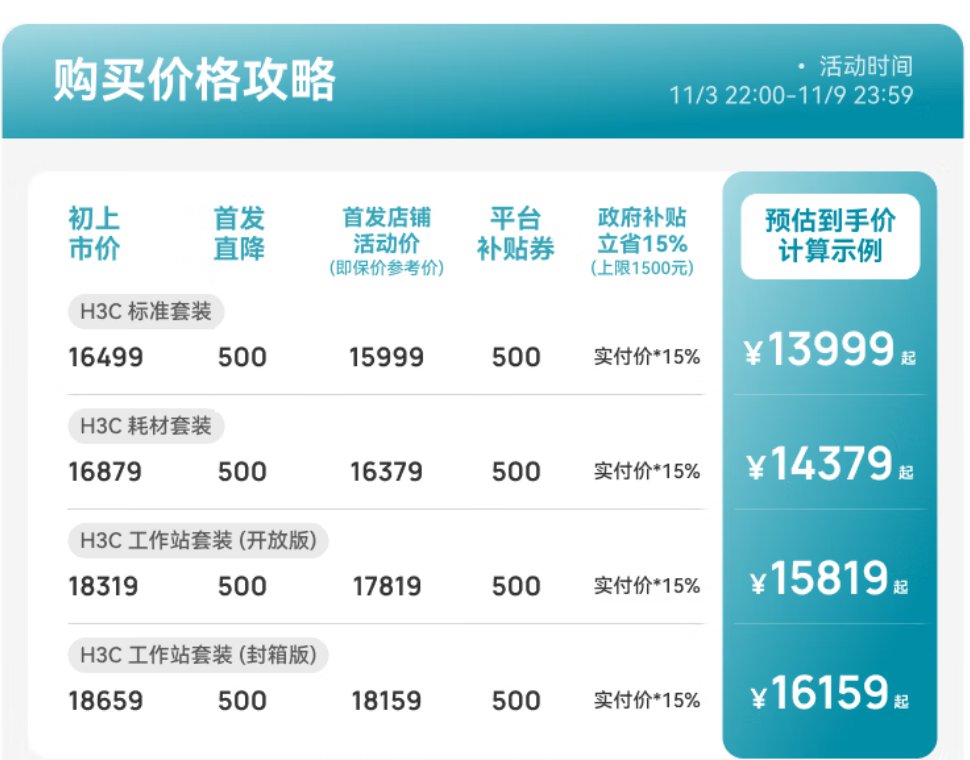
On November 3, 2026, Nanjixiong learned that the flagship H3C had launched with nine independent heads, six-second switching, 0.038 g waste per change, and reliable ultra-soft 75A TPU printing. The standard launch package starts at RMB 13,999 after national subsidy.
With nine heads below RMB 20,000, Nanjixiong sees Bambu redefining the third generation of consumer FDM.
Nine Heads and AMS 3H: A Desktop Tool Library
Swaptek™ is the central feature.
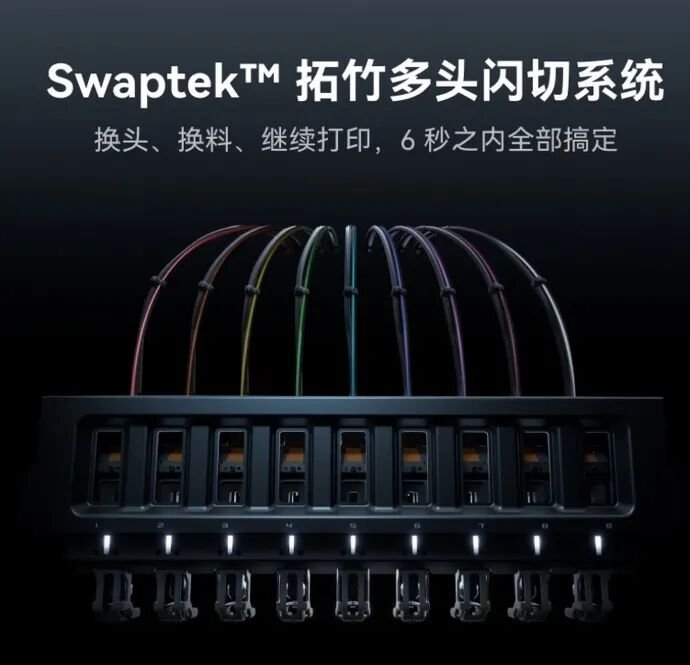
Nine PrintTools dock on a height-adjustable rack, each with independent feeding and active preheating. The next head can preheat while another works.
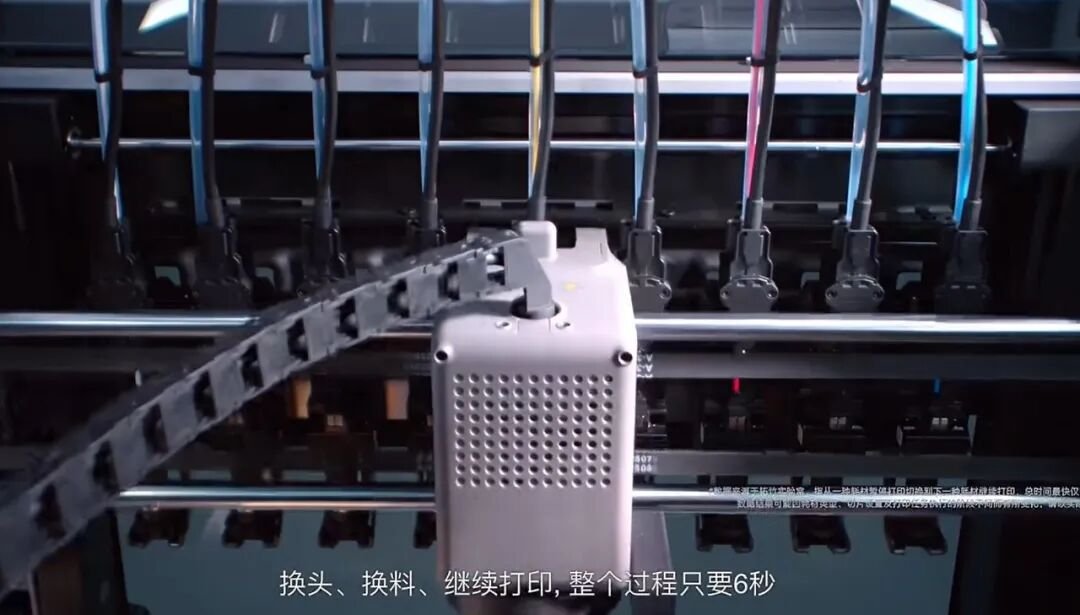
Head exchange takes 3.4 seconds, and the complete head/material change and resumption takes six seconds, described as the fastest in consumer printing. Eliminating repeated single-head cutting and retraction reduces waste to 0.038 g per change, approximately one-hundredth of an A4 sheet's weight, rather than the large purge piles of traditional multicolor printing.
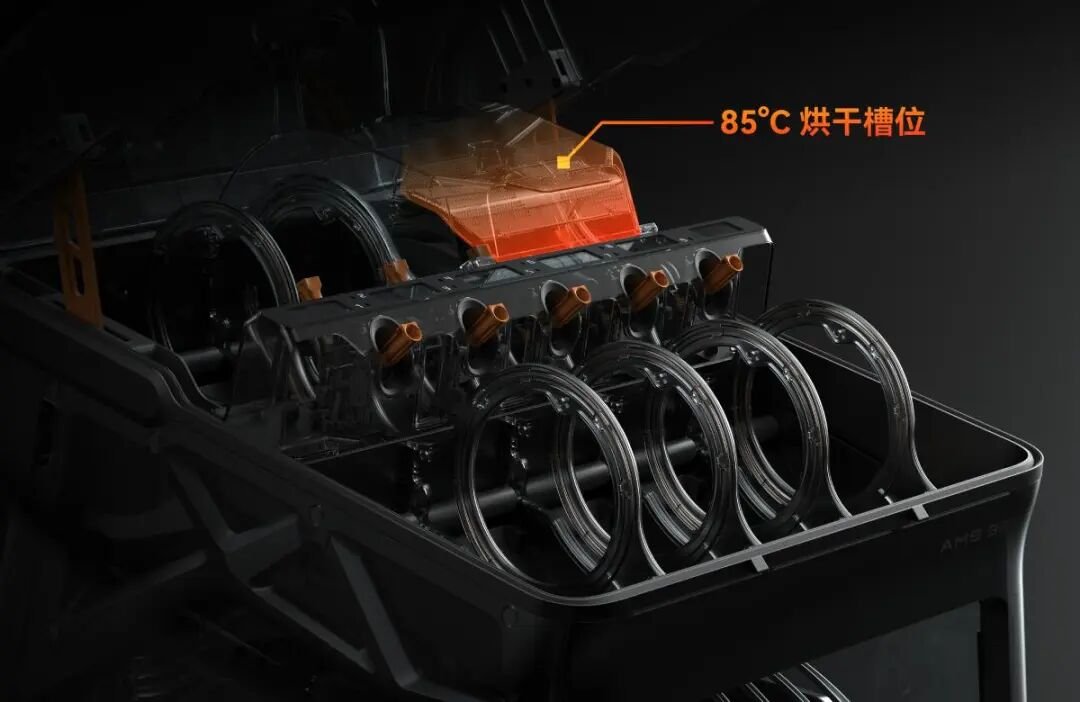
The overhead AMS 3H seals nine spools in an airtight chamber for moisture protection and drying while printing. Four external AMS units connect through the first head interface for up to 24 colors.
Variable Diameter Enables Very Soft 75A TPU
Ultra-soft TPU has been difficult for consumers: it buckles readily, forcing 1.75 mm filament to print extremely slowly.
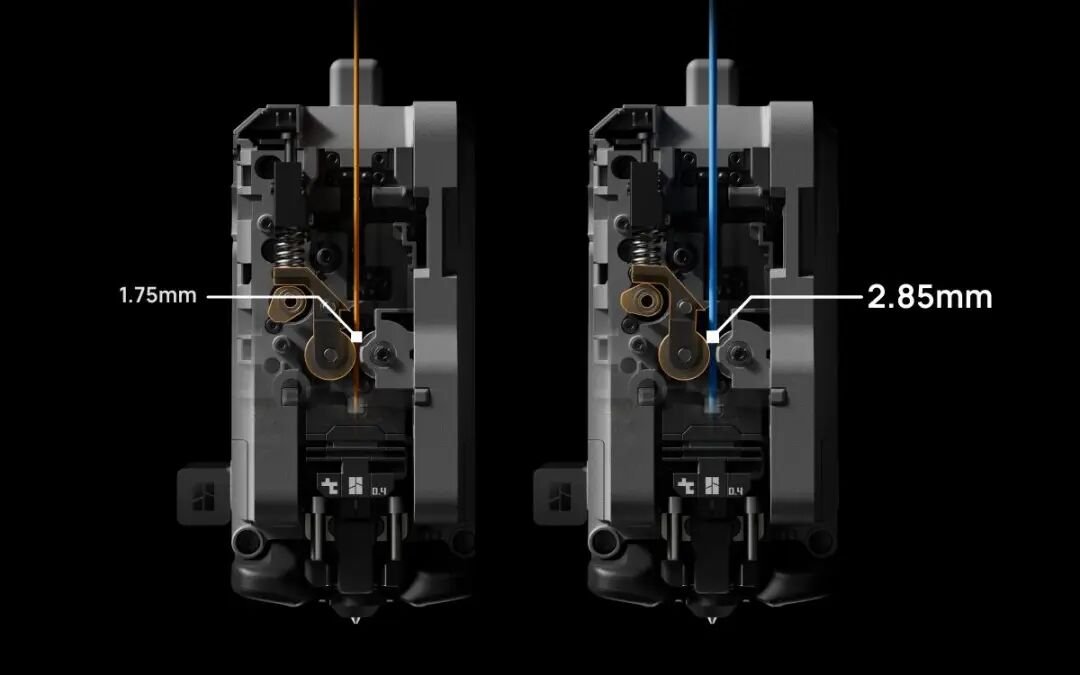
H3C adds a 2.85 mm extrusion path alongside 1.75 mm. A permanent-magnet synchronous motor drives a cam to switch automatically. Thicker filament resists buckling and permits greater flow. With a dedicated hotend, maximum 75A TPU volumetric flow reaches 10 mm³/s, raising speed three- to fivefold.
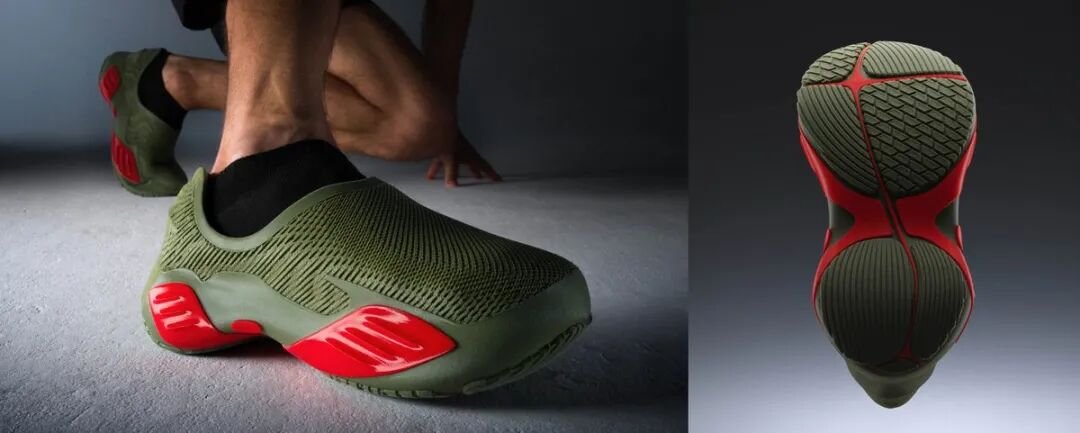
A demonstrated FDM sports shoe combines a soft, breathable upper with a tough, resilient midsole in one print, showing the prospect of making wearable shoes at home.
Mixed Functions Beyond Printing
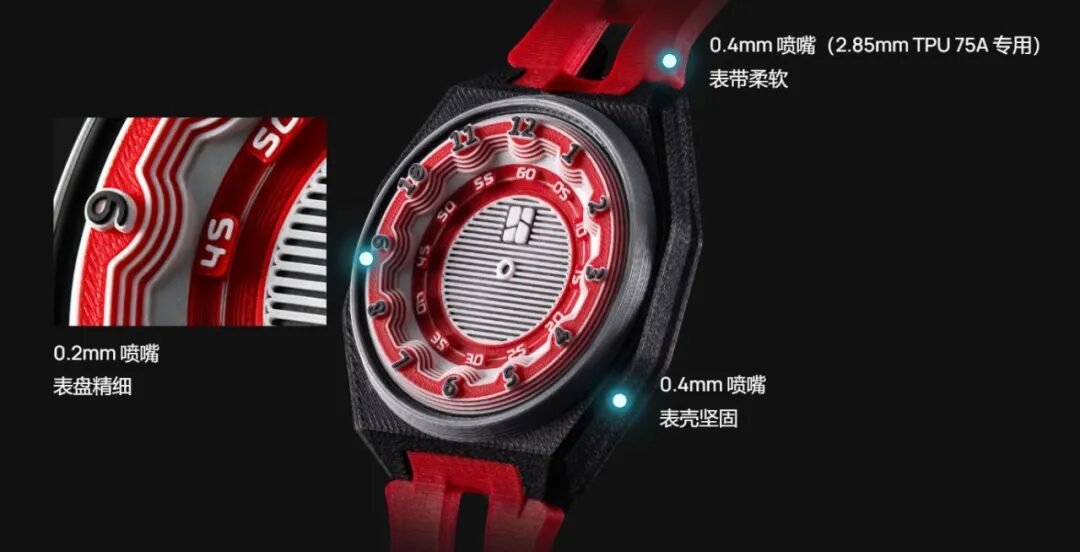
Within one part, users can combine 0.2, 0.4, 0.6, and 0.8 mm nozzles. A watch demonstration used 0.2 mm for dial detail, 0.4 mm for the case, and a TPU nozzle for the strap, combining speed and detail.
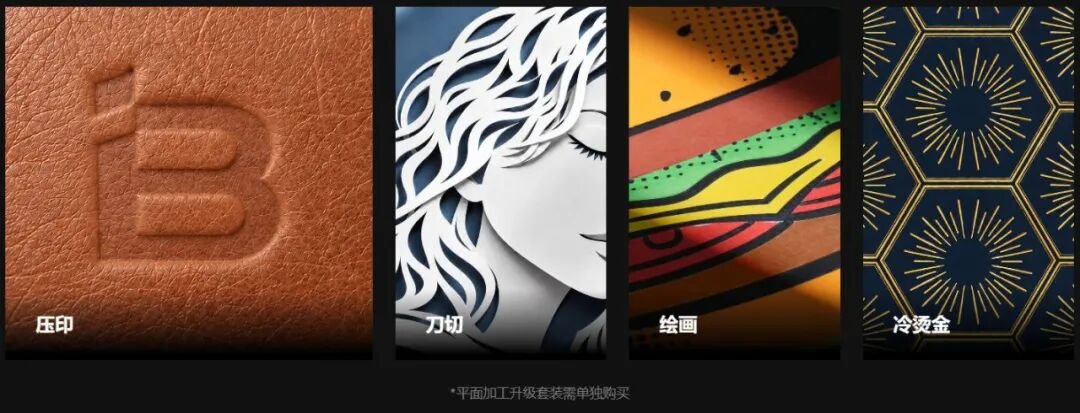
The rack also accepts cutting, pen, embossing, and cold-foil tools, letting one machine perform several functions.
Specifications include 1,400 mm/s maximum speed, 25,000 mm/s² acceleration, 350°C hotend, 65°C chamber heating, and three-camera AI detection of spaghetti failures, blockages, and other anomalies.
Nanjixiong's Commentary
Bambu is reshaping consumables as well as launching machines. Its own materials already lead shipments, and H3C is generating demand for specialized 2.85 mm TPU.
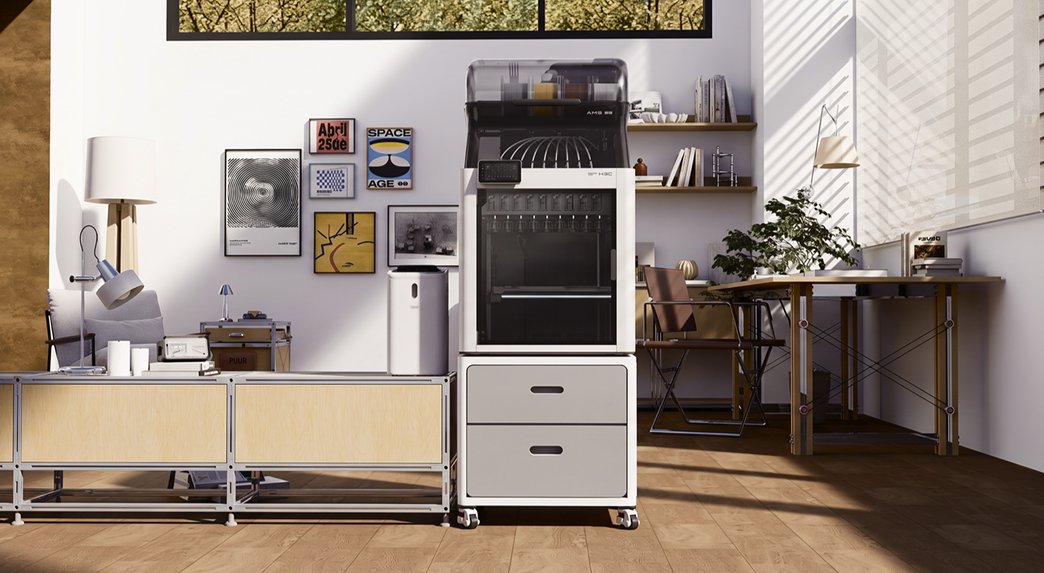
H3C, Workstation L, and Air Purifier E1.
Variable diameter opens a new soft-material segment. Reliable elastic soles, tough stress-relief toys, and combined rigid/flexible wearables expand FDM's boundaries.
At RMB 13,999 after subsidies, an automatic tool-changer concept once associated with industry reaches a desktop machine costing just over RMB 10,000. Difficult soft-material printing becomes more accessible.
Nanjixiong forecasts global 2026 printer shipments of eight million units. Ahead of a market approaching ten million, H3C is a major multi-head upgrade and sets a difficult benchmark. The next phase of multicolor, multi-material competition will focus on smarter switching, broader compatibility, and less waste, beyond nozzle count.
AI-translated from an article by Kuaixiong on Nanjixiong, originally published on 2026-11-04. Text and images retain the original source attribution.
Read the original Chinese article |



 Record number | ©2024 panda3dp Team. Powered by panda3dp