Nanjixiong's introduction: In medical 3D printing, patient-specific implants can match individual anatomy, but high manufacturing costs and long lead times have limited adoption across broader healthcare systems.
In November 2026, Nanjixiong learned that Hong Kong-based NOVUS Life Sciences Limited disclosed new application data. By combining its proprietary medical-grade OSSFILA® PEEK filament with INTAMSYS' industrial FUNMAT PRO 310 APOLLO FDM printer, production time for a patient-specific PEEK cranial implant was reduced to about four hours, and manufacturing cost to about USD 100 per part.
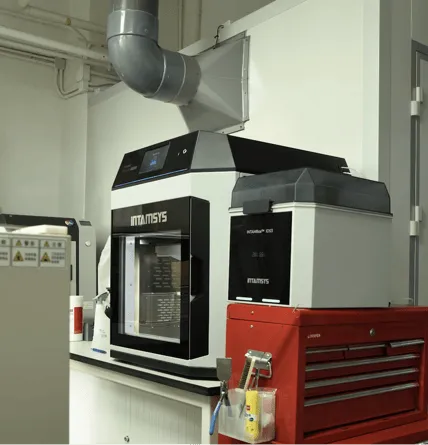
△ INTAMSYS FUNMAT PRO 310 APOLLO 3D printer
By comparison, conventional CNC machining or outsourced manufacturing of a similar implant typically takes about 15 hours and costs around USD 1,000 per part. The figures illustrate the potential cost advantages of industrial FDM for customized medical manufacturing.
The challenge: high barriers in conventional subtractive manufacturing
Patient-specific cranial implants must closely match a person's anatomy. They have traditionally relied on CNC machining, which wastes material when cutting complex cranial curves and takes about 15 hours. This makes it difficult for medical institutions to flexibly schedule production and logistics around a defined surgical window. High costs also limit access in budget-sensitive healthcare systems.
In principle, FDM offers a better approach: it can produce complex geometries on demand and adjust porosity to promote bone integration. But PEEK (polyether ether ketone), a high-performance medical polymer, requires extremely high processing temperatures. Previous FDM printers capable of printing PEEK were often slow and inconsistent, making it difficult for manufacturers to balance throughput and medical-grade reliability.
The solution: OSSFILA® PEEK paired with APOLLO
NOVUS, a medical-grade filament maker serving more than 180 enterprise customers in over 80 countries, says it has been working to reduce the cost of customized medical devices. The application is intended to connect material, equipment, and process into a complete workflow.
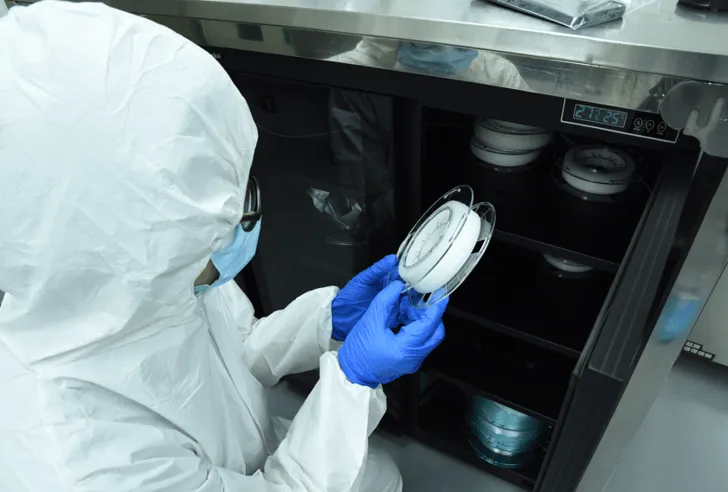
△ Medical 3D-printing workflow
NOVUS engineers identified three key capabilities of the INTAMSYS FUNMAT PRO 310 APOLLO:
- High-temperature extrusion: a high-temperature hot end and strong feed torque support smooth extrusion of PEEK and other demanding polymers.
- Stable temperature control: precise chamber-temperature control is critical for preventing PEEK warping and achieving stable crystallization.
- High-speed motion system: substantially increases print speed, with a target of 200 mm/s, while maintaining structural reliability.
At NOVUS's training center in Hong Kong, the system serves as a platform for internal R&D and production validation and for hands-on training of hospital technicians and international partners, helping them establish efficient medical 3D-printing workflows.
Two applications: implants and surgical guides
Application 1: customized PEEK/PEEK-HA cranial implants
Based on a patient's DICOM medical-image data, manufacturers can design cranial implants with complex curves, lightweight structures, and adjustable porosity. OSSFILA® PEEK and OSSFILA® PEEK-HA filaments are described as biocompatible and mechanically similar to human bone.
- Manufacturing time: reduced from about 15 hours conventionally to about four hours.
- Manufacturing cost: reduced from about USD 1,000 conventionally to about USD 100.
- Structural advantages: overcomes machining constraints, supports integrated formation and complex porosity, and substantially reduces material waste.
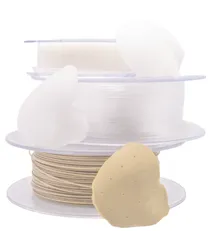
△ OSSFILA® filament and cranial implant sample
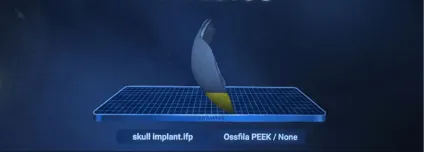
△ Cranial implant printing process
Application 2: customized polycarbonate (PC) surgical cutting guides
NOVUS also uses the FUNMAT PRO 310 APOLLO to print surgical cutting guides in PC. The material has strong mechanical properties and can be sterilized in an autoclave. In NOVUS' internal quality-control tests, printed PC specimens averaged a flexural strength of 94.62 MPa and a flexural modulus of 2.18 GPa. Precise chamber-temperature control enables the guides to snap closely onto a patient's bone and incorporate an integrated cutting slot, improving surgical precision and reducing delays in conventional preoperative preparation.
Nanjixiong's view: medical 3D printing is moving from feasibility to affordability
NOVUS' data point to a clear industry shift: competition in medical implants is moving from proving feasibility to optimizing economics.
PEEK medical implants have traditionally been seen as high-end, expensive, and customized. A cost of USD 100 per part is close to the lower limit of today's medical supply chain. If costs fall to one-tenth and delivery time drops below four hours, PEEK implants could be used more broadly, beyond a small number of leading hospitals and in more routine surgeries.
INTAMSYS, a Chinese industrial FDM-equipment maker, is also demonstrating its high-temperature chamber control and high-speed printing capability. Its equipment is not only able to print PEEK, but to print it quickly and consistently.
NOVUS' future plans are also notable. Its materials portfolio already includes biodegradable OSSFILA® PLLA (poly-L-lactic acid) filament. With equipment upgrades, it plans to develop medical-grade biodegradable scaffolds for tissue engineering and envisages on-site production near an operating room or clinic. From long-term structural implants to resorbable regenerative-medicine solutions, the full potential of 3D printing in medicine is only beginning to emerge.
AI-translated from an article by Xiaoruanxiong on Nanjixiong, originally published on 2026-11-11. Text and images retain the original source attribution.
Read the original Chinese article |


 Record number | ©2024 panda3dp Team. Powered by panda3dp