Source: Farsoon Technologies
Nanjixiong learned that Farsoon's European team and Apollo Automobil jointly developed and produced the titanium exhaust pipes and tips for the Apollo Evo. The project shows that additive manufacturing can take highly complex parts from concept to small production runs.
The companies built on their long-standing relationship, shared interest in high-performance graphite and confidence in additive manufacturing.
Apollo handled vehicle engineering and design, while Farsoon contributed additive manufacturing, design for additive manufacturing (DfAM) and large-format industrial production. The titanium alloy exhaust system is among the largest metal 3D printed titanium assemblies for road-going cars, illustrating the value of introducing additive manufacturing early in product development.

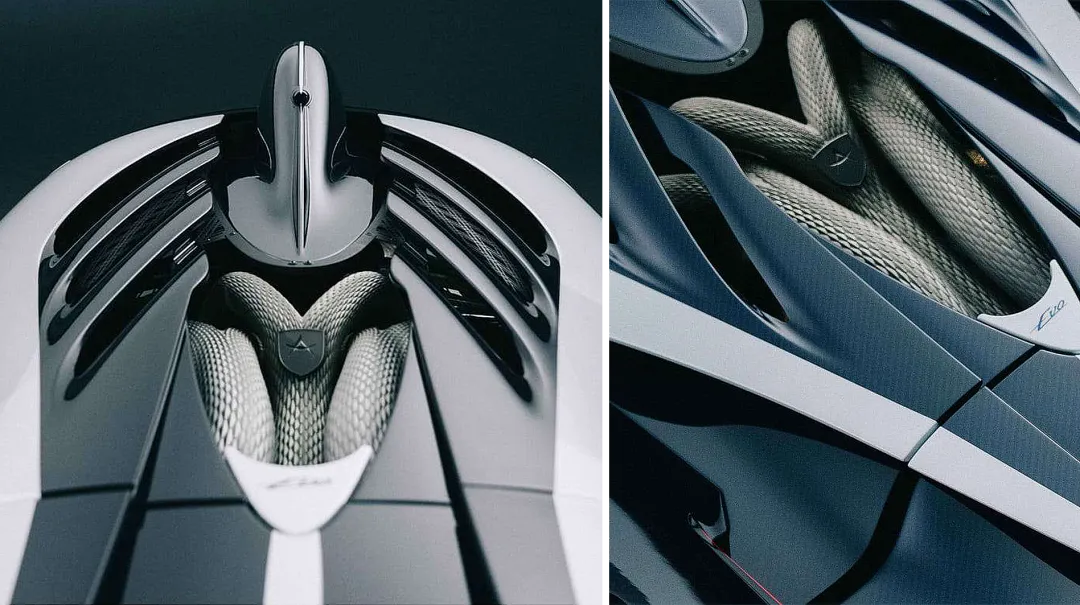
The teams worked together throughout engineering to optimize design, performance and manufacturability in parallel. Designing for additive manufacturing allowed them to consolidate a complex multi-part assembly into one titanium alloy component, retaining the original design while reducing assembly and post-processing.
The first production Apollo Evo, “Dragon of the Caribbean,” debuted at the 2026 Goodwood Festival of Speed. The exhaust's signature dragon-scale texture is printed directly, with no secondary processing. The design also reworks the visual effect of the exhaust. Farsoon made the exhaust tips with its own high-efficiency printing process, followed by precision machining and mirror chrome plating.

The full assembly is built on Farsoon's FS811M-6 in TA15 titanium alloy. Farsoon's print parameters use thicker layers to combine good curved surface quality with production efficiency.
Using Farsoon's in-house assembly technology, the pipe is printed in one piece without internal supports. This eliminates processing of multiple pipe sections and sharply reduces post-processing. The project made assemblies for all ten Apollo Evos, demonstrating production of highly complex parts in small batches.
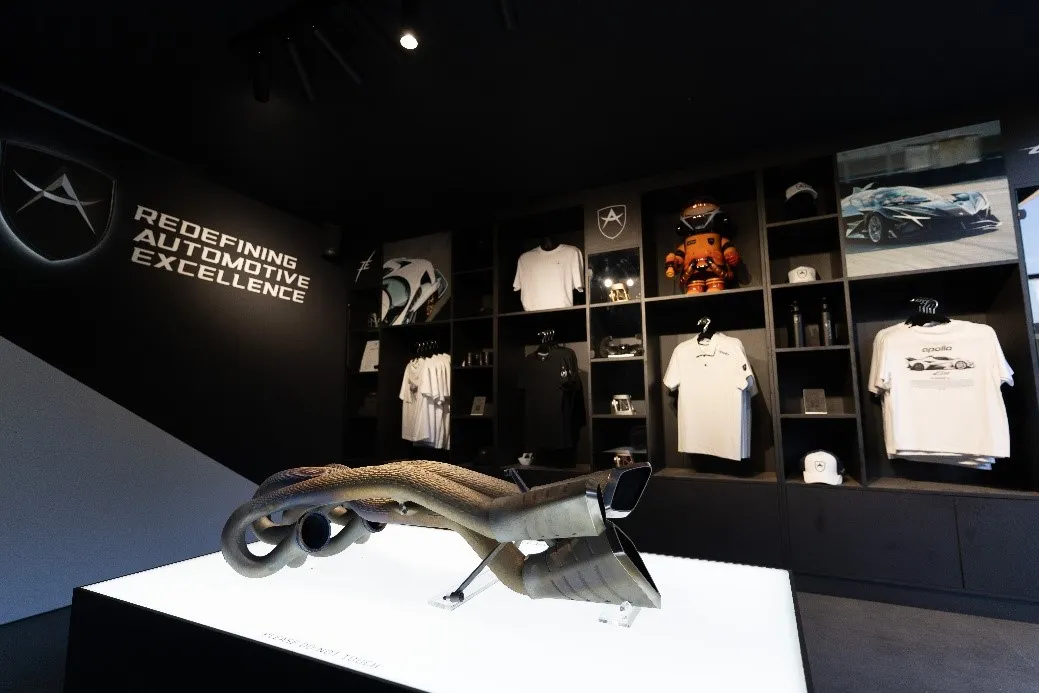
The project illustrates Farsoon's industrial service model: it participates directly in development and engineering, turning new designs into parts that can be produced while meeting performance and design requirements. Additive manufacturing let the team evaluate several support-free designs and make prototypes for rapid milling and finishing trials, shortening development.
Sonja Rasch, who leads strategic sales and business development for Farsoon Europe, said the project showed the value of close collaboration among customers, designers and manufacturing specialists, with attention to process constraints and economics. She said Farsoon works with customers to identify applications, improve designs and reduce risk, and that actual production projects move the industry from concept to industrial use.
Apollo Chief Product Officer Marko Konta said the partnership completed the benchmark project and met its technical targets. The exhaust system passed functional, durability and thermal testing and entered production, meeting customer expectations for performance, manufacturing quality and a distinctive experience.
About Apollo Automobil
Headquartered in Germersheim, Germany, Apollo describes itself as the country's only manufacturer dedicated to the highest tier of supercars. Founded by Roland Gumpert in 2004, the brand develops high-end road and track vehicles and represents what it calls “rebellious German engineering.”
About Farsoon Technologies
Farsoon provides industrial additive manufacturing solutions for metals and polymers. Its open-platform approach serves automotive, aerospace, medical and tooling customers, using laser-based powder bed processes to produce high-performance parts at industrial scale.

AI-translated from an article by Xiaoruanxiong on Nanjixiong, originally published on 2026-11-13. Text and images retain the original source attribution.
Read the original Chinese article |



 Record number | ©2024 panda3dp Team. Powered by panda3dp