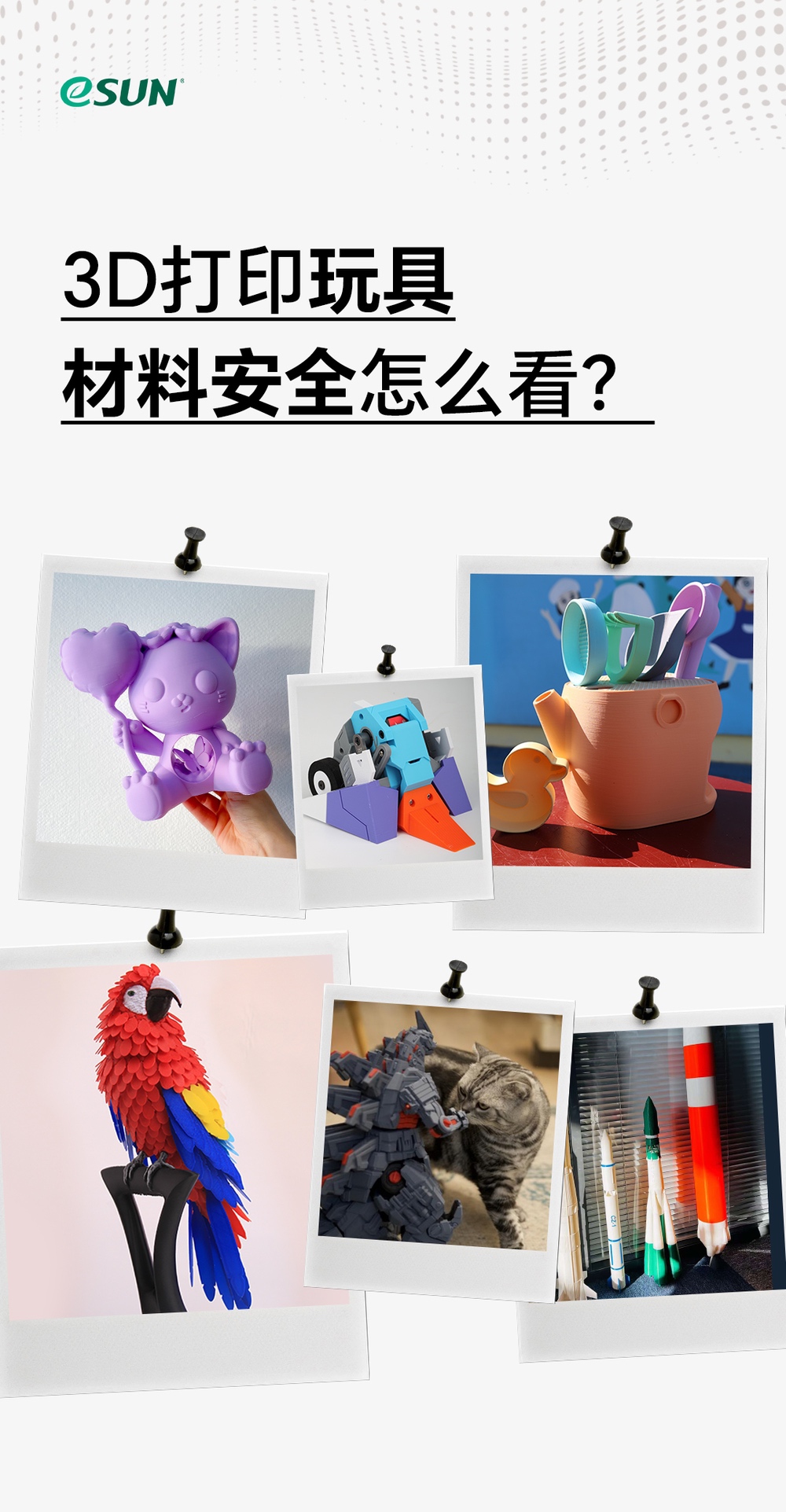
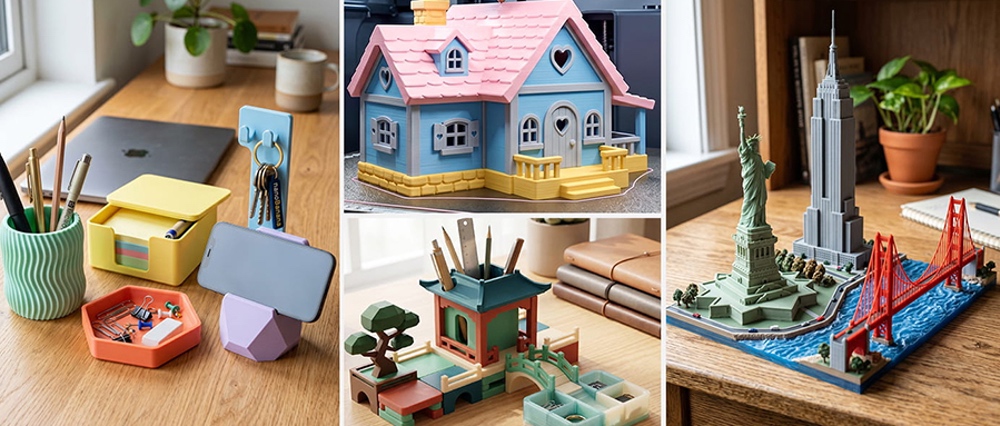
Nanjixiong introduction: Printing is entering homes through figures, storage and children's toys. When parts are given to children or used with food, safety becomes a central consideration.
EN71-3 and toy materials
Common documentation includes REACH, RoHS, MSDS, FDA and CE references. For children's toys, EN71 is particularly relevant.
EN71-3, Safety of Toys—Part 3: Migration of Certain Elements, assesses whether migration of nineteen elements, including lead, cadmium, mercury, arsenic and chromium, stays within limits under specified conditions.
It measures released amounts under test conditions rather than simply whether metals are present. This matters for children who put toys in their mouths.
Testing individual materials and colors
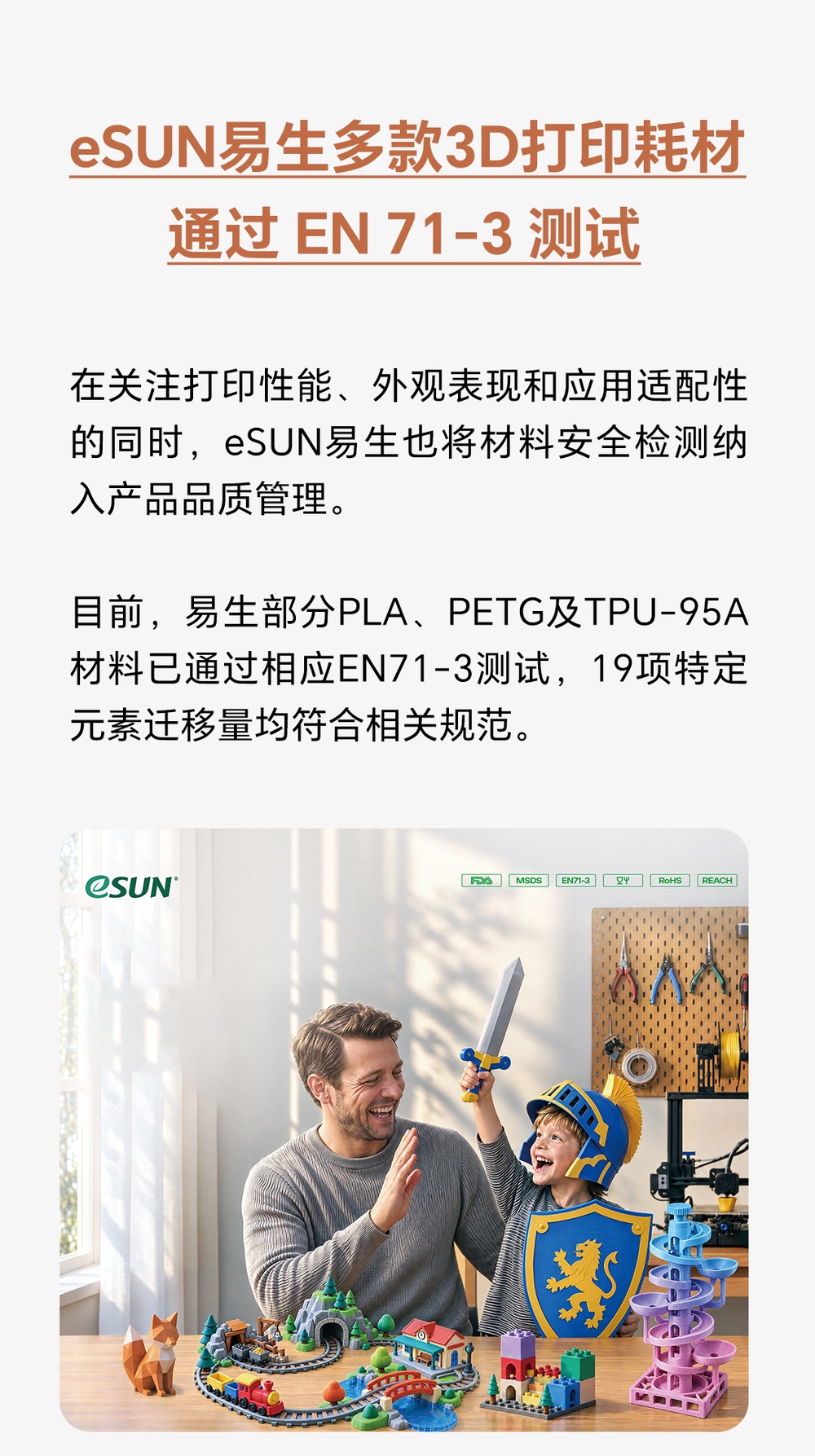
eSUN recently reported that selected PLA, PETG and TPU-95A products passed EN71-3 tests for all nineteen elements.
Each material and color was tested separately.
Different pigments and color masterbatches can introduce different trace elements. One color's results cannot establish another's performance. Separate testing takes more time and money but gives clearer information.
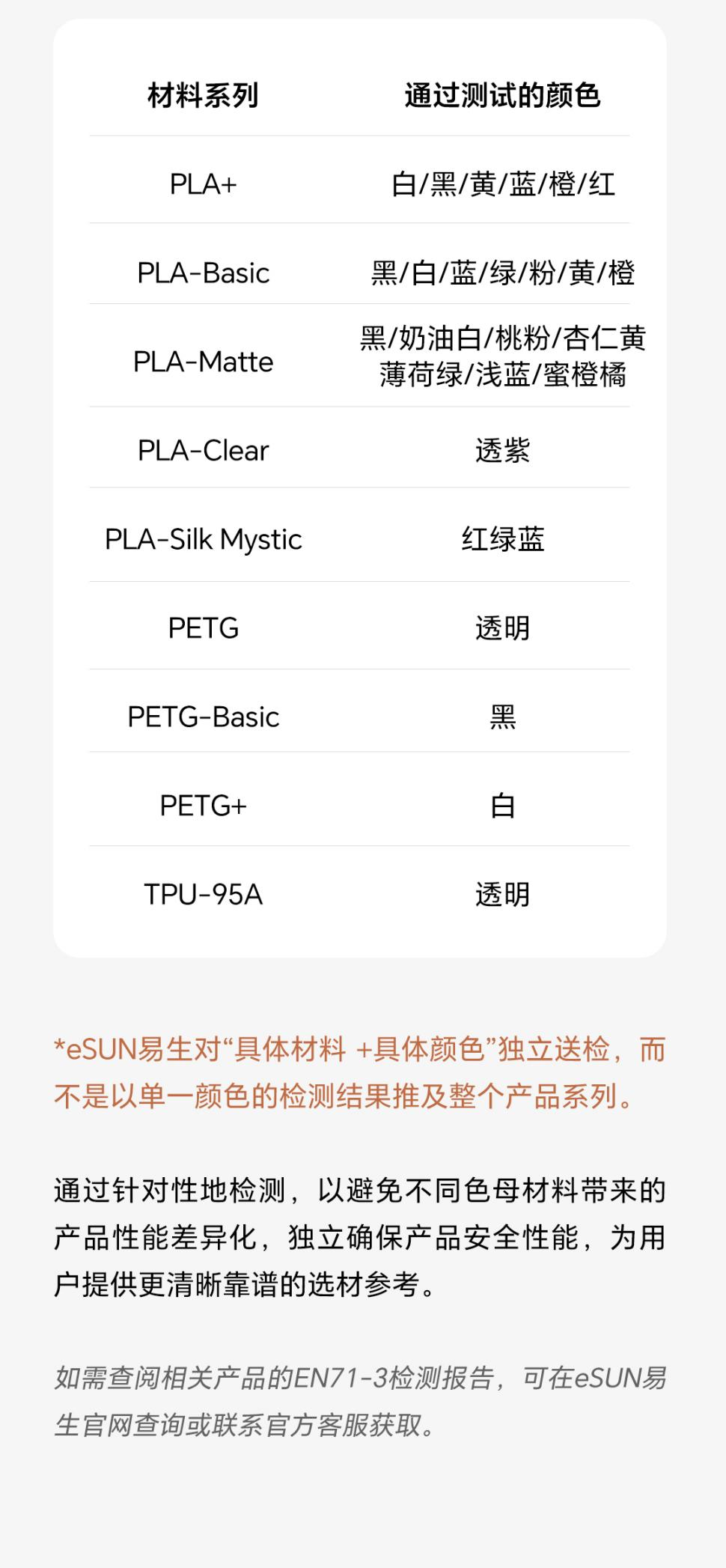
Product reports are available from eSUN's website or customer service.
Three other considerations for home printing
1. Brass nozzles may contain trace lead. The article recommends stainless or hardened steel when frequently printing toys or food-contact items, because wear during prolonged hot processing could introduce traces.
2. Sanding produces fine plastic dust. The article recommends wet sanding or a mask, and checking that paints and adhesives meet the relevant environmental or child-safety requirements.
3. Material testing does not establish structural safety. Avoid thin, sharp toy features and round edges in design or finishing to reduce cuts.
AI-translated from an article by Xiaoruanxiong on Nanjixiong, originally published on 2026-11-23. Text and images retain the original source attribution.
Read the original Chinese article |


 Record number | ©2024 panda3dp Team. Powered by panda3dp